

Apr 29, 2026 Our evidence guide separates real nano-enabled biohacking from marketing claims, from glucose sensors and nanoformulations to peptides and smart materials. (Nanowerk Spotlight) Biohacking sells itself as control: track more signals, tune more pathways, recover faster, age more slowly. The promise is seductive because it sounds measurable. But...
The most common planets in the galaxy don’t appear around the most common stars

Apr 29, 2026 New research finds the galaxy's most common stars host many super-Earths but almost no sub-Neptunes, reshaping planet formation theories. (Nanowerk News) Astronomers now estimate there is at least one planet for every star in our galaxy. These worlds, called exoplanets, are planets that orbit stars outside our...
New nitride magnets let electricity flip hidden spin patterns
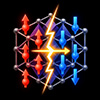
Apr 29, 2026 New nitride materials could let electricity control hidden magnetic spin patterns, pointing toward faster and more stable future electronics. (Nanowerk Spotlight) A material used to store information must satisfy a demanding bargain. It has to keep its state when the power is off, resist noise from its...
New roadmap highlights surface acoustic wave technologies
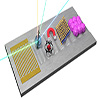
Apr 29, 2026 A new roadmap charts the next decade for surface acoustic wave technology, spanning signal processing, quantum tech, and life sciences applications. (Nanowerk News) The application of surface acoustic waves is widespread. The spectrum ranges from modern communication technologies, for example wireless data transmission with smartphones, to the...
Nanozymes against brain tumors
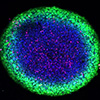
Apr 29, 2026 Researchers are developing nanozymes that can attack brain cancer cells directly during tumor surgery, offering new hope when conventional therapies fall short. (Nanowerk News) Among malignant brain tumors, astrocytoma is particularly common and equally dangerous: Surgical removal of this aggressively growing tumor can be difficult because the...
Nano-tin interlayer solves interfacial instability in all-solid-state batteries
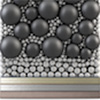
Apr 29, 2026 Researchers developed a nano-tin interlayer that stabilizes solid-state battery interfaces, achieving 350 Wh/kg energy density and 81% capacity retention over 500 cycles. (Nanowerk News) A research team at the Korea Electrotechnology Research Institute (KERI) has eliminated a key barrier to commercializing all-solid-state batteries by developing a nano-tin...
Ultraviolet light that fits on a chip
Apr 29, 2026 'Sidewall-poled' lithium niobate device paves way for compact UV sources. (Nanowerk News) Ultraviolet light, beyond its natural abundance from the sun, is used in countless modern applications, from disinfection, to fluorescence of biological materials, to photolithography of computer chips. In the near future, pinpricks of UV light...
Chiral semiconductors can now absorb visible light thanks to a molecular trick
Apr 28, 2026 A dopant molecule accepts electrons from a chiral perovskite host, enabling visible light absorption while preserving the material's left or right-handedness. (Nanowerk News) A University at Buffalo-led team has found a way to help chiral semiconductors, electronic materials whose structures are left- or right-handed like many of...
A shape no engineer would dream up makes thermoelectric generators 8 times better

Apr 28, 2026 A computer-optimized thermoelectric generator with an unconventional shape converts waste heat into electricity 8 times more efficiently than traditional designs. (Nanowerk News) A thermoelectric generator with a shape that no human designer would likely have imagined has now been created by a computer—and it performs more than...
Why stars spin down, or up, before they die
Apr 28, 2026 Magnetic fields in the convection zone drives the rotation evolution of massive stars. (Nanowerk News) From birth to death, stars generally slow by 100 to 1000 times their initial rotation rates; in other words, they spin down. The Sun's total angular momentum has declined as material is...