| Apr 15, 2026 |
An international team of scientists has used artificial intelligence to create ‘smart’ proteins that switch on only when they detect a chosen target.
|
|
(Nanowerk News) Published in Nature Biotechnology (“Artificial allosteric protein switches with machine-learning-designed receptors”), the research opens the way to a new generation of low-cost biosensors for medicine, environmental monitoring and biotechnology.
|
|
The team showed that these AI-designed protein switches could work inside living bacterial cells and could also be linked to electrodes to generate an electrical signal, similar in principle to glucose meters.
|
|
Lead author Professor Kirill Alexandrov, from the QUT School of Biology and Environmental Science and the ARC Centre of Excellence in Synthetic Biology, said proteins are the molecular machines that allow living cells to sense changes in their environment and respond.
|
|
“One of the major goals of synthetic biology is to build protein systems that can detect molecules of interest and then trigger a useful response,” Professor Alexandrov said.
|
|
“Until recently, protein engineers were mostly limited to adapting natural proteins found in biology. That gave us only a small set of starting options and made it very difficult to design new sensors on demand.
|
|
“Our study shows that AI-designed proteins can be turned into effective molecular switches, greatly expanding what protein engineers can build.”
|
|
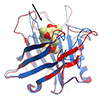
The researchers used machine learning-designed binding proteins as artificial receptors and connected them to enzymes that produce an easily measurable output.
|
|
These outputs included colour changes, light emission and electrical signals, making the switches suitable for different types of sensing technologies.
|
|
Importantly, the work also challenges a long-held idea in protein science.
|
|
“It was widely believed that sensing proteins had to undergo large shape changes to function as switches,” Professor Alexandrov said.
|
|
“We found that these artificial receptors do not need a dramatic structural rearrangement. Instead, binding of the target molecule subtly changes how the protein moves, and that is enough to turn activity on.
|
|
“That gives us new insight into how natural protein regulation works and provides a powerful new strategy for designing useful biosensors.”
|
|
In the study, the team built switches that responded to small molecules, peptides and proteins.
|
|
They also demonstrated electrochemical biosensors for steroid detection and showed that the switches could operate in living cells, an important step towards future synthetic biology applications.
|
|
The technology could eventually support portable diagnostic devices, environmental sensing systems and engineered cells that respond intelligently to chemical signals.
|
|
The work brought together researchers from seven teams across Australia, the United Kingdom and the United States, including collaborators from the University of Washington led by 2024 Nobel Prize laureate Professor David Baker, and CSIRO, Australia’s national science agency.
|