| Mar 05, 2026 |
A two-chip photonic neuromorphic system performs real time spiking reinforcement learning using only light, achieving GPU-class energy efficiency.
(Nanowerk News) A research team based at Xidian University in China has developed a photonic neuromorphic computing system capable of performing reinforcement learning using only light-based processes. The two-chip platform handles both linear and nonlinear computation optically, removing the need to convert signals back to electronics for the nonlinear steps that underpin learning and decision making.
|
|
Published in the journal Optica (“Nonlinear Photonic Neuromorphic Chips for Spiking Reinforcement Learning”), the work addresses longstanding bottlenecks in photonic spiking neural networks and points toward applications in autonomous driving and robotics.
|
Key Findings
- A 16-channel photonic neuromorphic chip with 272 trainable parameters performs both linear and nonlinear spiking neural network computation entirely in the optical domain.
- Hardware decision accuracy came within 1.5% and 2% of software-only baselines on two standard reinforcement learning benchmarks.
- On-chip computing latency reached just 320 picoseconds, with energy efficiency in the GPU-class range of approximately 1 TOPS/W.
|
|
Photonic spiking neural systems transmit information as brief optical pulses that mimic biological neural signaling. Until now, these systems could handle only the linear portions of computation in the optical domain. The nonlinear activation steps essential for learning required converting optical signals into electronic ones, introducing latency and negating much of the speed and energy advantage that photonics promises.
|
|
“Photonic spiking neural systems use brief optical pulses, or spikes, to emulate neural signaling, but they can typically only process the linear parts of computation using light,” said research team leader Shuiying Xiang from Xidian University. “Previously, the nonlinear steps that make learning and decision making possible required the signal to be converted back into electronic signals. This adds delay and undercuts the speed and energy advantages of photonics.”
|
|
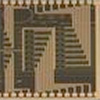
The system developed by Xiang and colleagues consists of two fabricated chips working in tandem. The first is a 16 x 16 Mach-Zehnder interferometer mesh chip tailored for spiking neural network operations. The second contains a distributed feedback laser array with a saturable absorber, optimized to produce low-threshold nonlinear spiking activation. Together, the chips form a large-scale programmable incoherent photonic neuromorphic computing system that can process 16 channels of optical signals simultaneously and adjust 272 connections through learning.
|
|
“Our system tackles three key challenges: the lack of large-scale, low-threshold nonlinear photonic spiking neuron arrays, the absence of fully programmable photonic spiking neural network chips, and the question of whether photonic spiking reinforcement learning can be implemented in hardware,” said Xiang.
|
|
The team also designed a hardware-software collaborative training and inference framework. Models are first trained globally in software, then deployed onto the photonic chips for hardware-level training, and finally fine-tuned in software to compensate for chip-level variations. This layered approach bridges the gap between idealized software models and the physical realities of fabricated photonic devices.
|
|
To validate the system, the researchers built an opto-electronic hybrid computing testbed and ran two standard reinforcement learning benchmarks. In the CartPole task, a pole must be balanced on a moving cart. In the Pendulum task, a pendulum must be swung from a hanging position to upright and held steady. Hardware decisions dropped only 1.5% in accuracy for CartPole and 2% for Pendulum compared with software-only performance. Using the combined hardware-software setup, the system achieved perfect scores on CartPole and strong results on the more demanding Pendulum task.
|
|
“We used this system to demonstrate reinforcement learning, supported by a hardware and software collaborative framework that trains and runs the neural network,” said Xiang. “The system was able to learn quickly through trial and error, showing potential as a fast, low-latency solution that could be used for applications such as autonomous driving and embodied intelligence.”
|
|
Performance benchmarks confirmed that the photonic system operates at competitive speed and efficiency. For linear computation, energy efficiency reached 1.39 tera operations per second per watt (TOPS/W) with a computing density of 0.13 TOPS per square millimeter. Nonlinear computation achieved 987.65 giga operations per second per watt (GOPS/W) and a density of 533.33 GOPS per square millimeter. These figures place the chips in the same class as GPUs for energy efficiency and in the range of GPUs and application-specific integrated circuits for computing density. On-chip latency measured just 320 picoseconds per computation.
|
|
The team plans to scale the architecture to a 128-channel fully functional photonic spiking neural network chip capable of tackling more complex tasks such as neuromorphic autonomous navigation. A compact hybrid-integrated version of the chip would also need to be demonstrated before the technology could be deployed in practical edge computing scenarios.
|
|
The results establish that reinforcement learning, a technique in which systems improve through trial-and-error interaction with their environment, can be executed on photonic hardware with minimal loss of accuracy relative to software. By keeping the entire computation in the optical domain, the approach preserves the inherent speed and energy advantages of photonics and opens a pathway toward robotic and autonomous systems that learn from real-world interactions in real time.
|