| Apr 24, 2026 |
A bioinspired hollow diamond foam composite increases PEG thermal conductivity by 378% and achieves 86.68% photothermal conversion efficiency for energy storage.
(Nanowerk News) Researchers at the University of Science and Technology Beijing have developed a composite phase change material that uses a hollow diamond foam skeleton to dramatically improve thermal conductivity and energy storage performance (Frontiers in Energy, “Advancing hydrogen energy through enzyme-mimetic electrocatalysis”).
|
|
The bioinspired material, designed for applications in solar energy harvesting and electronics cooling, addresses key limitations that have held back polyethylene glycol (PEG) as a practical heat storage medium.
|
Key Findings
- The hollow diamond foam composite increased thermal conductivity by 378% compared to pure PEG, reaching 1.458 W/(m·K).
- Photothermal conversion efficiency reached 86.68%, far exceeding that of unmodified PEG.
- Electronic component temperature cycling times extended by up to four times for heating and 2.3 times for cooling.
|
|
Phase change materials absorb and release large amounts of heat when they melt and solidify, making them valuable for bridging the gap between when renewable energy is produced and when it is needed. PEG is one of the more attractive options because it stores a large amount of energy per gram and is environmentally benign.
|
|
But three problems have kept it from wider use: it conducts heat poorly, it supercools significantly before solidifying, and it converts sunlight to heat inefficiently. To address these shortcomings, researchers have investigated encapsulating PEG within porous scaffolds that can enhance its thermal properties.
|
 |
| (a) Preparation of HDF skeleton; (b) preparation of HDF/PEG; (c) material picture: HAD (left), HAD/PEG (right). (Image: Reproduced from DOI:10.1007/s11708-025-0975-7, CC BY)
|
|
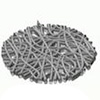
The team drew inspiration from the hollow bones of birds. Avian skeletons use internal cavities to optimize oxygen storage and respiratory function while maintaining structural integrity. Applying that principle to materials design, the researchers fabricated a three-dimensional diamond foam with hollow internal channels that form a continuous, interconnected heat transport network.
|
|
Building the skeleton required several steps. First, the team grew diamond structures using microwave plasma chemical vapor deposition (CVD). They then used laser perforation to create precise openings in the diamond walls, followed by acid immersion to etch out internal material and form the hollow cavities. The resulting scaffold was then filled with PEG2000, producing the final HDF/PEG composite.
|
|
Testing revealed substantial performance gains across multiple metrics. Thermal conductivity jumped from 0.305 W/(m·K) for pure PEG2000 to 1.458 W/(m·K) for the composite, a 378% increase. While the composite’s latent heat decreased slightly from 152.06 J/g to 111.48 J/g, the difference between melting and solidification enthalpies shrank from 12.61 J/g to just 0.17 J/g, indicating much more consistent energy cycling. Supercooling also dropped from 19.1 °C to 15.2 °C.
|
|
The photothermal properties proved equally notable. HDF/PEG converted incoming light to thermal energy with an efficiency of 86.68%, a marked improvement over unmodified PEG2000. For electronics thermal management, the composite extended the time before components reached critical temperatures by a factor of four during heating and 2.3 times during cooling.
|
|
The HDF/PEG composite functions as an integrated system suited to solar energy collection, photothermal conversion, electronic component heat dissipation, and thermal energy transfer and storage. By combining the high thermal conductivity of diamond with the advantages of a three-dimensional interconnected architecture, the material offers a new design strategy for high-performance composite phase change materials with practical relevance to clean energy technologies.
|