
May 12, 2026 Chemists have designed a light activated metal organic framework (MOF) that pulls water from the air and stores it in cavities triggered by sunlight alone. (Nanowerk News) In a new study (Journal of the American Chemical Society, "Photo Capture of Water by Single Crystals of a Nonporous...
Blog
Machine learning proves that graphene is hydrophobic
May 11, 2026 Machine-learning molecular simulations show pristine graphene is intrinsically hydrophobic and that water trapped beneath the sheet caused earlier conflicting results. (Nanowerk News) Graphene, the single-atom-thick carbon sheet valued for its strength and electrical conductivity, has confused researchers with contradictory wetting behavior. Some experiments showed water droplets beading...
Researchers develop body-compatible dermal electrode
May 11, 2026 Researchers develop a bio-implant with virtually no immune response at the cellular and tissue level. (Nanowerk News) A research team at POSTECH has developed a novel electrode that the human body does not reject. This breakthrough addresses a fundamental limitation of current wearable technology and is attracting...
Microcomb chip achieves record-low noise for microwave and millimeter-wave signals
May 11, 2026 Researchers use microcomb-based photonic chips to generate ultralow-noise microwave and millimeter-wave signals with record stability for 6G and radar. (Nanowerk News) A chip-scale photonic system has achieved record low-noise microwave signal generation using optical frequency combs, known as microcombs. Researchers at KAIST demonstrated two complementary techniques that...
Moon soil catalyst could recycle astronaut breath into useful chemicals

May 11, 2026 Moon soil mineral becomes a working carbon dioxide recycling catalyst when sunlight and heat reshape its surface chemistry. (Nanowerk Spotlight) On the International Space Station, chemical canisters absorb the CO₂ astronauts exhale and get swapped out between resupply missions. That approach will not scale to a permanent...
Generative artificial intelligence can significantly reduce the number of animal experiments

May 11, 2026 AI tool genESOM learns small dataset structures to generate synthetic data matching lab results, potentially cutting animal testing needs by 30-50%. (Nanowerk News) In early phases of drug development, new active substances are tested in animals –alongside numerous other experimental methods. Researchers face a dilemma: on the...
New strategy produces bulk graphene composite with record strength and thermal conductivity
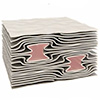
May 11, 2026 Researchers used just 5.9% polymer resin to boost graphene composite strength by 117% while achieving a thermal conductivity ten times above conventional composites. (Nanowerk News) Modern electronics and advanced protective gear keep getting more powerful and compact, but all that performance packed into tight spaces generates intense...
Defect-engineered zinc oxide turns tiny strain into near-infrared light
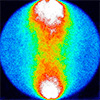
May 11, 2026 Defect-engineered zinc oxide converts tiny reversible strains into near-infrared light, opening a rare-earth-free path to self-powered optical stress sensing. (Nanowerk Spotlight) Mechanoluminescent materials emit light when mechanical force acts on them. Researchers have demonstrated them in prototype systems for stress mapping, structural health monitoring, and biomedical sensing....
Ultrahigh-energy cosmic messengers may carry ultraheavy secrets

May 11, 2026 There may be an ultraheavy explanation for the mystery surrounding the origins of the highest-energy particles ever observed. (Nanowerk News) Ultrahigh-energy cosmic rays are particles from space that strike Earth with energies far beyond those reachable by human-made particle accelerators. One of the most extreme events ever...
Stevia-based hydrogel improves triboelectric nanogenerator performance
May 11, 2026 Researchers developed a stevia-PVA hydrogel triboelectric nanogenerator with 2-5 times greater mechanical strength and 3-8 times higher electrical output than conventional designs. (Nanowerk News) A research team from South Korea has built a triboelectric nanogenerator using a stevia-infused hydrogel that surpasses existing designs in mechanical strength, electrical...