| Feb 22, 2026 |
Scientists developed a charge-free polymer-DNA complex that boosts cellular DNA uptake 14-fold in mice, avoiding the harmful inflammation caused by current methods.
|
|
(Nanowerk News) Researchers from Tokyo Metropolitan University have created a new molecule which carries DNA into biological cells, to treat or vaccinate against illnesses (ACS Applied Bio Materials, “Annealing of pDNA to Form the Single-Nucleobase-Terminal Complex for In Vivo Gene Expression”).
|
|
Many existing options rely on molecules with a strong positive charge, which can cause harmful inflammation. The team overcame this by using a neutral molecule and a new method to bind DNA to it, making it possible to deliver DNA into cells. Successful experiments in mice promise new, more effective therapies.
|
 |
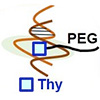
| Thymine modified polymer for delivering DNA into cells. A thymine modified compound, poly (ethylene glycol) (PEG), is bound to DNA through an annealing process, then delivered by intramuscular injection. The team confirmed up to a 14-fold increase in gene expression compared to bare DNA, depending on the ratio of thymine-PEG to DNA. (Image: Tokyo Metropolitan University)
|
|
Over the last few decades, scientists have developed new treatments which deliver genetic information into cells. This information, in the form of DNA and RNA, can either be incorporated permanently into genes (“gene therapy”) or be used temporarily by the protein-manufacturing machinery of cells to produce therapeutic proteins and molecules.
|
|
A major challenge in this is getting the DNA or RNA into the cell in the first place. Once injected into the body, the cell membrane presents a physical barrier to entry, and above all, they need to arrive inside cells intact.
|
|
This is where delivery vehicles come in. Instead of using the “naked” DNA or RNA molecules, they can be incorporated into complexes which can be taken up by cells more easily. For plasmid DNA, short segments of DNA which encode for the production of a few genes, a common delivery method is using positively charged polymers. Since DNA is negatively charged, it can bind with the positive charges on a long polymer to create a complex which can be swallowed by cells.
|
|
However, this approach is not without its issues. For example, positively charged molecules can trigger inflammation at the site of injection. It can also attract any other negatively charged molecule in its surroundings and form aggregates. In the case of an intramuscular injection, that includes the extracellular matrix of muscle tissue.
|
|
To get around this challenge, a team led by Professor Shoichiro Asayama of Tokyo Metropolitan University have synthesized an uncharged polymer with a “sticky” thymine base attached to its end, one of the four building blocks of DNA. The polymer they used was poly (ethylene glycol) (PEG), a well-known “inert” molecule in the body. However, the thymine base has nowhere to attach to the DNA without some help. Here, the team used a process called “annealing.” When a plasmid DNA molecule is heated slightly, the double strand can partially unwind. In the presence of this molecule, the thymine base can weakly bind to the exposed structure by hydrogen bonding, creating a complex between the team’s new molecule and the DNA.
|
|
By exploring the ratio between the number of thymine-PEG strands and DNA, the team were able to optimize their recipe. In experiments using mice, they successfully showed that their complex boosted the take-up of DNA into mouse cells by a factor of up to 14 compared to the “naked” DNA strand. Their new “single nucleobase-terminal complex (SNTC),” a charge-free compound, promises to improve and broaden the scope of therapies which rely on the successful delivery of genetic information.
|