| Apr 27, 2026 |
Researchers used Raman spectroscopy to infer proteome profiles from intact E. coli cells, revealing conserved protein ratio patterns that also appear in human cells.
(Nanowerk News) Scientists can now read the full protein composition of a living cell by analyzing scattered laser light, eliminating the need to break the cell open. A team at the University of Tokyo used Raman spectroscopy to capture proteome profiles from intact E. coli cells and discovered that protein abundances follow a layered organizational pattern, with a stable core maintaining essential functions and smaller variable groups enabling adaptation to changing environments.
|
|
The findings, published in eLife (“Revealing global stoichiometry conservation architecture in cells from Raman spectral patterns”), also suggest this pattern extends to human cells.
|
Key Findings
- Raman spectroscopy can nondestructively infer the full proteome profile of individual E. coli cells, eliminating the need for protein extraction.
- Protein abundances follow a hierarchical structure, with a large stable core supporting basic functions and smaller variable groups enabling environmental adaptation.
- The pattern of conserved protein ratios, termed stoichiometry conservation, also appears in human cells, suggesting broad biological relevance.
|
|
Standard proteomics requires extracting proteins from cells to quantify them, a process that destroys the cell and involves many labor-intensive steps.
|
|
“However, we have found a better way,” said Professor Yuichi Wakamoto from the Department of Basic Science at the University of Tokyo. “We demonstrated that cellular proteome profiles can be nondestructively inferred by simply exposing cells to light and analyzing their so-called Raman spectra, a type of scattered light from cells that conveys their molecular profiles.”
|
 |
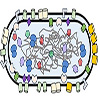
| Environmental conditions. The team demonstrated the feasibility of proteome inference in E. coli using Raman and proteome data measured under 15 different environmental conditions. (Image: Reproduced from DOI:10.7554/eLife.101485, CC BY)
|
|
Raman spectroscopy works by directing a laser at a sample and measuring the spectrum of light that scatters back. Different molecules scatter light in characteristic ways, producing a spectral fingerprint that reflects the cell’s molecular composition. By collecting Raman spectra and matching them against proteome data measured under 15 different environmental conditions, the team showed that a cell’s protein profile can be reliably predicted from its optical signature alone.
|
|
With this correspondence established, Wakamoto and Project Researcher Ken-ichiro F. Kamei investigated why Raman spectra encode proteome information so faithfully. They found that abundance ratios of many proteins are globally coordinated across all conditions tested. A large core group of proteins maintains fixed ratios regardless of external circumstances. These proteins handle essential tasks: acquiring and metabolizing nutrients, synthesizing new molecules for growth and division, and transmitting information so the cell can respond to its surroundings.
|
|
Surrounding this stable core, smaller clusters of proteins shift their relative abundances depending on environmental conditions. This layered arrangement explains how a cell sustains itself while still adjusting when its surroundings change. Because the core ratios stay constant, a Raman spectrum — which reflects the combined molecular signature — can reliably predict the broader protein profile.
|
|
“The biggest challenge for us was connecting and unifying the two distant fields of study, optics, in this case Raman spectroscopy, and omics, or the proteome, which have developed independently. Many measurements, data analyses and mathematical analyses were necessary to convince ourselves that the correspondence between cellular Raman spectra and omics profiles is real and has a firm foundation,” said Kamei.
|
|
The team calls this conserved pattern of protein ratios stoichiometry conservation. The phenomenon is not limited to bacteria. The researchers observed the same organizational principle in human cells, raising the possibility that it reflects a widespread feature of how cells organize their molecular machinery.
|
|
“It’s possible that by applying our method, we may be able to predict the early changes in cellular states associated with diseases and the molecular underpinnings that drive such changes. It’s also important to dig deeper into how this pattern of protein ratios, which we call stoichiometry conservation, emerges. It is apparent in cell types beyond E. coli, including human cells, so it’s intriguing and likely important,” said Kamei.
|
|
Because the method leaves cells intact, it could enable researchers to track the same individual cells over time as they respond to drugs, stressors, or disease-related triggers. Detecting early shifts in protein organization before visible symptoms appear would give scientists a window into cellular state changes that destructive methods, which capture only a single snapshot, cannot provide.
|