| Apr 27, 2026 |
Researchers have developed an outdoor wireless EEG transmission system using energy harvested from the temperature difference between the human body and surrounding air, even under hot summer conditions.
|
|
(Nanowerk News) As devices for wireless sensing systems become smaller and more complex, finding suitable power sources for them is becoming increasingly difficult. However, advances in low-power sensing technology may allow such systems to operate using small amounts of energy available in the environment, such as body heat.
|
|
In a paper published in the 2026 IEEE International Conference on Consumer Electronics (ICCE) (“A Battery-Free Wireless EEG Transmission System Using Compressed Sensing and Powered by Body–Ambient Temperature Difference: Outdoor Demonstration at Expo 2025”), a research team at The University of Osaka demonstrated a wireless EEG transmission system capable of operating on energy harvested from the temperature difference between the human body and hot outdoor summer air.
|
|
To achieve this, the team utilized a system architecture based on previous research that reduces the amount of data transmitted and uses a receiver-side algorithm to accurately reconstruct EEG signals from limited data. This enables operation without an external power source.
|
|
EEG often requires continuous monitoring over long periods. As a result, wireless sensing systems for long-term operation can consume considerable power, which limits practical use and increases maintenance requirements.
|
|
“Our long-term goal is to create sensing systems that can operate indefinitely without maintenance,” says lead author Daisuke Kanemoto. “A wireless EEG transmission system without any external power source is an important step toward practical, maintenance-free sensing technologies.”
|
|
The system developed by the team reduces the amount of data that needs to be acquired and transmitted by randomly undersampling the EEG signal. These reduced data are then processed by a receiver-side algorithm that accurately reconstructs the original EEG signal.
|
|
The team even performed a live demonstration of their technology outdoors at Expo 2025 (Osaka, Japan), where it continued to function under high ambient temperatures of over 32°C. Remarkably, no additional external power source or airflow was needed.
|
 |
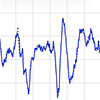
| Comparison of the reconstructed waveform at the receiver (blue solid line) and the reference waveform (black dashed line). The sensor side was powered solely by energy generated from the difference between body and ambient temperatures, confirming accurate waveform acquisition without an external power source.©Original content, No modifications of the work are permitted. (Image: Daisuke Kanemoto)
|
|
“Although the amount of harvestable energy decreases as the outside temperature approaches that of the human body, our results show that continuous wireless EEG transmission is possible even when the temperature difference is only a few degrees. This demonstrates that such systems can operate reliably in real-world environments, not just in controlled laboratory settings. In the future, this technology may contribute to the development of practical wireless monitoring devices, and advances in low-power design may enable a wider range of sensors to operate using only limited energy,” says Kanemoto.
|
|
Beyond routine health monitoring, similar battery-free systems could also be deployed for infrastructure and environmental monitoring, as well as in smart cities. As demand for continuous data collection grows, technologies like this may broaden the range of sensing systems that can operate using energy drawn from the environment or even the human body itself.
|