| May 19, 2026 |
A new review details how covalent organic frameworks form continuous proton channels in fuel cell membranes, boosting conductivity under low humidity and high temperatures.
(Nanowerk News) Hydrogen fuel cells offer clean, efficient electricity generation, but the membrane at their core often fails under high temperatures or dry conditions. A comprehensive review published in Chinese Journal of Polymer Science (“Covalent Organic Frameworks Modified Composite Proton Exchange Membranes towards Advanced Fuel Cells”) now maps out how covalent organic frameworks can be woven into proton exchange membranes to solve these problems, delivering higher conductivity and better durability across a range of operating environments.
|
Key Findings
- Adding just 0.6 wt% of sulfonated covalent organic nanosheets to a Nafion membrane improved methanol fuel cell performance by 44%.
- A phosphoric acid-based gel membrane reinforced with covalent organic frameworks achieved anhydrous proton conductivity of 0.168 S·cm⁻¹ at 180 °C, among the highest values reported.
- Tuning covalent organic framework pore size above 2.1 nm shifted proton transport from a slow vehicle mechanism to rapid hopping, exponentially increasing conductivity.
|
|
Most commercial proton exchange membranes (PEMs) are made from Nafion, a fluorinated polymer that relies on water molecules to ferry protons between electrodes. Above 80 °C or under low relative humidity, water evaporates faster than the membrane can retain it and proton conductivity collapses. Phosphoric acid-doped polybenzimidazole (PBI) membranes can tolerate higher temperatures, but they gradually lose mechanical strength and leak acid over extended operation.
|
|
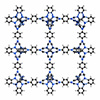
Covalent organic frameworks (COFs) are crystalline, porous materials built from organic molecules linked by strong covalent bonds. Their well-ordered channels and adjustable surface chemistry make them promising additives for directing proton flow through polymer membranes. Incorporating them into flexible films has been difficult, however, because rigid COF particles tend to clump together inside the polymer, creating weak spots and unreliable interfaces.
|
|
Researchers from Northwestern Polytechnical University, the Northwest Research Institute of Chemical Industry Co., Ltd., and Xi’an Jiaotong University evaluated the full landscape of COF-modified PEM design across three base polymers: Nafion, sulfonated polyetheretherketone (SPEEK), and PBI. Their analysis covers how COFs can establish unbroken, molecular-scale proton channels inside each membrane type, sustaining fast ion transport even when water is limited or temperatures climb well above normal operating ranges.
|
 |
| Engineering “proton highways” with covalent organic frameworks for next-generation fuel cells. This schematic illustrates two key strategies—nanoconfinement dispersion and in situ synthesis—for integrating covalent organic frameworks (COFs) into proton exchange membranes (PEMs). The resulting COF-modified membranes (based on PEEK, SPEEK, or PBI) create ordered, continuous proton channels and improve water retention. These structural features enable stable operation under both low-humidity and high-temperature conditions, addressing major limitations of conventional fuel cell membranes. (Image: Chinese Journal of Polymer Science)
|
|
The review identifies two principal fabrication strategies. Nanoconfinement dispersion shrinks COF particles below 100 nm so they distribute more evenly through the polymer. In situ synthesis takes a different approach, growing COFs directly within the dissolved polymer so that the framework bonds tightly to the surrounding matrix. Both methods target the particle aggregation that weakens conventionally blended membranes.
|
|
Under low-humidity conditions, attaching sulfonic acid groups to COFs and dispersing them in Nafion or SPEEK improves water retention and stabilizes proton pathways. One study found that loading just 0.6 wt% of sulfonated covalent organic nanosheets into Nafion raised direct methanol fuel cell output by 44%.
|
|
At temperatures between 100 °C and 200 °C, COFs play a structural reinforcement role in PBI-based membranes that use phosphoric acid as their proton source. A standout design employed phosphoric acid simultaneously as solvent and proton carrier in a PBI-COF gel, reaching an anhydrous proton conductivity of 0.168 S·cm⁻¹ at 180 °C. In separate work, researchers discovered a pore-size threshold: once COF channels exceeded 2.1 nm in diameter, proton transport switched from a vehicular mechanism, where protons ride on carrier molecules, to Grotthuss hopping, where protons jump directly along hydrogen-bonded networks. That transition produced an exponential gain in conductivity.
|
|
In situ growth and covalent grafting of COFs onto polymer chains also address interfacial defects that plague simple blending. Durability data reinforce this point: one COF-modified membrane retained nearly all of its conductivity after 15 days of continuous water immersion.
|
|
“The real breakthrough lies in how COFs reshape the inner architecture of conventional membranes,” the authors said. “Instead of just adding a filler, the goal is to build connected, molecule-level pathways that let protons move quickly even when water is scarce.”
|
|
The team added that “the most exciting progress comes from in situ synthesis, where COFs grow directly inside the polymer — this solves the clumping problem and creates a tight, stable interface.” Moving forward, they emphasized that precise pore engineering and targeted functional group design will determine whether these membranes can meet commercial fuel cell requirements.
|
|
The practical implications span several sectors. PEMFCs operating above 100 °C tolerate carbon monoxide impurities far better than low-temperature cells, enabling them to run on reformate hydrogen from natural gas or biofuels instead of requiring ultrapure feeds. Lower fuel crossover in COF-modified membranes also improves safety and energy efficiency.
|
|
The review points to scalable roll-to-roll coating and machine learning-guided prediction of optimal COF structures as two developments that could bridge the gap between laboratory results and industrial production. If these fabrication and design challenges can be resolved, COF-modified membranes could support hydrogen fuel cells in electric vehicles, backup power systems, and portable generators operating in conditions that would disable current membrane technology.
|