| May 05, 2026 |
Researchers developed a cellulose aerogel with metal-organic frameworks that absorbs microwaves, resists fire, insulates heat, and dampens sound in one lightweight material.
(Nanowerk News) Modern aircraft, high-power electronics, electric vehicles, and energy-efficient buildings share a common set of vulnerabilities: electromagnetic interference, fire hazards, excess heat, and noise. Engineers have traditionally managed each threat with separate material layers, adding weight, cost, and complexity.
|
|
A team of researchers has now developed a bio-based aerogel that addresses all four problems in a single lightweight material (Research, “Designing MOF-Cellulose Bio-Aerogels for Electromagnetic Management and Fire-Acoustic Safety”).
|
Key Findings
- A cellulose aerogel embedded with nickel-based metal–organic frameworks achieved microwave absorption with a minimum reflection loss exceeding -50 dB across a broad frequency range.
- The material reduced peak heat release by more than 60% compared with untreated cellulose aerogels while maintaining thermal conductivity comparable to commercial insulation.
- The aerogel contains only about 5% filler by weight, preserving its ultralight character while delivering electromagnetic, fire-retardant, thermal, and acoustic protection.
|
|
The strategy centers on cellulose, the most abundant natural polymer and a primary structural component of plant cell walls. Cellulose is renewable, biodegradable, and capable of forming robust three-dimensional networks. But untreated cellulose aerogels burn easily and lack electromagnetic functionality, which limits their usefulness in demanding environments.
|
 |
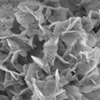
| Multifunctional cellulose-based aerogel for electromagnetic and fire–acoustic protection. (Image: Reproduced from DOI:10.34133/research.1111, CC BY)
|
|
To address those shortcomings, the researchers grew nickel-based metal–organic frameworks (MOFs) directly within the cellulose network. MOFs are porous crystalline structures assembled from metal ions linked by organic molecules. Their tunable architecture and high surface area suit applications from gas storage to catalysis. Here, the MOFs were distributed uniformly through the cellulose, producing an interconnected nanoscale architecture.
|
|
“Modern engineering systems rarely encounter only one challenge at a time,” said Prof. Pan. “We wanted to design a sustainable aerogel that could simultaneously manage electromagnetic waves, improve fire safety, provide thermal insulation, and absorb sound.”
|
|
The composite then underwent a controlled two-step carbonization. During heating, portions of the cellulose converted into a conductive carbon scaffold while the nickel species transformed into nanoscale nickel phosphide particles distributed throughout the porous matrix. This hierarchical arrangement creates conductive pathways and abundant interfaces, both of which are central to the material’s electromagnetic performance.
|
|
“The hierarchical structure that forms during carbonization is essential,” Pan explained. “It creates conductive pathways and abundant interfaces, which are critical for strong microwave absorption.”
|
|
Testing showed strong microwave absorption across a wide frequency band. The aerogel achieved a minimum reflection loss exceeding -50 dB, meaning incoming electromagnetic waves were largely dissipated rather than reflected. The researchers also recorded a significant reduction in radar cross section, pointing to potential uses in electromagnetic interference shielding and stealth applications. Conductive carbon networks and interfacial polarization within the porous structure work together to attenuate electromagnetic energy through multiple mechanisms.
|
|
In combustion trials, the aerogel cut peak heat release by more than 60% relative to untreated cellulose aerogels. The carbonized structure and nickel-derived particles promoted a stable protective char layer during burning, slowing heat transfer and limiting the release of flammable gases. This flame retardancy was achieved without halogen-based additives, which are effective but raise environmental and health concerns.
|
|
“Achieving substantial flame retardancy without traditional halogen-based additives is an important advancement,” Pan noted. “It enhances safety while maintaining environmental responsibility.”
|
|
Despite carrying multiple protective functions, the aerogel retained strong thermal insulation. Its highly porous structure traps air and restricts heat conduction, producing thermal conductivity on par with commercial insulating materials. Acoustic testing revealed effective sound absorption across a broad frequency range as well. The interconnected pore network and layered microstructure dissipate acoustic energy through repeated internal reflections and friction.
|
|
The study, published in the journal Research on 6 February 2026, was led by Prof. Ye-Tang Pan and Prof. Pan Chen at the Beijing Institute of Technology together with Prof. Pingan Song’s team at the University of Southern Queensland. The research team acknowledges that their work remains at the laboratory stage. Long-term durability, mechanical strength, and real-world environmental performance all require further evaluation before the material could move toward practical deployment.
|
|
“We hope this strategy will inspire the development of next-generation sustainable protective materials,” Pan said.
|