| Jun 12, 2026 |
Defect-free copper pathways let electrons travel with less scattering, pointing to ways of reducing resistance in future nanoscale wiring.
(Nanowerk News) A joint research team led by Professor Gil-Ho Lee of the Department of Physics at POSTECH, Professor Emeritus Se-Young Jeong of the School of Transdisciplinary Engineering at Pusan National University, and Professor Seong-Gon Kim of the Department of Physics and Astronomy at Mississippi State University announced that they have experimentally observed ballistic transport in single-crystalline copper thin-films, demonstrating that ballistic transport is achievable in an industry-standard metal at interconnect-relevant dimensions.
|
|
Ballistic transport refers to a phenomenon in which electrons travel along straight trajectories without scattering. Until now, this behavior has mainly been observed in special quantum materials such as graphene or semiconductor nanostructures. In copper, where electron scattering is pronounced, realizing ballistic transport has been considered practically impossible.
|
|
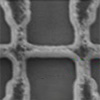
In this study (Nature Communications, “Ballistic transport in nanodevices based on single-crystalline Cu thin films”), the team experimentally demonstrated that ballistic transport can occur in structures with a thickness of 80 nm and a linewidth of 150 nm, dimensions comparable to those used in actual semiconductor interconnects.
|
|
This finding suggests that electronic behavior may change not only in laboratory-scale special structures, but also at wiring scales already relevant to the semiconductor industry.
|
|
The research team grew single-crystalline Cu(111) thin films with no grain boundaries using Atomic Sputtering Epitaxy (ASE). The films have an extremely low surface roughness of approximately 0.2 nm and, unlike conventional polycrystalline copper films, provide structural conditions that minimize electron scattering. In ordinary copper conductors, electrons undergo repeated scattering, resulting in diffusive transport, and the resistance is always positive.
|
|
However, when ballistic transport is established, electron behavior deviates from conventional expectations, and an unusual signal known as negative bend resistance appears in nonlocal voltage measurements. The team clearly confirmed the presence of ballistic transport through this signature. These measurements were carried out at temperatures below 85 K (−188 °C).
|
|
A key significance of this study is that ballistic transport was realized at a realistic interconnect linewidth of 150 nm. This result points to a possible route for mitigating the conventional interconnect scaling limit, in which resistance increases sharply in ultrafine interconnects.
|
|
In principle, this could contribute to reduced signal delay, lower Joule heating, and the realization of low-power, high-speed circuits, making the result highly relevant to next-generation semiconductor interconnect technologies.
|
|
Copper has long been regarded as a representative metal in which ballistic transport is difficult to achieve due to strong electron–phonon coupling and short mean free path. Therefore, this work is considered a major achievement in that it demonstrates the feasibility of ballistic transport in an industry-standard metal, rather than in a special material, at practically relevant dimensions.
|
|
Professor Gil-Ho Lee commented, “Ballistic transport is an ideal transport mechanism for fundamentally reducing power consumption in electronic devices. The significance of this work lies in demonstrating that such a phenomenon is achievable even in copper — an industry-standard metal — at realistic interconnect dimensions.”
|