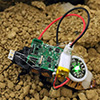
AI-guided cyborg cockroaches use internal signals to estimate environmental states and steer movement while reducing unnecessary stimulation.
(Nanowerk News) Cyborg insects have long been studied as bio-hybrid systems that combine living organisms with small electronic devices. These systems may one day support tasks such as disaster search and rescue, environmental monitoring, and sensing in spaces too small or dangerous for conventional robots. However, most existing systems control insects based mainly on externally visible behavior, such as whether the insect is walking or stopping.
Now, researchers from The University of Osaka and their collaborators have proposed a new concept called the Insect Synergy Circuit (ISC), in which artificial intelligence works with the insect’s own biological signals to support more cooperative control.
The international research team, led by Professor Keisuke Morishima of the Graduate School of Engineering at The University of Osaka, together with collaborators of Diponegoro University, developed and tested a new bio-intelligent cyborg insect system that integrates both body movement and internal physiological information.
The study, published in ROBOMECH Journal (“Perception-driven control strategy for bio-intelligent cyborg insect”), shows that heartbeat activity, neural signal features, and body motion data can be measured simultaneously and analyzed by AI to estimate the insect’s environment-associated internal state. This information is then used to decide when to apply gentle stimulation, and when to leave the insect unstimulated.
This video demonstrates the locomotion ability of a bio-intelligent cyborg insect after attaching all electronic components for measurement and stimulation. The attached components include UV LEDs, neural signal sensors, heartbeat sensors, a vibration motor, a wireless backpack, and a battery. Even with these electronic components mounted on the body, the cockroach is able to walk easily without difficulty on both flat and rough surfaces. This result shows that the BCI system can be integrated with the insect while maintaining its natural walking ability across different surface conditions.
“An insect is a living being, and its responses change from one individual to another, and from moment to moment,” says Professor Morishima. “Conventional robot research has often taken a one-way approach, giving commands to animals. In this study, we took a first step toward bio-hybrid control that responds to the animal’s state. The key shift is from ‘controlling’ to ‘listening.’”
The team developed a wearable backpack for Madagascar hissing cockroaches that can simultaneously measure heartbeat, low-frequency neural signal features, and body movement. The system also includes low-burden stimulation devices, including ultraviolet light stimulation for turning and vibration stimulation for forward movement.
Using this backpack, the researchers collected data under five conditions: natural baseline, ultraviolet light, chemical exposure, heat, and food. They then trained machine-learning models to classify the insect’s environment-associated internal state from the combined biological and movement data.
The best-performing offline model, a Random Forest classifier, classified five environmental conditions with an overall accuracy of 93%. Classification was especially strong for natural and food-related states, while some overlap occurred among ultraviolet, chemical, and heat conditions, which can produce similar avoidance-related responses.
This video demonstrates the cockroach’s responses to different types of stimuli, including natural, UV, heat, chemical, and food stimuli. The responses are analyzed using physiological, neural, and physical data collected during treadmill-based experiments. The video also shows that the cockroach can move freely on the treadmill, allowing controlled observation of its locomotion and sensory responses under different environmental conditions.
The researchers then tested the system in a multi-chamber maze containing attractive and avoidance-associated environments. Natural cockroaches tended to remain in food-containing chambers and did not complete the full maze. In contrast, when cyborg cockroaches were guided using the ISC-based closed-loop control strategy, some individuals successfully moved through the environment.
The control strategy was designed to reduce unnecessary intervention. When the AI inferred that the insect was in an attractive or calm state, stimulation could be applied to guide movement. When the insect was inferred to be in an avoidance-associated state, such as under chemical or heat conditions, stimulation was turned off, allowing the insect to respond through its own behavior.
According to the team, this marks an important step from behavior-based control toward internal-state-based bio-hybrid control. Instead of treating the insect only as a moving platform, the system uses internal biological signals as part of the control loop.
The concept may also extend beyond insects. Because ISC is based on the integration of biological signals, body movement, and AI-based interpretation, the framework could be applied to other living organisms or sensor systems. In the long term, the researchers envision systems in which biological organisms and AI cooperate more seamlessly, supporting next-generation cyborg technologies and new forms of environmental sensing.
“This is not the conclusion, but the beginning,” says Professor Morishima. “By listening to physiological signals from living systems, we hope to build a foundation for future communication and cooperation between artificial systems and biological organisms.”