| Apr 28, 2026 |
A stretchy, 3D-printable composite thinner than a human hair combines carbon and boron nitride nanotubes to shield against both electromagnetic waves and neutron radiation.
(Nanowerk News) Shielding materials are essential in key modern industrial settings-such as spacecraft, nuclear power plants, semiconductor equipment, and advanced medical devices-to protect both equipment and personnel from electromagnetic waves and radiation.
|
|
However, electromagnetic waves and neutron radiation, which can cause malfunctions in key components like semiconductors, have different characteristics and must be blocked using distinct materials. This has historically led to issues such as increased weight and structural complexity. These limitations pose an even greater burden in the space industry.
|
|
To address this challenge, a research team led by Dr. Joo Yong-ho at the Extreme Environment Shielding Materials Research Center of the Korea Institute of Science and Technology (KIST) has proposed a new solution (Advanced Materials, “Ultrathin, Stretchable, and 3D‐Printable Complementary Nanotubes–Polymer Composites for Multimodal Radiation Shielding in Extreme Environments”).
|
 |
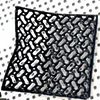
| In space, nuclear, and medical environments, electromagnetic waves and neutron radiation coexist, but existing materials have been limited in their application due to their heavy weight and rigidity. The research team combined carbon nanotubes (CNTs), which block electromagnetic waves, with boron nitride nanotubes (BNNTs), which absorb neutrons, to create a composite material capable of simultaneously blocking both types of radiation in a single thin layer. Furthermore, by combining this with a polymer (PDMS), the team achieved a lightweight and flexible form, demonstrating the potential for this material to evolve into a next-generation shielding material applicable to various structures and devices. (Image: Korea Institute of Science and Technology)
|
|
The team has developed the world’s first innovative composite shielding material that can simultaneously block electromagnetic waves and neutrons using a single ultra-thin film-thinner than a human hair-while also being stretchy like rubber and suitable for 3D printing.
|
|
The key to this newly developed material lies in the combination of two types of nanotubes. Carbon nanotubes (CNTs), which are highly conductive, absorb and reflect electromagnetic waves, while boron nitride nanotubes (BNNTs), rich in boron, effectively capture neutrons.
|
|
In particular, as the two materials naturally form a “shell structure” in which they envelop each other, a single film is now capable of simultaneously blocking both types of hazards. As a result, the material achieves performance that blocks 99.999% of electromagnetic waves and reduces neutrons by approximately 72%, even at a thickness thinner than a human hair.
|
|
Its technical sophistication is also noteworthy. This material possesses exceptional elasticity, maintaining its performance even when stretched to more than twice its original length, and can be 3D-printed into various shapes, such as honeycomb structures. In fact, it has been confirmed that the honeycomb structure offers up to 15% better shielding performance than flat materials of the same thickness. Furthermore, it has proven durability, withstanding temperatures ranging from -196°C to 250°C, making it suitable for stable use even in extreme environments such as space.
|
|
This research goes beyond the development of a single material to open up new possibilities across the entire industry. With the ability to simultaneously block electromagnetic waves and radiation using a single material, it has become possible to achieve both simplified design and weight reduction across various fields, including satellites, space stations, nuclear facilities, cancer treatment equipment, and wearable protective gear.
|
|
In particular, the design of customized shielding structures combined with 3D printing is a core technology that will transform the paradigms of the space, energy, and medical industries in the future.
|
|
Dr. Joo Yong-ho of KIST stated, “This material represents a completely new concept in shielding technology-it is as thin as tape and as flexible as rubber, yet simultaneously blocks both electromagnetic waves and radiation.” He added, “This technology is significant for securing the advanced materials and establishing the domestic production infrastructure necessary for realizing the space age. We plan to further enhance its performance through structural design optimization and actively pursue its application in actual industrial settings.”
|