| May 05, 2026 |
Physicists created highly conductive zones at twisted lithium niobate interfaces, extending twisted interface research beyond van der Waals materials for nanoelectronics.
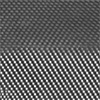
(Nanowerk News) An international team of physicists has demonstrated that rotating and bonding two large crystals of lithium niobate at precise angles produces unexpected electrically conductive zones at their interface.
|
|
The results, published in the journal Nature Communications (“Polar discontinuities, emergent conductivity, and critical twist-angle-dependent behaviour at wafer-bonded ferroelectric interfaces”), expand the concept of twisted interfaces beyond conventional layered materials and point toward new design strategies for quantum and nanoelectronic devices.
|
Key Findings
- Twisted interfaces between lithium niobate crystals generate highly conductive zones in materials that are otherwise electrical insulators.
- The conductivity at the interface varies depending on the rotation angle between the two crystal layers.
- The technique extends twisted interface research beyond van der Waals materials to strongly bound oxide crystals.
|
|
Quantum materials exhibit unusual electronic, magnetic, and superconducting behaviors that make them candidates for artificial intelligence hardware and quantum computing.
|
|
Controlling the electronic behavior at material interfaces remains a persistent challenge, however, particularly in material systems outside the well-studied family of van der Waals crystals. The new study addresses that gap directly.
|
|
The work focused on twisted interfaces, a class of structures formed by stacking crystalline layers at defined angles relative to one another. This angular offset produces physical properties not found in either layer alone.
|
|
Previous twisted interface research concentrated almost exclusively on van der Waals materials, layered crystals held together by weak intermolecular forces that are comparatively easy to separate and restack.
|
|
Lithium niobate, by contrast, is a strongly bonded oxide crystal widely used in photonics and telecommunications, and it had not been explored in this context.
|
|
To fabricate the twisted structures, the team bonded two lithium niobate crystals using thermal compression bonding, a process that applies heat and mechanical pressure to fuse the layers. Once bonded, the researchers measured the electrical characteristics at the interface and found conductive behavior where none was expected. The conductivity varied with the rotation angle, meaning the electronic outcome could be selected during fabrication.
|
|
“We observed that, depending on the angle of rotation, new types of highly conductive zones are created at the interfaces between these otherwise electrically insulating materials,” explains Dr habil. Michael Rüsing from the Institute for Photonic Quantum Systems (PhoQS) at Paderborn University.
|
|
The ability to tune conductivity through geometric manipulation rather than chemical doping or external fields has practical implications for device miniaturization. Engineers could design specific electronic properties into a component simply by choosing the twist angle at the bonding stage, enabling levels of miniaturization and functionality that conventional fabrication methods cannot achieve.
|
|
Scientists from Germany, Spain, the United Kingdom, and the United States contributed to the research. The work was coordinated in part through PhoQS, where a sub-project is led by Professor Dr Christine Silberhorn. The collaboration reflects the cross-disciplinary and multinational effort required to advance fundamental materials research at this scale.
|
|
“With our work, we show that the electronic properties of materials can be precisely controlled. In particular, the ability to twist even strongly bound crystals in a targeted manner and control their interfaces opens up fascinating prospects for future quantum and nanoelectronics. This allows us to achieve a miniaturisation and functionality of components that was previously unthinkable,” Dr. Rüsing notes.
|
|
By establishing that strongly bonded oxide crystals can be twisted and interfaced with tunable electronic outcomes, the study broadens the experimental toolkit available to materials scientists designing computer chips, memory elements, and other components for quantum applications and ultra-fast computing technologies.
|