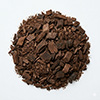
A coating made from paper-mill waste lignin and liquid metal nanoparticles absorbs 96% of sunlight, powering flat-panel thermoelectric generators while cutting carbon emissions below zero.
(Nanowerk Spotlight) Industries routinely destroy materials they later discover were valuable. Coal tar was once a nuisance byproduct of nineteenth-century gas works, poured into rivers or dumped on the ground, until chemists found that the same black sludge could be refined into synthetic dyes, pharmaceuticals, and building blocks for a chemical industry. The pattern recurs often enough that large industrial waste streams deserve a second look before they disappear into furnaces.
The pulp and paper industry produces one of those streams. Mills generate hundreds of millions of tons of lignin each year, separating this dark aromatic polymer from wood during paper production and burning almost all of it as low-grade fuel. That practice extracts modest energy while releasing roughly twice the lignin’s mass in carbon dioxide. Yet lignin is not chemically inert waste. Its structure naturally absorbs light and dissipates part of that energy as heat, a property that points to a different kind of value.
That possibility matters for solar thermoelectric generation, a compact approach that turns sunlight into electricity through heat. Instead of using sunlight to move charge directly, these devices use a light-absorbing surface to create a temperature difference across a thermoelectric module.
The concept avoids the bulky mirrors and mechanical tracking used in concentrating solar systems, but it places difficult demands on the absorbing layer. It must capture a broad solar spectrum, direct heat efficiently into the device, remain stable outdoors, and be cheap enough for large-area deployment.
Lignin appears attractive for that role because it is abundant, inexpensive, and naturally photothermal. But on its own it falls short. It absorbs near-infrared light poorly and conducts heat weakly, limiting the temperature gradient that a thermoelectric generator needs.
Liquid metals offer complementary properties, including strong thermal transport and strong absorption in the wavelengths lignin misses, but they need a stable, scalable host. The opportunity is to make these two mismatched materials work as one engineered coating.
Concept and design of solar thermoelectric generation (STEG). (a) The traditional lignin burning process and the team’s upgrading process for STEG by lignin-liquid-metal (Lig-LM) coating. (b) Biomass-volume and annual lignin production in some countries. (c) SEM image of Lig-LM’s cross-section and schematic of crosslinked lignin and LM nanoparticles. (d) Large amount of lignin produced in the factory. (e) Hundreds kilograms-scale Lig-LM coating can be produced. (f) Castings of Lig-LM coating. (g) Large-scale of flat-panel STEG with Lig-LM coating (2 × 0.5 m). (Image: Reproduced with permission from Wiley-VCH Verlag) (click on image to enlarge)
The gradient forms by itself during curing. The team sonicated the bulk alloy in a lignin solution to produce nanoparticles, and as the solvent evaporates and the lignin crosslinks, the dense particles settle through a fluid whose viscosity is climbing.
The gradient creates a light trap. The lignin-rich top surface has low reflectance and admits most incoming photons. Those photons reach the metal-rich layer beneath, which absorbs some through interactions between light and the metal’s free electrons and reflects others back upward for additional passes. A uniform mixture of the same materials does not produce this effect. Only the smooth gradient generates the repeated internal reflections that push total absorption to 96% across the solar spectrum.
The gradient also channels heat in a single direction. The metal-rich lower region conducts heat faster than the lignin-rich upper region, creating a built-in pathway that moves converted thermal energy downward toward the thermoelectric module while suppressing lateral losses.
Holding the gradient in place under sustained heating requires more than simple mixing. Reactive groups in the lignin form coordination bonds with surface gallium ions on the metal particles, and those same groups react with the polyethylene glycol crosslinker through covalent ring-opening. Lignin also condenses directly on the metal surface. Together, these interactions lock the graded structure in place and remain stable across the temperature range relevant to outdoor operation.
Under one-sun illumination, the coated surface reaches roughly 75 °C while an uncoated control stays near ambient. Coupled to a commercial thermoelectric module with active water cooling on the underside, the device delivers a power density of 4.13 W m⁻².
The strategy works across a range of starting materials. The team tested nine combinations of three industrial lignin types and three gallium-based liquid metals. All produced broadband absorption and elevated surface temperatures. Kraft lignin paired with eutectic gallium-indium performed best, because that lignin’s reactive groups maximize coordination bonding with gallium while the alloy’s flow properties during curing produce the steepest gradient.
Scale-up is where many laboratory coatings fail. The team produced hundreds of kilograms per batch and assembled a flat-panel device measuring two meters by half a meter. Outdoor testing on a rooftop in Tianjin, China, yielded an open-circuit voltage of 64.7 V with continuous power generation through both day and night. Daytime peak power density reached 452 mW m⁻².
Nighttime operation relied on a different physical effect. Earth’s atmosphere is largely transparent to mid-infrared radiation, which means a surface that emits strongly in those wavelengths can radiate heat directly to the cold sky and cool itself below ambient air temperature.
The lignin coating does exactly that. The reversed temperature gradient drives the thermoelectric module in the opposite direction, generating small amounts of electricity without external energy input.
The carbon case rests on what lignin would otherwise become. Burning one tonne releases roughly two tonnes of carbon dioxide. Diverting that lignin into solar thermoelectric coatings, and accounting for the embodied emissions of all raw materials and manufacturing energy, produces a net negative pathway. The team calculates a reduction of roughly 490 kg of carbon dioxide per 1000 m² each year, a carbon payback period of less than a year, and a production cost of US$6.37 per square meter.
Per-area electrical output remains low compared with photovoltaics, and the thermoelectric modules constrain overall efficiency more than the coating does. Improved thermoelectric materials and passive cooling architectures could close that gap. The coating’s broader value may lie in applications like atmospheric water harvesting and evaporative cooling, where the same ability to absorb sunlight, direct heat, and radiate in the infrared is the limiting factor.
For authors and communications departmentsclick to open
Lay summary
Prefilled posts
Nanowerk Newsletter
Get our Nanotechnology Spotlight updates to your inbox!
Thank you!
You have successfully joined our subscriber list.
Become a Spotlight guest author! Join our large and growing group of guest contributors. Have you just published a scientific paper or have other exciting developments to share with the nanotechnology community? Here is how to publish on nanowerk.com.