| Mar 07, 2026 |
A hydrogen-treated metal alloy shrinks instead of expanding when heated, driven by magnetism, offering customizable materials for nanotechnology.
(Nanowerk News) Researchers at Tokyo Metropolitan University have uncovered a previously unknown mechanism driving negative thermal expansion in hydrogenated cobalt zirconide, a finding that could open new routes to engineering materials that remain dimensionally stable under temperature changes.
|
|
The discovery, published in the Journal of the American Chemical Society (“Uniaxial Negative Thermal Expansion in a Weak-Itinerant-Ferromagnetic Phase of CoZr2H3.49“), shows that the shrinkage behavior in the hydrogenated compound is governed by a magnetic phase transition rather than the vibrational mechanism observed in its hydrogen-free form. Because the degree of hydrogenation can be adjusted, the work points toward a tunable strategy for designing zero-expansion materials suited to next-generation precision nanotechnology.
|
Key Findings
- Hydrogenated cobalt zirconide exhibits uniaxial negative thermal expansion driven by a ferromagnetic phase transition below the Curie temperature, a fundamentally different mechanism from the vibrational origin seen in unhydrogenated cobalt zirconide.
- The material shrinks along one crystallographic axis while expanding along another when heated through its magnetic ordering transition.
- Because hydrogen content in the structure is adjustable, the magnitude of negative thermal expansion can potentially be controlled, offering a new design principle for zero-expansion composites.
|
|
Thermal expansion is a familiar nuisance across engineering scales. Glass shatters under sudden temperature swings, bridges and rail tracks require expansion joints to absorb dimensional changes on hot days, and at the nanoscale, even tiny shifts in component size can compromise circuit connections or generate destructive internal stresses where dissimilar building blocks meet. Eliminating volumetric change under heating has therefore become a pressing goal in advanced materials design.
|
|
One promising approach involves negative thermal expansion materials, substances that contract rather than expand when their temperature rises. By combining constituents that expand and contract in complementary fashion, engineers could in principle create composites whose overall volume remains constant. Progress in this direction, however, has been limited by an incomplete understanding of the atomic-scale mechanisms that produce negative thermal expansion.
|
|
A team led by Associate Professor Yoshikazu Mizuguchi at Tokyo Metropolitan University has been investigating transition metal zirconides, crystalline compounds composed of a transition metal and zirconium. In earlier studies, the group established that cobalt zirconide displays uniaxial negative thermal expansion, meaning it contracts along a single crystallographic direction when heated. That behavior was attributed primarily to changes in the vibrational dynamics of the crystal lattice.
|
 |
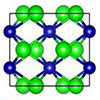
| Negative Thermal Expansion (NTE) in cobalt zirconide. By hydrogenating cobalt zirconide, the team changed the crystalline structure to induce a different form of NTE. While cobalt zirconide shows NTE over a wide temperature range, the same phenomenon in its hydrogenated version is only seen below the Curie temperature, where a ferromagnetic phase is seen. (Image: Tokyo Metropolitan University)
|
|
Cobalt zirconide also happens to absorb hydrogen readily. While characterizing the compound’s hydrogen-storage behavior, the researchers found that hydrogenated cobalt zirconide likewise exhibits uniaxial negative thermal expansion, but through an entirely different physical process. Below the Curie temperature, where magnetic moments align to produce a ferromagnetic phase, heating causes the hydrogenated material to shrink along one axis while expanding along another. The contraction is clearly tied to the onset of ferromagnetic order rather than to lattice vibrations.
|
|
“The hydrogenation changed the crystalline structure enough to trigger a completely different form of negative thermal expansion,” said Yoshikazu Mizuguchi. The observation is especially notable because cobalt zirconide is also a known superconductor, making the hydrogenated compound a rare system in which ferromagnetism, superconductivity, and negative thermal expansion coexist and interact.
|
|
Critically, the amount of hydrogen incorporated into the cobalt zirconide lattice can be tuned during synthesis. This tunability implies that the magnitude of the volume change associated with negative thermal expansion could be deliberately controlled. Such a capability would represent a fundamentally new paradigm for creating custom compounds engineered to exhibit zero net volume change under thermal cycling, an essential property for components in nanoscale devices where dimensional stability is paramount.
|
|
The study establishes hydrogenation as a practical lever for tailoring negative thermal expansion behavior in transition metal zirconides. By linking the phenomenon to a magnetic phase transition rather than purely vibrational effects, the findings expand the mechanistic toolkit available to materials scientists pursuing thermally invariant composites for high-precision applications.
|