
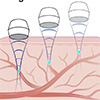
Apr 13, 2026 Researchers have developed a noninvasive method to create light anywhere in the body. Their technique, which uses ultrasound waves to activate light-emitting nanoparticles, could be used to manipulate cell signals or facilitate light-based medical treatments in the future. (Nanowerk News) Light has an increasing number of applications...
Precision boost for quantum sensor technology
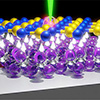
Apr 13, 2026 Physicists have determined the quantum dynamics in a two-dimensional layer of boron nitride. Their findings form the basis for future applications in quantum technology. (Nanowerk News) A key factor for the performance of sensors is the speed at which the system returns to its initial state after...
The local universe’s expansion rate is clearer than ever, but still doesn’t add up
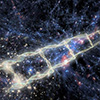
Apr 12, 2026 A new synthesis of astronomical measurements confirms a persistent mismatch that could point to physics beyond current models. (Nanowerk News) An international collaboration of astronomers has produced one of the most precise measurements yet of how fast the local Universe is expanding. The result deepens one of...
Superconductivity control in twisted bilayer graphene opens path to energy efficient electronics
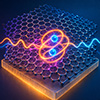
Apr 12, 2026 Researchers show superconductivity can be tuned by the surrounding environment in twisted bilayer graphene, pointing to more efficient electronics and quantum devices. (Nanowerk News) Researchers have discovered evidence that superconductivity can be controlled by influencing the surrounding environment, a finding that may lead to more efficient electronics...
Chemically modified wood captures sunlight and stores it as heat
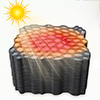
Apr 11, 2026 A layered coating on delignified wood enables solar heat storage and electricity generation without carbonization, while adding water, fire, and microbial resistance. (Nanowerk Spotlight) Photothermal conversion can in principle capture more than 90% of incoming solar radiation, far exceeding the roughly 25% ceiling that bounds conventional photovoltaics....
Researchers demonstrates universal 2D growth

Apr 10, 2026 The Kardar Parisi Zhang equation models surface growth. After forty years, researchers confirmed its two dimensional behavior using polaritons in engineered materials. (Nanowerk News) Crystals, bacterial colonies, flame fronts: the growth of surfaces was first described in the 1980s by the Kardar–Parisi–Zhang equation. Since then, it has...
Magnetic biochar nanocomposite rapidly removes antibiotic pollution from wastewater
Apr 10, 2026 Researchers developed a biochar nanocomposite that removes tetracycline from water by adsorption and light driven breakdown, achieving over ninety percent removal and enabling reuse. (Nanowerk News) Antibiotic contamination in water is a growing global concern, threatening ecosystems and human health. Now, researchers have developed a novel biochar-based...
Solid oxide cell research needs unified materials and systems design, review argues

Apr 10, 2026 Researchers argue that progress in SOFCs and SOECs depends on linking materials, electrochemistry, and system engineering through a reverse-guided design strategy. (Nanowerk News) A review from Northwestern Polytechnical University and Fuzhou University contends that progress in solid oxide fuel cells and solid oxide electrolysis cells has stalled...
A biodegradable supercapacitor delivers acupuncture-style pain relief

Apr 10, 2026 A biodegradable implant powered by a new single-atom iron electrode delivered acupuncture-style pain relief in mice, then dissolved harmlessly in the body. (Nanowerk Spotlight) Supercapacitors sit between batteries and ordinary capacitors in the energy storage landscape. They charge in seconds rather than hours, survive hundreds of thousands...
‘Poor man’s majoranas’ can be used as quantum spin probes
Apr 10, 2026 A theoretical study shows that quantum excitations without topological protection, previously considered experimental limitations, can serve as spectroscopic tools for identifying quantum statistics. (Nanowerk News) A “Majorana fermion” is a particle that would be identical to its antiparticle. Such an object has not yet been found. However,...