
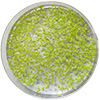
Mar 20, 2026 Researchers have successfully used a fertilizer, which can be produced solely with Martian resources, to grow edible biomass. (Nanowerk News) The fertilizer is based on cyanobacteria, also known as blue-green algae. They have several properties that make them particularly suitable for the use on the Red Planet:...
Blog
4D-printed magneto-plasmonic microrobots de-ice exactly where and when needed
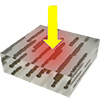
Mar 20, 2026 4D-printed microrobots with embedded gold-magnetite nanofillers use magnetic fields for navigation and near-infrared light for plasmonic heating to de-ice surfaces with programmable spatial and temporal precision. (Nanowerk Spotlight) Aircraft that accumulate ice on their wings before departure must be sprayed with heated glycol to restore safe airflow,...
Engineered bioprocess converts CO2 into amino acids at 97 percent efficiency
Mar 20, 2026 A new bioprocess achieves 97% CO2-to-amino-acid conversion while cutting costs by over 40%, bringing carbon-negative chemical manufacturing closer to industrial scale. (Nanowerk News) The building blocks of proteins, amino acids are essential for all living things. Twenty different amino acids build the thousands of proteins that carry...
Hydrogel stiffens 27,000-fold in seconds when heated then softens back when cooled
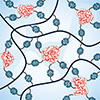
Mar 19, 2026 A new hydrogel stiffens 27,000-fold upon heating by transforming weak internal bonds into strong permanent ones, then gradually softens at room temperature. (Nanowerk Spotlight) Most synthetic polymers cannot change their mechanical properties after manufacturing. A rubber band stays stretchy; a hard plastic stays rigid. Biological tissues, by...
AI predicts how nanodiamonds become new carbon nanostructures under extreme conditions

Mar 19, 2026 Researchers use supercomputers and artificial intelligence to predict how carbon transforms under extreme heat and pressure, paving the way for revolutionary materials. (Nanowerk News) Carbon is everywhere. It forms the graphite in pencils, the diamonds in jewelry and the molecules that make up every living thing. But...
Gravitational waves leave imprints on light emitted by atoms

Mar 19, 2026 Gravitational waves from violent cosmic events distort spacetime. A new study proposes detecting them by observing how they alter light emitted by atoms, pending experiments. (Nanowerk News) Gravitational waves are ripples in spacetime produced by violent cosmic events, such as the merging of black holes. So far,...
More stable perovskite solar cells for extreme temperature fluctuations

Mar 19, 2026 A new method strengthens perovskite solar cells by stabilizing grains and interfaces, enabling reliable performance under extreme temperature swings in orbit and harsh environments like space. (Nanowerk News) The Aydin Group at LMU has unveiled a novel strategy for making perovskite solar cells more robust against extreme...
New doping method solves the contact problem limiting perovskite electronics

Mar 19, 2026 Researchers have discovered a way to dramatically improve how electrical current enters perovskite semiconductors, an emerging class of materials with enormous potential for next-generation electronics. (Nanowerk News) A longstanding challenge has been the metal–perovskite interface, where electrical current often struggles to pass efficiently from the metal electrode...
Aromatic hydrocarbons suppress diffusion in carbon nanotubes during gasification
Mar 19, 2026 Aromatic molecules adsorb onto carbon nanotube walls via pi-pi interactions, slowing supercritical water flow and reducing gasification efficiency, a new simulation study finds. (Nanowerk News) A molecular dynamics study shows that aromatic hydrocarbons form strong π–π interactions with carbon nanotube walls, severely reducing the diffusion of both...
Lab-grown muscles bulk up on their own to power a swimming robot
Mar 19, 2026 Scientists have developed a self-training method that strengthens lab-grown muscle tissues around the clock, and used them to power a living-muscle robot that swims faster than any of its predecessors. (Nanowerk News) NUS researchers have developed a platform that lets lab-grown muscle tissues train themselves to record-breaking...