| Jun 01, 2026 |
Tiny hydrogel capsules let labs grow cells in tissue-like 3D conditions using simple tools, making advanced cell culture cheaper and more accessible.
|
|
(Nanowerk News) Cells are typically studied outside the body under controlled laboratory conditions. However, conventional flat cell culture methods do not fully reproduce the complex three-dimensional environments that cells experience in living tissues. Tiny hydrogel capsules offer one way to culture cells in a confined three-dimensional space, allowing researchers to study how cells grow, organize and interact under more tissue like conditions. Current methods to do this come with a high cost and set of requirements that put such research out of reach to many.
|
|
“Using conventional methods, creating these cell-containing capsules requires what is known as a microfluidic device to encapsulate cells one by one. The use of microfluidic devices requires expensive and complex specialized equipment, which can limit accessibility and scalability,” said Professor Sadao Ota of the Research Center for Advanced Science and Technology at the University of Tokyo. “So we invented a different approach. Instead of encapsulating cells individually during droplet generation, we first prepared uniform gelatin beads as templates in advance. Cells were then introduced into these templates during what we call the emulsion-templated gel-embedding (ETE) process, followed by formation of the surrounding hydrogel shell to yield cell-containing capsules.”
|
 |
| Emulsion-templated gel embedding. The step-by-step process researchers used to create tiny hydrogel capsules containing living cells. First, the researchers started with tiny uniform gelatin beads that acted as templates. These beads were mixed with cells and oil to form microscopic droplets. By carefully warming and cooling the mixture, the gelatin temporarily melted and then solidified again, trapping cells inside the beads. Next, the cell-containing gelatin beads were coated with another material called agarose, which forms a thin outer shell. (Image: Reproduced from DOI:10.1021/acsbiomaterials.5c02129, CC BY) (click on image to enlarge)
|
|
The team’s findings have been published in ACS Biomaterials Science & Engineering (“Emulsion-Templated Gel Embedding: A Microfluidics-Free Method for Scalable Cell Encapsulation in Hydrogel Microcapsules”).
|
|
ETE needs only simple laboratory tools, such as a vortex mixer and temperature controls, which are common in many labs. Using ETE, the team demonstrated scalable production of more than 100,000 cell-containing capsules in a single workflow. Cells grown inside the capsules remained viable and proliferated comparably to those produced using conventional microfluidic approaches.
|
|
The team’s method worked with suspension cells, which grow while floating freely in culture, and the researchers also explored its applicability to adherent cell types, which normally grow while attached to other cells or supporting materials. Tests showed that different cell types can exist within capsules in predictable ways, potentially enabling future studies looking into dynamic interactions such as those seen between tumors and immune cells.
|
|
“One of the biggest challenges was achieving two goals at the same time: producing capsules with uniform size, while also ensuring the cells remained healthy,” said Ota. “Simpler methods often yield more variation in capsule size or can even damage cells during the process. By using prefabricated gelatin beads as templates, we were able to control capsule size while maintaining cell viability.”
|
|
The capsules are customizable, and researchers can alter their size and properties depending on their usage. This flexibility could make the technique useful in areas including drug screening, regenerative medicine, and basic cell biology research.
|
 |
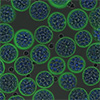
| Cell proliferation. Microscope images of U937 cells growing inside hollow agarose microcapsules produced using the ETE method. The cells survive encapsulation and even proliferated over several days with the capsule structures remaining intact during growth. (Image: Reproduced from DOI:10.1021/acsbiomaterials.5c02129, CC BY)
|
|
Although the technology is currently aimed at research use, medical applications may be possible too. Hydrogel capsules could potentially help protect transplanted cells from immune-system attack, though this possibility was not tested in the study and requires further investigation.
|
|
“At this stage, the technology is primarily intended for research applications, such as drug screening and cell biology studies. We did not test primary or patient-derived cells in this study, so their compatibility remains to be determined. Further optimization of the system may be needed to better support the growth of adherent cells and other cell types,” said Ota. “We hope this method will allow more laboratories to perform advanced cell culture experiments without requiring specialized engineering expertise. By making the materials and protocols more accessible, we aim to support broader adoption and collaborative development of this technology.”
|