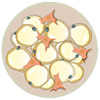
Mineral casts of cancer cell surfaces reprogram fat cells into stem cells and improve insulin sensitivity in obese mice through purely mechanical cues.
(Nanowerk Spotlight) Cancer cells corrupt their neighbors. As a tumor expands, it doesn’t merely compress adjacent tissue; it transforms it. Fat cells caught in a tumor’s path lose their lipid stores, abandon their mature identity, and revert to a primitive, stem cell-like state, one that feeds further tumor growth.
The reverted fat cells, however, are not simply damaged. They acquire genuine multipotency, the ability to become bone, muscle, or new fat, suggesting a powerful regenerative resource. But under normal circumstances this potential serves the tumor, fueling its progression and metastasis. The central challenge has been to isolate the mechanical signals that trigger the transformation from the dangerous biological context that accompanies it.
Previous work showed that compressive forces mimicking the physical pressure of a growing mass can drive fat cell reversion. Osmotic stress, stiff implants, and direct mechanical loading all produced similar effects. Yet a tumor’s influence extends beyond bulk pressure.
Cancer cells present complex surface architectures at the nanoscale, ridges, protrusions, and valleys that differ dramatically between indolent and aggressive tumors. If topology alone could reprogram fat cells, it would offer a way to harness the tumor’s mechanical toolkit without any of its biology, a physical signal that could be copied, manufactured, and deployed as therapy.
By coating these cells in silica through a biomineralization process and then calcinating the constructs at 600 °C, they created purely mineral replicas that preserved the original cellular topography down to the nanoscale while eliminating every trace of biological material.
Decoupling cancer cell topology for exploring tissue communication with adipose tissue. (A) Schematic illustration of decoupling cell topology via cell-templated mineralization for either in vitro or in vivo studies of its impact on adipocytes. (B) Schematic diagrams showing the formation of highly invasive mesenchymal-like cancer cell substrates by MDA-MB-231 cells and less-invasive epithelial-like cancer cell substrates by MCF-7 cells, respectively. (C) SEM imaging of mineralized highly invasive cancer cells (MDA-MB-231) on a glass substrate at different scales. Scale bar, 5 µm (left), 10 µm (middle), and 100 µm (right). (D) SEM imaging of mineralized, less invasive cancer cells (MCF-7) on a glass substrate at different scales. Scale bar, 5 µm (left), 10 µm (middle), and 100 µm (right). (E) AFM image of MDA-MB-231 cells mineralized on a glass substrate. The right image shows the height profile corresponding to the white dashed line in the left image. Scale bar, 2 µm. (F) AFM image of MCF-7 cells mineralized on a glass substrate. The right image shows the height profile corresponding to the white dashed line in the left image. Scale bar, 2 µm. (Image: Reproduced with permission from Wiley-VCH Verlag) (click on image to enlarge)
ubstrates derived from highly invasive cells exhibited substantially greater surface roughness, as confirmed by atomic force microscopy. The critical test was whether this difference in texture would alter fat cell behavior. When primary mouse fat cells were cultured on these substrates, the high-roughness surfaces drove dedifferentiation far more rapidly. By day 15, virtually no mature fat cells remained on the rough substrates, whereas about 30% of cells on flat controls kept their mature phenotype.
A reasonable objection is that the two cancer cell lines differ not only in roughness but also in overall shape, one round, the other elongated. To rule out shape as the driver, the team expanded the comparison to six cell lines spanning both round and elongated morphologies with varying roughness. Within each shape category, higher roughness consistently accelerated fat cell reversion, regardless of whether the template cell was cancerous. This established surface topology as the primary mechanical determinant.
The reprogrammed fat cells had acquired a new identity. They could generate both bone and fat tissue when given the appropriate chemical cues, and they expressed surface markers characteristic of mesenchymal stem cells, a versatile cell type used in regenerative medicine. Their capacity to absorb glucose increased roughly six-fold.
At the genetic level, fat-storage programs shut down progressively while signaling pathways known to respond to mechanical forces, including the Wnt and Hippo pathways, switched on. Single-cell sequencing revealed two subpopulations: one that had completed the transition and another still mid-process, tracing a continuous trajectory from fat cell to stem cell identity.
The mechanism centers on the nucleus. Fat cells on rough substrates displayed pronounced nuclear deformation, their nuclei adopting triangular, rectangular, and curved shapes instead of remaining round. A key structural protein of the nuclear envelope redistributed unevenly, concentrating toward the center rather than spreading uniformly, a sign of uneven mechanical strain imposed by the irregular surface beneath the cell.
Measurements of protein movement showed that rough substrates increased the rate at which proteins entered the nucleus without changing the rate of export. The net effect was that signaling proteins accumulated inside the nucleus at higher concentrations, activating programs that drive the cell away from its fat-storing identity. Computer simulations confirmed the picture: a rugged surface creates multiple contact points with the nucleus, generating uneven mechanical stress that a flat surface cannot produce.
To translate these findings into a usable format, the researchers fabricated injectable microparticles they called TMMs, for tumor-mimicking microparticles. Rather than templating cells on flat glass, they mineralized intact cancer cells that had been gently scraped from culture dishes to preserve their native surface architecture. The resulting silica particles retained the full surface complexity and could be suspended in solution for subcutaneous injection.
In healthy mice, TMMs reduced the size of subcutaneous fat pads compared with smooth spherical silica particles of matched size and composition. Tissue analysis at injection sites showed fewer, smaller fat cells alongside increased connective tissue and higher cell density, and genes responsible for maintaining fat cell identity were suppressed. The effect was local: inflammation markers showed no significant difference between treated and control sites, confirming that the tissue changes were driven by mechanical reprogramming rather than an immune response.
The therapeutic test came in obese mice maintained on a high-fat diet. A course of TMM injections improved insulin sensitivity, meaning the animals’ cells responded more effectively to insulin. The study is transparent about what the particles did not achieve: body weight differences did not reach statistical significance over eight weeks, and oral glucose tolerance showed no improvement.
The authors attribute this gap to continued dysfunction in the insulin-producing cells of the pancreas and persistent insulin resistance in the liver, limitations that improved peripheral insulin sensitivity alone could not overcome. Comprehensive safety testing, including immune profiling, blood chemistry, organ tissue analysis, and blood cell counts, revealed no signs of toxicity or adverse effects over six weeks of chronic exposure.
The study decouples a destructive feature of tumor biology, the rough and complex surface of invasive cancer cells, from its oncogenic context and repurposes it as an engineering parameter. The generation of stem cell-like cells from abundant fat tissue without genetic manipulation opens a potential route toward therapies built from a patient’s own cells. The metabolic improvements achieved through localized mechanical cues, rather than the systemic disruption characteristic of pharmacological weight-loss agents, sketch a distinct strategy for managing insulin resistance in obesity.
Significant questions remain, including whether the effect can be strengthened to produce sustained weight loss and how the particles would perform across different fat depots and in larger animal models. But the proof of concept is clear: a tumor’s physical fingerprint, emptied of its biology, can be turned against the metabolic consequences of obesity.
For authors and communications departmentsclick to open
Lay summary
Prefilled posts
ORCID information
Yiwei Li (Huazhong University of Science and Technology)
, 0000-0002-5203-0290 corresponding author
Nanowerk Newsletter
Get our Nanotechnology Spotlight updates to your inbox!
Thank you!
You have successfully joined our subscriber list.
Become a Spotlight guest author! Join our large and growing group of guest contributors. Have you just published a scientific paper or have other exciting developments to share with the nanotechnology community? Here is how to publish on nanowerk.com.