
Apr 29, 2026 'Sidewall-poled' lithium niobate device paves way for compact UV sources. (Nanowerk News) Ultraviolet light, beyond its natural abundance from the sun, is used in countless modern applications, from disinfection, to fluorescence of biological materials, to photolithography of computer chips. In the near future, pinpricks of UV light...
Chiral semiconductors can now absorb visible light thanks to a molecular trick
Apr 28, 2026 A dopant molecule accepts electrons from a chiral perovskite host, enabling visible light absorption while preserving the material's left or right-handedness. (Nanowerk News) A University at Buffalo-led team has found a way to help chiral semiconductors, electronic materials whose structures are left- or right-handed like many of...
A shape no engineer would dream up makes thermoelectric generators 8 times better

Apr 28, 2026 A computer-optimized thermoelectric generator with an unconventional shape converts waste heat into electricity 8 times more efficiently than traditional designs. (Nanowerk News) A thermoelectric generator with a shape that no human designer would likely have imagined has now been created by a computer—and it performs more than...
Why stars spin down, or up, before they die
Apr 28, 2026 Magnetic fields in the convection zone drives the rotation evolution of massive stars. (Nanowerk News) From birth to death, stars generally slow by 100 to 1000 times their initial rotation rates; in other words, they spin down. The Sun's total angular momentum has declined as material is...
Robotically assembled building blocks could make construction more efficient and sustainable
Apr 28, 2026 New research suggests constructing a simple building from interlocking subunits should be mechanically feasible and have a much smaller carbon footprint. (Nanowerk News) Robotically assembled building blocks could be a more environmentally friendly method for erecting large-scale structures than some existing construction techniques, according to a new...
Tiny magnetic robots grip, snap and swim with a wave of a magnet
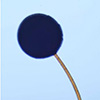
Apr 28, 2026 Researchers' new fabrication technique can produce soft, microscopic structures with magnetically activated moving parts. (Nanowerk News) Under a microscope, a bouquet of lollipop-like structures, each smaller than a grain of sand, waves gently in a Petri dish of liquid. Suddenly, they snap together, like the jaws of...
Ordinary nail polish turns surfaces into removable nanogenerators

Apr 28, 2026 Commercial nail paint can be brushed onto surfaces to create removable triboelectric generators that harvest small mechanical energy for low-power electronics. (Nanowerk Spotlight) Electric charge is easy to create but hard to put to work. A rubbed balloon sticks to a wall, clothes cling after tumbling in...
Turning plastic waste into clean fuel using sunlight

Apr 28, 2026 Scientists are advancing a promising solution to two of the world's biggest challenges - plastic pollution and clean energy - by transforming waste plastics into valuable fuels using sunlight. (Nanowerk News) A new paper led by Adelaide University PhD candidate Xiao Lu explores how solar-powered technologies can...
New nanocomposite enables removal and detection of radioactive iodine in water
Apr 28, 2026 A MOF-based nanocomposite for removing and detecting radioactive iodine, supporting nuclear wastewater treatment and environmental cleanup of long-lived isotopes. (Nanowerk News) Researchers from Hefei Institutes of Physical Science, Chinese Academy of Sciences, have developed a silver-decorated, metal-organic framework (MOF)-derived TiO2-x nanocomposite enriched with oxygen vacancies, enabling both...
The reason nanoscale gaps can produce terahertz radiation
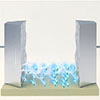
Apr 28, 2026 Plasma forms in gaps ten times smaller than classical theory predicts possible, driven by electron cascades on the substrate surface, enabling 2 W terahertz generation on a chip. (Nanowerk Spotlight) Radio transmitters, microwave ovens, infrared cameras, visible lasers: every major band of the electromagnetic spectrum has its...