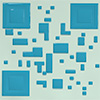
Screen-printed MXene-cellulose labels deliver infrared QR authentication, reversible thermal switching, and rapid 200-second degradation, offering durable industrial anti-counterfeiting with reduced environmental persistence.
(Nanowerk Spotlight) Authentication tools became essential once manufactured goods began moving through long and opaque supply chains. The simplest methods such as serial numbers or reproduced labels were easy to copy. Optical countermeasures introduced specialized printing, including holographic foils, microtext and ultraviolet inks.
Although these features raised the barrier for imitation, each depended on a single behavior visible to the human eye or to a scanner. When the required materials or fabrication steps were understood, duplication remained possible. Electronic authentication attempted to solve this limitation using radio frequency tags and embedded circuits, yet these approaches introduced higher cost, environmental persistence and vulnerabilities such as spoofing and cloning.
Anti-counterfeiting research has shifted toward materials that respond differently to light, heat or electrical input. A security label that appears uniform in visible light but becomes scannable only in the mid-infrared spectrum is more difficult to reproduce.
Two-dimensional transition metal compounds called MXenes meet this need. Their layered structure and surface groups allow them to absorb ultraviolet, visible and near-infrared light efficiently, converting it into heat. At the same time, MXenes emit very little radiation in the mid-infrared, which makes them more difficult to detect thermally. These traits allow patterns that remain concealed to a camera or observer but are readable by thermal imaging systems.
In parallel, TEMPO-oxidized cellulose nanofibers form mechanically stable and biodegradable networks. They provide reinforcement through hydrogen bonding and electrostatic attraction, offering durability without persistent polymer residues.
These complementary properties form the foundation of research published in Advanced Functional Materials (“Screen‐Printed Multifunctional Anti‐Counterfeiting MXene‐Based Device with Ultra‐Fast On‐Demand Degradability”). The study introduces a screen-printed MXene anti-counterfeiting device reinforced with TEMPO-oxidized cellulose nanofibers (TOCNF). The system is designed to conceal information under ordinary inspection, reveal authentication codes through mid-infrared imaging, permit active thermal switching and undergo rapid chemical degradation at end of life.
Schematic illustration of the MXene-TOCNF anti-counterfeiting device featuring extensive hydrogen bonding, enabling multi-stimuli responsiveness
and ultra-fast degradation. (Image: Reproduced with permission from Wiley-VCH Verlag) (click on image to enlarge)
The device centers on Ti₃C₂Tₓ MXene, a titanium carbide with surface terminations including ═O, ─OH and ─F. These terminations provide reactive bonding sites. The cellulose nanofiber component carries a high density of carboxyl groups introduced through controlled oxidation. When combined, the MXene and nanofiber form a three-dimensional hydrogen-bonded network.
This structure improves printability. MXene slurry alone tends to shear poorly and produce inconsistent coatings. The MXene-TOCNF ink behaves as a shear-thinning fluid. It flows under the mechanical force of screen-printing and recovers structure afterward, producing stable high-resolution patterns on flexible substrates. This property is essential for roll-to-roll manufacturing, packaging integration and batch processing.
Mechanical characterization demonstrates the reinforced performance. The MXene-TOCNF layer exhibits a 125.9 % increase in critical load compared to pure MXene coatings and maintains more than 95 % of its structural integrity after 180 minutes of ultrasonic agitation. These results indicate that the cellulose component acts as a nanoscale framework that locks MXene sheets into place, reducing delamination and improving abrasion resistance. For labeling applications that encounter handling, vibration and temperature cycling, this durability is critical.
The spectral behavior of Ti₃C₂Tₓ enables the label’s concealment and thermal detection. Between 0.3 μm and 1.2 μm the material strongly absorbs light due to localized surface plasmon resonance, a collective oscillation of electrons that converts light into heat with high efficiency.
In the mid-infrared region, the material behaves more like a metal, reflecting or transmitting energy rather than absorbing it. According to Kirchhoff’s law this results in low emissivity. Ti₃C₂Tₓ coatings exhibit an emissivity of about 17 %, comparable to stainless-steel thin films and lower than graphene-based coatings. This low emissivity reduces the contrast visible to infrared cameras observing a passive surface.
The researchers apply this property by screen-printing a MXene-cellulose quick-response code onto a black substrate. Under visible inspection the pattern blends into the background and cannot be read. When viewed with a mid-infrared camera, the MXene areas emit less radiation and appear darker, revealing the code.
This infrared-readable QR authentication mechanism supports use in logistics environments, product lifecycle tracing and warehouse inspection systems where surface markings must be concealed from general view but machine-readable on demand.
To implement controllable encryption, the device incorporates a temperature-responsive overlayer. At ambient conditions the overlayer is opaque. When heated above its transition point it becomes transparent. Because the MXene-TOCNF layer converts light or current into heat efficiently, it functions as the heater. Illumination or an applied voltage raises the temperature, temporarily exposing the code to a scanner. Cooling restores opacity and conceals the information. This reversible approach provides a second authentication pathway distinct from infrared emissivity.
Photothermal tests show that sunlight at 800 W m⁻² heats the printed layer to more than 110 °C in under 200 seconds, which is enough to switch the temperature-responsive film from opaque to transparent. The same effect can be produced electrically. At a moderate driving voltage, the surface reaches the required temperature in roughly 25 seconds, allowing the hidden code to be read.
Under light irradiation the transition happens even faster, in about 10 seconds. The device withstands more than one hundred heating and cooling cycles without noticeable loss of performance, and the codes remain readable at inspection distances of 10 to 60 cm.
End-of-life disposal is addressed directly. The composite layer can be degraded by immersing the device in hydrogen peroxide and applying ultrasound. Structural analysis shows the conversion of Ti₃C₂Tₓ into TiO₂ in the anatase phase. The Ti–C bonds disappear and the original MXene structure is no longer detectable. Complete degradation occurs within 200 seconds.
This is significantly faster than many existing MXene-based devices, which require days to break down. Biocompatibility tests using ATDC5 chondrocyte cells show high cell viability and low mortality after exposure to the degradation products for 24 hours and 48 hours. The authors describe these outputs as low toxicity, which supports environmentally responsible disposal and reduces electronic waste.
This work demonstrates an approach that unifies spectral stealth, thermal switching and rapid chemical deactivation. The MXene-cellulose composite enables mechanically robust screen-printed labeling compatible with industrial processes. It offers authentication through mid-infrared imaging, reversible thermal encryption and a defined degradation route that prevents persistent residues. The concept provides a direction for anti-counterfeiting devices that treat performance and end-of-life impact as linked engineering constraints rather than isolated considerations.
For authors and communications departmentsclick to open
Lay summary
Prefilled posts
Nanowerk Newsletter
Get our Nanotechnology Spotlight updates to your inbox!
Thank you!
You have successfully joined our subscriber list.
Become a Spotlight guest author! Join our large and growing group of guest contributors. Have you just published a scientific paper or have other exciting developments to share with the nanotechnology community? Here is how to publish on nanowerk.com.