| Apr 08, 2026 |
A three-layer electrode using silver nanowire networks as both conductors and catalysts achieved 86% selectivity for converting CO2 into multi-carbon products.
(Nanowerk News) Researchers have developed a novel electrode architecture that uses silver nanowire networks to convert carbon dioxide into ethylene and other multi-carbon chemicals with up to 86% selectivity. The team, led by Professor Hyunjoon Song from KAIST’s Department of Chemistry, designed a three-layer electrode structure that overcomes a persistent problem in electrochemical CO2 conversion: electrode flooding, where liquid electrolyte seeps into the electrode and blocks CO2 from reaching catalytic surfaces.
|
|
The findings are published in Advanced Science (“Overlaid Conductive Silver Nanowire Networks on Gas Diffusion Electrodes for High-Performance Electrochemical CO₂-to-C₂₊ Conversion”)
|
Key Findings
- A stacked silver nanowire network electrode achieved 79% selectivity for multi-carbon products in alkaline electrolytes and 86% in neutral electrolytes.
- Silver nanowires served a dual role as both electrical conductors and active catalysts, generating carbon monoxide that feeds into adjacent copper catalysts for tandem reactions.
- The electrode maintained stable performance for more than 50 hours without degradation.
|
|
Electrode flooding has been a persistent bottleneck in electrochemical CO2 reduction. When liquid electrolyte saturates the porous electrode, it reduces the gas-phase space where CO2 molecules need to reach catalytic sites. Hydrophobic coatings can block water intrusion, but they also tend to be poor electrical conductors, requiring additional components that add complexity to the system.
|
|
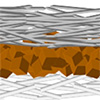
The KAIST team addressed both problems simultaneously with a three-layer design. The bottom layer is a hydrophobic substrate that repels water. Above it sits a copper-based catalyst layer where CO2 reduction takes place. On top, an overlaid network of ultrafine silver nanowires acts as a current collector that distributes electrical charge across the electrode surface while the hydrophobic base prevents electrolyte from flooding the structure.
|
 |
| Schematic diagram of a porous polymer–copper oxide catalyst silver nanowire network electrode structure. (Image: KAIST)
|
|
A key finding was that the silver nanowires do not merely conduct electricity. During CO2 reduction, the nanowires themselves catalyze the conversion of CO2 into carbon monoxide. That carbon monoxide then migrates to neighboring copper oxide catalyst sites, where it undergoes further reduction into multi-carbon compounds such as ethylene. This sequential two-step process, known as tandem catalysis, significantly boosts the yield of valuable products compared to conventional single-catalyst systems.
|
|
Performance testing showed the electrode achieved 79% selectivity toward C2+ products, meaning compounds with two or more carbon atoms, when operated in alkaline electrolyte. In neutral electrolyte conditions, selectivity rose to 86%. Both figures represent leading performance levels for electrochemical CO2 conversion. Equally important, the electrode ran continuously for over 50 hours with no measurable decline in output, addressing the durability limitations that have hampered earlier electrode designs.
|
|
Professor Hyunjoon Song stated, “This study is significant in showing that silver nanowires not only serve as electrical conductors but also directly participate in chemical reactions,” adding, “This approach provides a new design strategy that can be extended to converting CO₂ into a wide range of valuable products such as ethanol and fuels.”
|