| Dec 09, 2025 |
Scientists boosted brain-computer interface performance by 2x using nanoparticles to deliver anti-inflammatory drugs directly to implanted electrodes.
|
|
(Nanowerk News) Scientists working to enhance brain-computer interface (BCI) technology—which allows people to control devices with their thoughts—have found they can improve the performance of electrodes implanted in the brain by targeted delivery of anti-inflammatory drugs.
|
|
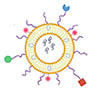
Case Western Reserve University researchers, in collaboration with Haima Therapeutics, used a novel “platelet-inspired nanoparticle” to deliver an anti-inflammatory drug directly to where BCI electrodes were implanted. The drug doubled the effectiveness of the electrodes, according to the research, recently published in Nature Communications (“Dexamethasone-loaded platelet-inspired nanoparticles improve intracortical microelectrode recording performance”).
|
|
“When we implant devices in the brain, it disrupts the blood-brain barrier, and we knew platelets would be showing up to seal the breach,” said neural engineer Andrew Shoffstall, the Nord Distinguished Associate Professor of Biomedical Engineering in the Case School of Engineering and Case Western Reserve School of Medicine. “We used these nanoparticles that act like platelets as a Trojan horse to target the site where we’re putting the device.”
|
Brain-computer interface
|
|
BCI allows people with spinal cord injury or prosthetic limbs to control a limb or operate an external device just by thinking about it, through electrodes in the brain that sense activity in neurons. But a barrier to advancing the technology is inflammation that essentially gums up the electrodes and causes them to fail over time.
|
|
“The brain recognizes the implant as a foreign object—like a splinter—and it responds with inflammation to try to isolate and neutralize it,” Shoffstall said.
|
|
The team tested the targeted approach using implanted microelectrodes that record brain activity. The drug-loaded nanoparticles improved electrode performance, while giving the same drug systemically actually made things worse.
|
|
Shoffstall, who is also a principal investigator at the Advanced Platform Technology Center (APT) within the VA Northeast Ohio Healthcare System, said he plans to advance the BCI-related research toward translation, beginning with safety studies.
|
Synthetic platelets
|
|
The breakthrough relies on platelet-inspired nanoparticle technology that Anirban Sen Gupta, Wallace R. Persons Professor of biomedical engineering, developed, patented and licensed to Haima Therapeutics, a biotechnology start-up he co-founded with CWRU alumna and Chief Operating Officer Christa Pawlowski.
|
|
“The main job of platelets is to form a clot and stop bleeding, so they naturally accumulate at the site of an injury,” said Sen Gupta, who is also an investigator at the APT Center as well as a member of the Case Comprehensive Cancer Center.
|
|
Potential clinical applications for the company’s product, SynthoPlate, include mitigating life-threatening bleeding and targeted drug delivery. For this study, Haima manufactured the drug-containing synthetic platelet nanoparticles.
|
|
The research was supported, in part, by funding from the U.S. Department of Veterans Affairs, the U.S. National Institutes of Health and the National Institute of Biomedical Imaging and Bioengineering.
|
Potential future applications
|
|
“Because the particle itself is a platform, you can load it with any drug, as long as you pick a disease or pathology where platelets can accumulate,” Sen Gupta said. “Really, it has potential for treating any disease that involves vascular injury and inflammation, from stroke and heart attack to autoimmune disorders like rheumatoid arthritis or infectious diseases like sepsis.”
|