| Apr 09, 2026 |
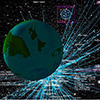
New exoplanet database visualizes planets in 3D star maps, simulates surface views, and estimates environments, with a time-enabled 4D version coming soon.
|
|
(Nanowerk News) A research group led by Professor Yosuke Alexandre Yamashiki (Graduate School of Advanced Integrated Studies in Human Survivability, Kyoto University), Assistant Professor Takanori Sasaki (Graduate School of Science), and Dr Takao Doi (Graduate School of Agriculture; astronaut and Visiting Professor at Ryukoku University) has released the exoplanet database “EXOKYOTO3D” and announced its extended version, “EXOKYOTO4D”, which incorporates a temporal dimension.
|
|
The group originally launched the Japanese-language exoplanet database “ExoKyoto” in 2016 and has since advanced research on planetary environments, as well as educational and outreach applications. In particular, their work has contributed to the evaluation of cosmic radiation environments associated with stellar flares, expanding into broader planetary environment studies.
|
|
The newly released EXOKYOTO3D is a significantly enhanced next-generation database built upon these achievements. It visualizes exoplanets within a three-dimensional stellar map and integrates multiple advanced functions, including estimation of planetary environments based on stellar spectra and orbital parameters, generation of three-dimensional artistic renderings of planetary surfaces, and simulation of the surrounding sky as seen from individual exoplanets. These features provide a comprehensive and multidimensional platform not found in conventional databases.
|
|
As part of a long-term high school–university collaboration, the project has also worked with Shiga Prefectural Moriyama High School for over a decade to produce artistic visualizations of exoplanets. Some of these student-created images are incorporated into the system, representing a successful integration of education and research.
|
|
In addition, Dr. Vladimir Airapetian of NASA’s Goddard Space Flight Center (Specially Appointed Professor at Kyoto University) participated in the press conference online and highlighted the international significance and future potential of the project.
|
|
The development also involved contributions from Researcher Keiya Murashima (GSAIS), Rio Fukai (Faculty of Engineering), and others who participated in the press event. Notably, Murashima has been involved in the project since its early development phase approximately ten years ago. Additional contributions include texture generation by Seimu Shirakashi (Faculty of Medicine) and system migration to 3D by Natsumi Iwato (Engineering graduate).
|
|
The extended version, EXOKYOTO4D, is designed to incorporate temporal analysis capabilities, including the reconstruction of celestial configurations for arbitrary dates and locations on Earth, as well as prediction of exoplanet transits. Public release is planned for around July 2026.
|
|
This database is expected to contribute not only to the advancement of exoplanet research, but also to broader applications in space environment studies, habitability research, and innovative educational and outreach activities.
|
|
The project has also been covered by major media outlets in Japan (see the link below).
|
|
EXOKYOTO3D is currently in a preview phase and is being made available upon request through a dedicated website. The system is primarily designed for macOS, with optimal performance on Apple Silicon (M1 or later).
|