| Mar 23, 2026 |
Researchers use rapid thermal processing to convert ZIF-67 into MOF-derived carbon nanotube catalysts with nickel-cobalt nanoparticles in 30 minutes.
(Nanowerk News) Researchers at Jiangsu University have developed a way to synthesize MOF-derived carbon nanotube catalysts in roughly 30 minutes using rapid thermal processing, cutting production time and energy consumption compared with conventional pyrolysis (Frontiers of Materials Science, “Blazing fast MOF magic: carbon nanotubes derived from MOFs for catalysis”).
|
Key Findings
- Rapid thermal processing of ZIF-67 produces carbon nanotube-metal nanoparticle composites in approximately 30 minutes, compared with hours for standard pyrolysis.
- The resulting C-CoNi catalyst achieves 80% styrene conversion with 50–60% selectivity toward styrene oxide.
- The material retains surface areas of 208–225 m²/g while integrating carbon nanotubes and nickel-cobalt nanoparticles within a porous carbon matrix.
|
|
Metal-organic frameworks are crystalline porous materials built from metal ions connected by organic linker molecules. Their ordered structures, large surface areas, and tunable pore sizes make them attractive precursors for functional carbon materials. But converting MOFs into carbon-based catalysts typically requires pyrolysis, a slow heating process that can take many hours and degrade the structural features that make MOFs valuable.
|
 |
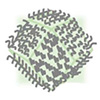
| CNT-Co/Ni nanocomposites synthesized via rapid thermal processing treatment of ZIF-67 for selective epoxidation of styrene. (Image: Reproduced from DOI:10.1007/s11706-025-0750-z, CC BY)
|
|
The team led by Prof. Long Zhang at Jiangsu University’s Institute of Green Chemistry and Chemical Technology applied rapid thermal processing to ZIF-67, a zeolitic imidazolate framework based on cobalt. Instead of slowly ramping temperatures over extended periods, the method delivers intense heat in a short burst, completing the conversion in about 30 minutes.
|
|
The product, designated C-CoNi, has a distinctive architecture. Carbon nanotubes grow from the framework while nickel-cobalt nanoparticles disperse uniformly throughout a porous carbon matrix. This structure preserves the porosity and surface area of the original MOF while introducing additional catalytic active sites. Surface area measurements placed the materials between approximately 208 and 225 square meters per gram.
|
|
The researchers tested C-CoNi in the epoxidation of styrene, an industrially relevant reaction that produces styrene oxide, a chemical intermediate used in perfumes, pharmaceuticals, and epoxy resins. The catalyst reached 80% styrene conversion with selectivity for styrene oxide between 50% and 60%, establishing it as an effective heterogeneous catalyst for selective oxidation.
|
|
The 30-minute processing window also has practical implications for scale-up. Conventional pyrolysis demands extended heating times and high energy input, both of which limit throughput. Rapid thermal processing could lower those barriers, making MOF-derived catalysts more accessible for industrial use.
|