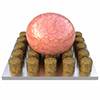
A novel electrode platform detects dopamine from single living brain organoids in real time, enabling non-destructive monitoring of neuronal function at concentrations as low as 7.51 nM.
(Nanowerk Spotlight) Dopamine, the neurotransmitter central to movement, motivation, and the symptoms of Parkinson’s disease, operates in the brain at concentrations below 10 nM, or fewer than 10 billionths of a mole per liter. When researchers grow neurons in laboratory dishes, or cultivate sophisticated brain-like structures called organoids, they face a fundamental problem: do these cells actually function like real neurons?
Scientists can stain them for protein markers. They can examine their shape under a microscope. But proving that lab-grown dopamine neurons release dopamine in physiologically meaningful amounts remains difficult.
Traditional detection methods like high-performance liquid chromatography and enzyme-linked immunosorbent assays can measure dopamine, but they require destroying the cells and collecting relatively large samples. These techniques take hours and cannot track what neurons do in real time.
Optical methods using fluorescent probes can visualize molecular activity in living cells, but they require genetic modification or chemical labeling that can alter cell behavior. The field has lacked a way to simply, repeatedly, and non-destructively measure whether stem-cell-derived neurons have matured enough to release dopamine at meaningful concentrations.
Electrochemical sensing offers an appealing alternative because dopamine is naturally electroactive, meaning it participates in electron-transfer reactions that generate measurable electrical currents. But existing electrochemical sensors struggle with the extremely low dopamine concentrations found in cell cultures. They also suffer from interference by structurally similar molecules and from fouling, where reaction byproducts gum up the electrode surface over time.
A new electrode platform now addresses these limitations. A research team based primarily at Sungkyunkwan University in South Korea developed a sensor they call SIDNEY, an acronym for Smart Interfacial Dopamine-sensing platform for NEurons and organoid physiologY. Published in Advanced Functional Materials (“Graphene Oxide‐Wrapped Hierarchical Gold Nanopillar Hybrids for Real‐Time, Non‐Destructive Dopamine Sensing in Neurons and Midbrain Organoids”), their work demonstrates the first real-time electrochemical detection of dopamine release from living midbrain organoids.
Schematic illustration showing the smart interfacial dopamine (DA)-sensing platform for neurons and organoid physiology (SIDNEY), capable of non-invasive monitoring of DA release from living neurons. (Image: Reproduced with permission from Wiley-VCH Verlag) (click on image to enlarge)
The sensor combines three nanoscale components in a layered structure. The foundation consists of vertically aligned gold nanopillars, each about 300 nm tall, fabricated through laser interference lithography, a technique that creates uniform patterns over large areas without masks. These pillars create a scaffold with dramatically increased surface area compared to flat electrodes.
The researchers decorated these pillars with smaller gold nanoparticles roughly 38 nm in diameter. These particles further expanded the electrochemically active surface and accelerated electron transfer during dopamine’s oxidation reaction.
Finally, they wrapped the entire structure with a thin layer of graphene oxide, a form of oxidized graphene featuring both carbon rings and oxygen-containing functional groups.
Each component serves distinct purposes. The gold structures provide the conductive backbone and electron-transfer hotspots. The graphene oxide layer addresses selectivity through multiple molecular interactions. Its aromatic carbon rings engage in pi-pi stacking, a form of attraction between ring-shaped molecules, that preferentially captures interferents away from the gold surface. Meanwhile, the graphene oxide’s negatively charged carboxyl groups attract dopamine’s positively charged amine group through electrostatic forces, orienting the molecule favorably for electron transfer.
Tests showed that SIDNEY achieved a detection limit of 29.5 nM in standard phosphate-buffered saline. In artificial cerebrospinal fluid, which mimics the brain’s ionic environment, sensitivity improved to 7.51 nM. The platform showed minimal response to common interferents including serotonin and norepinephrine, with signal reduction of only 3.33% when dopamine mixed with these competing molecules, compared to 21–47% signal loss in control electrodes.
The researchers validated their platform across increasingly complex biological systems. They first cultured SH-SY5Y cells, a human neuroblastoma line commonly used in neuroscience research, directly on the electrode surface and differentiated them into dopamine-producing neurons over 12 days. The sensor tracked progressive increases in dopamine release that correlated with expression of dopaminergic marker proteins.
Moving to human induced pluripotent stem cells, the team differentiated these into dopaminergic neurons through neural progenitor intermediates. Mature neurons produced clear dopamine signals averaging 50.96 μA, while undifferentiated stem cells and neural progenitors showed no detectable release. Control experiments with non-neuronal cell types like fibroblasts also produced no signals, confirming specificity.
The most challenging test involved midbrain organoids, structures grown from stem cells that self-organize into tissue resembling the human midbrain. These organoids serve as valuable models for studying Parkinson’s disease and testing potential therapies, but assessing their functional maturity without destroying them remains a persistent obstacle.
The researchers compared early-stage organoids at 35 days of development with mature organoids at 95 days. While both stages expressed dopaminergic markers, electrochemical measurements revealed a clear functional distinction. Early organoids produced signals mostly below the detection threshold. Mature organoids released quantifiable dopamine averaging 9.16 nM. The organoids occupied less than 3% of the sensor surface, demonstrating the platform’s ability to detect dopamine from extremely small biological samples.
Compared to conventional methods, the electrochemical approach offered substantial practical advantages. High-performance liquid chromatography required at least 1 mL of sample per analysis and needed over three hours including preparation. The enzyme-based immunoassay performed poorly in artificial cerebrospinal fluid because high ionic strength interfered with antibody binding. SIDNEY provided results within about one minute from microliter-scale volumes while preserving sample viability for future measurements.
The platform enables something previously impractical: tracking the same organoid’s functional development over time. Because organoids vary substantially in size, cellular composition, and maturation rate, bulk analyses that pool multiple organoids cannot capture individual differences. Single-organoid measurement opens possibilities for more precise drug screening and disease modeling, where researchers could monitor how individual organoids respond to treatments.
The researchers note that because the platform detects electroactive molecules broadly, it could potentially extend to other organoid systems, including liver and cardiac models where biomarkers like uric acid and adenosine play functional roles. As stem-cell-based models become increasingly central to drug discovery and personalized medicine, tools that measure functional output in real time without destroying precious samples address a genuine bottleneck in translating these technologies toward clinical applications.
For authors and communications departmentsclick to open
Lay summary
Prefilled posts
Nanowerk Newsletter
Get our Nanotechnology Spotlight updates to your inbox!
Thank you!
You have successfully joined our subscriber list.
Become a Spotlight guest author! Join our large and growing group of guest contributors. Have you just published a scientific paper or have other exciting developments to share with the nanotechnology community? Here is how to publish on nanowerk.com.