| Mar 16, 2026 |
Researchers experimentally confirm their 2021 hypothesis that electron-phonon coupling, not electron-electron interactions, explains why some metallic oxides are transparent.
(Nanowerk News) Researchers from the Institute of Materials Science of Barcelona (ICMAB-CSIC) Gyanendra Singh and Josep Fontcuberta (MULFOX group) have experimentally confirmed a theory they proposed in 2021 that explains the mechanism by which some metals are transparent.
|
|
Their findings, published in the journal Physical Review Letters (“Oxygen Isotope Fingerprints of Electron-Phonon Coupling in SrVO3 Films”), show that electrons in these materials move more slowly because they interact strongly with the vibrations of the material, so they cannot respond to visible light in the way electrons normally do in common metals. This work has been carried out in close collaboration with the Paul Scherrer Institut and ETH Zurich (both in Switzerland).
|
|
Transparent and electrically conductive materials are essential in technologies such as touch screens and photovoltaic cells. Although metals normally reflect visible light, some metallic oxides behave differently and become unexpectedly transparent. Understanding why this happens is crucial for developing new materials that could one day replace scarce elements used in today’s devices.
|
 |
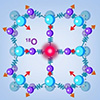
| Carrier dynamics and opical responses in metallic SrVO3 thin films are deeply impacted by the electron-phonon coupling here ad-hoc modifed by Isotopic 18O/16O enrichment. (Image: Courtesy of the authors)
|
What the 2021 theory proposed
|
|
Five years ago, a team also led by Josep Fontcuberta proposed a new theory to explain the transparency of metal oxides, which are used in the touch screens of smartphones and tablets, as well as on the solar cells used in photovoltaic energy.
|
|
They pointed out that the effective mass of electrons in these types of materials is large due to the formation of polarons or couplings between the electrons in motion and the ionic lattice of the material, which is distorted around it. These electrons cannot rapidly oscillate following the electric field of light and let it pass rather than reflect it. Until then, the accepted theory to explain this transparency pointed to the interactions between the electrons themselves.
|
The theory has been experimentally confirmed
|
|
Researchers discovered that these transparent metallic oxides display this property because their reflectivity to visible light is largely suppressed at infrared, and so visible light can propagate through them. This is in sharp contrast with conventional metals that largely reflect light at visible range. This property allows to use transparent metallic oxides in many high-tech applications; for instance, as electrodes in photovoltaic applications or screens in mobiles, to mention a couple of examples.
|
 |
| Sketches of: (a) electron-electron scattering, (b) electron-phonon scattering, and (c) polaron formation in 16O- and 18O substituted SrVO3. (Image: Courtesy of the authors)
|
|
Traditionally, it was accepted the electrons were dressed with a heavy effective mass by the electron-electron interactions in these metals, thus decreasing the plasma frequency (the edge of reflectivity) to infrared, contrasting with most common metallic systems where the plasma frequency is a higher energy.
|
|
One of these transparent metal oxides is the one named SrVO3. Back in 2021, after a systematic analysis of transport and optical data of films of this compound, researchers came to the conclusion that atomic vibrations, phonons, play a major role of the mass enhancement, overruling the conventional electron-electron correlations. This hypothesis allowed a description and understanding of experimental data.
|
|
As any hypothesis should be, it was falsifiable and subject to empirical validation. This has taken sometime. Now, publishing in Physical Rev Letters, new experiments involving a challenging 18O isotopic substitution in SrVO3 films, these authors have conclusively demonstrated the prominent role of phonons on carrier dynamics, enhancing their effective mass and ultimately governing their optical transparency.
|
|
Therefore, these results provide strong empirical support of the relevance of electron phonon coupling to understand the origin of the astonishing and much soaked transparency of metallic oxide thin films.
|
|
Josep Fontcuberta, leader of the ICMAB research group, inspiring and guiding the experiments that confirmed their early hypothesis, said: “This last step (the isotopic substitution instrumental on falsifying our hypothesis)) has required extensive and dedicated work. If phonons are responsible for dressing the carriers, then if the mass of ions in the lattice is changed the corresponding atomic vibrations should be modified and therefore the coupling the itinerant carriers (electrons) altered. To do so we have undertaken a long path that, in collaboration with our partners from PSI-Villingen (Switzerland), involves a partial substitution of 16O in SrVO3 thin films by its heavier isotope 18O, while keeping to total electron density constant.”
|
|
These findings challenge the conventional view centered on electron–electron interactions, establishing instead that electron–phonon coupling is key to understanding the remarkable transparency of metallic oxide thin films.
|
|
This disruptive view overrules conventional electron-electron interaction scenario, and the results reported here and their implications must be reckoned with in any future development.
|