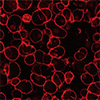
Lipid nanoparticles without drugs can make some cancer cells swell and burst, offering a new way to target tumors resistant to existing treatments.
(Nanowerk Spotlight) The ability to selectively destroy cancer cells without harming surrounding healthy tissue remains one of the most challenging goals in oncology. Chemotherapy and radiation can kill rapidly dividing cells, but their lack of precision often damages healthy tissue. Targeted therapies, such as antibody–drug conjugates and small-molecule inhibitors, have improved selectivity but can lose effectiveness when cancer cells develop resistance. Immunotherapies can activate the body’s own defences but are complex and not always suitable for all patients. These limitations continue to drive the search for alternative ways to induce cancer cell death, especially in tumors resistant to existing treatments.
Nanoparticle-based systems have gained attention for their ability to enter cells and deliver therapeutic agents directly to their targets. Ionizable lipid nanoparticles (LNPs) are already used in RNA vaccines and gene therapies because they can change their charge depending on the acidity of their environment, allowing them to bind and release cargo at specific locations in the body. Until now, they have been seen primarily as inert carriers for drugs or genetic material rather than as active therapeutic agents themselves.
A study published in Advanced Science (“Novel Swelling-Lytic Cell Death Triggered by Cargo-Free Ionizable Lipid Nanoparticles”) by researchers in China has revealed that ionizable LNPs can kill certain cancer cells even when they carry no drugs or genetic material. In these cases, the nanoparticles enter susceptible cells and disrupt their internal balance of salts and water. This disturbance causes the cells to take in water, swell far beyond their normal size, and eventually rupture. The researchers observed that this process is distinct from apoptosis, necroptosis, pyroptosis, and other well-known forms of cell death, representing a separate and previously unrecognized mechanism.
Schematic of cargo-free ipLNP-induced cell death, involving morphology, mechanism, and potential application. Illustration was created in BioRender.com. (Image: Reprinted from DOI:10.1002/advs.202509208, CC BY) (click on image to enlarge)
Tests on different cell types showed that the effect was selective. Certain cancer cell lines, including some liver and lung tumor cells, were highly sensitive to the nanoparticles, while many healthy cell types remained unaffected at comparable doses. Under the microscope, sensitive cells began to swell within hours of treatment until their membranes broke, releasing their contents.
The nanoparticles used in the experiments were composed of ionizable lipids, helper lipids, cholesterol, and polyethylene glycol–lipid conjugates, a formulation similar to those already used in approved RNA-based treatments. The ionizable lipid component proved essential: when replaced with non-ionizable lipids, the nanoparticles no longer caused swelling and rupture. The researchers propose that once inside the cell, these ionizable lipids interact with internal membranes, altering ion concentrations and creating an osmotic imbalance that drives water into the cell.
To confirm that this mechanism was distinct from known pathways, the team used inhibitors that block apoptosis, necroptosis, ferroptosis, and pyroptosis. None of these treatments prevented the swelling and rupture caused by the nanoparticles. Gene expression analysis of treated cells also showed patterns unlike those triggered by other forms of stress or cell death.
In mouse tumor models, injecting cargo-free ionizable LNPs directly into tumors reduced their size in sensitive cancer types. Tissue analysis showed the same swelling and rupture seen in cell cultures. Importantly, no damage to nearby healthy tissue was observed at therapeutic doses. Systemic delivery also appeared safe in these tests, although the authors caution that larger safety studies will be needed before any clinical use.
The discovery that ionizable lipid nanoparticles can act as direct anti-cancer agents adds a new dimension to a technology already proven in human medicine. Instead of functioning only as delivery vehicles, LNPs could be engineered to exploit this cell-bursting effect selectively against certain tumor types. Such an approach could be especially valuable for cancers that resist therapies targeting apoptosis, which is the main pathway triggered by many conventional treatments.
Future research will focus on understanding precisely how ionizable LNPs disrupt the internal environment of sensitive cells. Identifying molecular markers that predict a tumor’s susceptibility to this effect could allow clinicians to match patients to the therapy. Researchers also see potential in combining the nanoparticles with immune-stimulating treatments, since the sudden release of cellular contents can draw immune cells to the tumor site. Optimizing lipid chemistry to maximize tumor selectivity while sparing healthy cells will be an important step toward clinical translation.
Although still in early development, this work highlights an overlooked property of a widely used nanomedicine platform. If refined, the cell-bursting effect of ionizable lipid nanoparticles could become a new tool for targeting tumors that withstand other treatments, potentially broadening the role of nanoparticle-based cancer therapy beyond drug delivery.
For authors and communications departmentsclick to open
Lay summary
Prefilled posts
Nanowerk Newsletter
Get our Nanotechnology Spotlight updates to your inbox!
Thank you!
You have successfully joined our subscriber list.
Become a Spotlight guest author! Join our large and growing group of guest contributors. Have you just published a scientific paper or have other exciting developments to share with the nanotechnology community? Here is how to publish on nanowerk.com.