| Mar 12, 2026 |
Nanogel integrated spheroids increase cell retention and repair injured swallowing muscles.
(Nanowerk News) Swallowing is a fundamental human function that supports nutrition and communication. Damage to swallowing muscles can reduce quality of life and even lead to aspiration pneumonia or malnutrition. Many patients suffer from swallowing difficulties after being treated for head or neck cancer, and swallowing disorders are also common in older adults, yet effective therapies have been limited.
|
|
Stem cell therapy is considered a promising strategy for muscle repair, including the swallowing muscles, but so far it has not demonstrated the desired effect. Many transplanted cells die quickly after injection because they cannot survive in an injured environment. Spheroids, or three-dimensional cell clusters, are known to improve stem cell function, but large spheroids often develop a necrotic core due to limited oxygen and nutrient supply.
|
|
This motivated a collaborative team of researchers from Kyoto University and McGill University to take a new approach to tackling this uncomfortable condition. They included a soft, biocompatible material inside the spheroid to support cell survival and function. Biodegradable nanogels proved to be the innovative material they needed (Biomaterials, “Click-crosslinked nanogels integrated into 3D stem cell spheroids enhance regenerative function for swallowing muscle repair”).
|
|
“We were motivated to improve cell-based therapy so that it could truly restore muscle function, not just survive temporarily after transplantation,” says first author Hideaki Okuyama.
|
 |
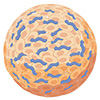
| Hybrid stem cell spheroids containing biodegradable nanogel microfibers improve oxygen diffusion and enhance muscle regeneration in a rat swallowing injury model. (Image: KyotoU / Hideaki Okuyama)
|
|
The team synthesized the biodegradable nanogels from a cholesterol-modified form of the carbohydrate pullulan, and crosslinked these to form microfiber-like fragments. They then mixed these fragments with stem cells derived from connective tissue to create hybrid spheroids. The team analyzed oxygen diffusion using computer simulations and experimentally evaluated cell viability, mechanical properties, and regenerative factor secretion.
|
|
In the final step, the international team transplanted the spheroids into a rat model afflicted with a swallowing muscle injury and then assessed muscle regeneration, cell engraftment, and functional recovery using histology and electromyography.
|
|
The use of biodegradable nanogels proved to be even more effective than expected. By integrating these soft material fragments inside the spheroid, the team successfully prevented internal cell death, improved oxygen diffusion, enhanced cell survival more than fivefold, and increased the secretion of regenerative factors. In the rat model, the hybrid spheroids significantly improved muscle regeneration, increased cell retention by over 20%, and restored muscle contraction-associated electrical activity by approximately 10%.
|
|
“By combining cells and materials into a single functional unit, we were able to overcome one of the biggest barriers in stem cell therapy — poor survival after transplantation,” says Okuyama. “This study shows that smart material design can unlock the full regenerative potential of stem cells.”
|
|
The international research team believes this approach may provide a new strategy for treating swallowing disorders. The method could also be applied to other muscle injuries, age-related muscle loss, and broader regenerative medicine applications. Next, the team plans to investigate the long-term functional outcomes of this technology in enhancing muscle regeneration, and aims to apply it to other muscles and tissue types.
|