| Feb 05, 2026 |
Single MXene flakes show two electrolyte dependent redox pathways, clarifying nanoscale charge transfer and guiding development of fast pseudocapacitors.
(Nanowerk News) MXene materials are promising candidates for a new energy storage technology. However, the processes by which the charge storage takes place were not yet fully understood. A team at HZB has examined, for the first time, individual MXene flakes to explore these processes in detail. Using the in situ Scanning transmission X-ray microscope ‘MYSTIIC’ at BESSY II, the scientists mapped the chemical states of Titanium atoms on the MXene flake surfaces.
|
|
The results revealed two distinct redox reactions, depending on the electrolyte. This lays the groundwork for understanding charge transfer processes at the nanoscale and provides a basis for future research aimed at optimising pseudocapacitive energy storage devices.
|
 |
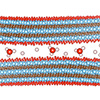
| Schematic view: In an acidic electrolyte H2SO4, proton intercalation displaces confined water molecules, protonating the MXene surface, which results in a reduced Titanium oxidation state. (Image: Energy & Environmental Science / HZB)
|
|
Energy storage is crucial for achieving a climate-neutral and efficient energy supply, based on renewable energy sources. Current technologies have their pros and cons. Batteries, for example, require a certain amount of time to charge but can store enormous amounts of energy, whereas electric double-layer capacitors (EDLCs) charge quickly but can only absorb a limited amount of energy.
|
|
So called pseudocapacitors could combine high storage capacity with speed, due to a charge transfer process based on chemical changes without changing the phase of material. Up to now, this technology has not yet been realised due to a lack of promising materials.
|
 |
| In a neutral electrolyte Li2SO4 the interaction of partially desolvated Li+ ions and water with the MXene surface results in an increased Titanium oxidation state. The two different chemical behaviours also change the interlayer spacing of the flakes. (Image: Energy & Environmental Science / HZB)
|
The hidden talents of MXenes
|
|
This might change with MXene materials. MXenes are two-dimensional materials with a layered structure, such as titanium carbide, which form a conductive core and a highly reactive surface. The distance between layers is in the order of a few nanometers. Via aqueous electrolytes, protons and Li ions can intercalate between MXene layers and act as charge carriers. The charge carriers bind to the surface terminations on the Titanium atoms via redox reactions. Another advantage: Aqueous electrolytes are generally much more environmentally friendly than organic electrolytes used in batteries.
|
Chemical changes observed
|
|
Until now, MXene has primarily been studied in larger samples comprising thousands of stacked flakes. Dr Tristan Petit has now experimentally clarified, for the first time, what happens at an individual flake level during ion storage with soft X-ray microscopy, to obtain information about the chemical changes at the sub-flake level. Using the in situ X-ray microscope ‘MYSTIIC’ at BESSY II, the scientists succeeded in imaging the local chemical changes in individual Ti₃C₂Tx MXene flakes during the spontaneous and electrochemical intercalation of different ions.
|
It depends on the electrolyte
|
|
“We discovered significant differences in chemical behaviour depending on whether the electrolyte contained proton or lithium ions,” says Namrata Sharma, the study’s first author (Energy & Environmental Science, “Nanoscale chemical imaging of pseudocapacitive charge storage in MXenes”). Protons reduce the oxidation state of titanium atoms, whereas intercalation of lithium ions increases the oxidation state of the titanium atoms.
|
|
‘This challenges the common perception of MXenes as electric double-layer capacitors (EDLCs) in neutral aqueous electrolytes. They are more complex and therefore more interesting, as we can use these insights to develop MXenes for new energy storage applications such as pseudocapacitors,’ says Petit.
|