| Mar 20, 2026 |
Physicists show that magnetoelastic coupling, present in nearly all magnets, can generate skyrmion arrays without crystal asymmetry or spin-orbit coupling.
(Nanowerk News) Physicists have proposed a theoretical framework demonstrating that magnetic skyrmions, nanoscale vortex-like spin structures valued for future data storage, can spontaneously emerge through magnetoelastic coupling without requiring special physical conditions. The work, led by Professor Se Kwon Kim and Dr. Gyungchoon Go at KAIST’s Department of Physics, removes a longstanding constraint from skyrmion research and makes these structures accessible in a far broader range of magnetic materials, including two-dimensional magnets.
|
Key Findings
- Magnetoelastic coupling, a fundamental interaction present in nearly all magnetic materials, is sufficient on its own to generate alternating skyrmion and antiskyrmion arrays.
- No crystal asymmetry or strong spin–orbit coupling is needed, overturning prior assumptions about the physical conditions required for skyrmion formation.
- The mechanism involves a simultaneous spin tilting and lattice distortion that destabilizes the uniform magnetic ground state and produces a chiral spin texture.
|
|
Skyrmions are configurations in which the magnetic moments of electrons, their spins, arrange into tiny vortex-like patterns within a material. Their nanoscale size and topological stability make them attractive candidates for ultra-high-density, low-power information devices that could store data at densities tens to hundreds of times greater than current technologies.
|
|
Yet producing skyrmions has traditionally required specific material properties, particularly broken inversion symmetry in the crystal lattice or strong spin–orbit coupling, limiting the pool of suitable host materials.
|
|
The KAIST team challenged this assumption by focusing on magnetoelastic coupling, the mutual influence between a material’s magnetism and its lattice structure. When a magnet’s spins reorient, the surrounding atomic lattice can deform slightly in response, and vice versa. This interaction is not exotic. It occurs naturally in virtually all magnetic materials, which is precisely why the result applies so broadly across spintronics research.
|
 |
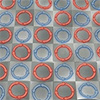
| Schematic illustration of how magnetoelastic coupling transforms a uniform magnetic state (left), in which all spins are aligned in the same direction, into a chiral spin texture (right) featuring alternating skyrmions (red) and antiskyrmions (blue) accompanied by lattice distortion. (Image: KAIST)
|
|
Through analytical modeling, the researchers showed that when magnetoelastic coupling reaches a critical strength, the conventional ground state, in which all spins point in the same direction, becomes unstable. The system instead relaxes into a new ordered phase featuring a periodic, vortex-like spin texture. In this phase, skyrmions and antiskyrmions alternate in a regular array, locked together by the lattice distortion that accompanies the spin rearrangement.
|
|
The key physical mechanism is a cooperative instability: spin tilting and lattice strain develop simultaneously rather than one triggering the other. This co-emergence produces a chiral spin texture, a pattern with a definite handedness, without any of the conventional symmetry-breaking ingredients previously thought necessary.
|
|
Professor Se Kwon Kim explained, “This study demonstrates that skyrmion-like magnetic structures can form even without specific or exotic interactions. It is particularly meaningful in that it suggests the possibility of realizing such structures in two-dimensional magnetic materials, where research is currently very active.”
|
|
That connection to two-dimensional magnets is especially relevant. Atomically thin magnetic films are among the most actively studied systems in condensed matter physics, and the ability to host skyrmions through an intrinsic coupling mechanism, rather than one that must be engineered through interface design or material selection, could simplify device architectures for future low-power electronics and high-density memory.
|
|
The study, with Gyungchoon Go as first author and Se Kwon Kim as corresponding author, was published in Physical Review Letters (“Magnetoelastic Coupling-Driven Chiral Spin Textures: A Skyrmion-Antiskyrmion-like Array”).
|
|
By establishing that one of the most common interactions in magnetism is sufficient to generate topologically nontrivial spin textures, the work eases the material requirements for skyrmion-based technologies. Rather than searching for materials with rare symmetry properties, researchers may now target any magnet with strong enough coupling between its spins and its lattice, a far less restrictive criterion that could accelerate progress toward practical spintronic devices.
|