| Mar 03, 2026 |
Paleomagnetic analysis of 28 Ryugu asteroid particles reveals stable magnetization acquired within millions of years of solar system formation.
|
|
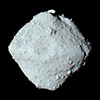
(Nanowerk News) Paleomagnetic analysis of 28 particles from the asteroid Ryugu has provided the most detailed evidence yet of magnetic fields present in the early solar system. A research team led by Masahiko Sato at the Tokyo University of Science conducted the measurements, which resolve conflicting interpretations from earlier studies that examined far fewer samples.
|
|
The findings, published in the (Journal of Geophysical Research: Planets, “Characteristics of Natural Remanence Records in Fine‐Grained Particles Returned From Asteroid Ryugu”), suggest that tiny magnetic minerals within the particles recorded ambient magnetic conditions within roughly 3 to 7 million years of the solar system forming.
|
|
Key findings
|
- 23 of 28 Ryugu particles carried stable natural remanent magnetization components, with eight particles preserving two distinct stable components.
- One particle displayed spatially inhomogeneous magnetization directions, indicating the magnetic signal was locked in before the material fully solidified.
- The magnetization is consistent with a chemical remanent magnetization acquired during the growth of framboidal magnetite driven by water alteration on Ryugu’s parent body.
|
|
Studying the magnetic signatures preserved in primordial astromaterials is essential for reconstructing the dynamic conditions of the ancient solar nebula. The weak but pervasive magnetic field generated by weakly ionized gas in the protoplanetary disk interacted with solid materials as they formed and changed. When magnetization becomes locked into these materials, it can persist for billions of years as natural remanent magnetization, or NRM.
|
|
Measuring that NRM in samples of known provenance offers a direct window into the spatiotemporal evolution of the disk, including constraints on its mass distribution and the transport of material that eventually built the planets.
|
 |
| In this study, NRM measurements suggest that the observed characteristics of Ryugu particles is a chemical remanent magnetization, likely acquired during growth of framboidal magnetite that occurred due to water-driven alteration on Ryugu’s parent body. (Image: Associate Professor Masahiko Sato, Tokyo University of Science)
|
|
Ryugu is a small, carbon-rich, near-Earth asteroid classified as a primitive rubble pile, likely a fragment of a parent body disrupted early in solar system history. Because it has remained largely unaltered since that time, its constituent materials are expected to retain magnetization acquired shortly after the solar system formed. Samples collected by the Hayabusa2 spacecraft and returned to Earth in 2020 are particularly valuable because careful handling and curation protocols minimized exposure to terrestrial magnetic fields, and any residual contamination can be traced and corrected. Previous stepwise alternating field demagnetization measurements on seven Ryugu particles produced ambiguous results, with research groups reaching different conclusions about the origin of the observed magnetization.
|
|
Sato and colleagues addressed that ambiguity by expanding the sample set fourfold. They performed systematic stepwise alternating field demagnetization on 28 submillimeter-sized Ryugu particles using a superconducting quantum interference device magnetometer at the University of Tokyo. The larger dataset revealed that the vast majority of particles, 23 out of 28, carry stable NRM components. Eight of those particles showed two distinct stable components, and one particle exhibited spatially inhomogeneous NRM directions. The inhomogeneous directions are particularly significant because they indicate the magnetization was acquired before the particle reached its final solid state. That timing rules out late-stage sources of magnetization such as spacecraft handling after sampling or exposure to fields on Earth.
|
|
The team interprets the overall NRM characteristics as a chemical remanent magnetization. This type of magnetization forms when new magnetic mineral grains grow through a critical size threshold in the presence of an ambient field, permanently recording that field. In the case of the Ryugu particles, the relevant minerals are framboidal magnetite crystals that grew during aqueous alteration on the asteroid’s parent body. According to Sato, the particles therefore preserve a record of the magnetic environment that existed in the very early solar system, potentially within 3 to 7 million years after its formation.
|
|
These results clarify the magnetic properties of Ryugu material and contribute to a broader understanding of protoplanetary disk evolution. By constraining the magnetic field conditions under which early solar system solids formed and were altered, the data help researchers reconstruct the physical environment in which planets, including Earth, assembled.
|