| Jan 27, 2026 |
Gold nanosphere supraballs absorb a bout 90% of sunlight across all wavelengths, nearly doubling energy capture and boosting power output 2.4x when applied to solar cells.
(Nanowerk News) Sunbeams contain a lot of energy. But current technology for harvesting solar power doesn’t capture as much as it could. Now, in ACS Applied Materials & Interfaces (“Plasmonic Supraballs for Scalable Broadband Solar Energy Harvesting”), researchers report that gold nanospheres, named supraballs, can absorb nearly all wavelengths in sunlight — including some that traditional photovoltaic materials miss.
|
 |
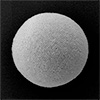
| This supraball (left) is 2100 nanometers in diameter and is made from hundreds of tiny gold nanoparticles (right) engineered to boost solar energy absorption. (Image: Adapted from ACS Applied Materials & Interfaces 2026, DOI: 10.1021/acsami.5c23149)
|
|
Applying a layer of supraballs onto a commercially available electricity converter demonstrated that the technology nearly doubled solar energy absorption compared to traditional materials.
|
|
Scientists are exploring materials that absorb light across the solar spectrum to improve solar energy harvesting. Gold and silver nanoparticles (NPs) have been suggested as a solution because they’re easy and cost-effective to make, but current NPs’ light absorption is confined to visible wavelengths — a fraction of the full solar spectrum.
|
|
To capture additional wavelengths, including near-infrared light, Jaewon Lee, Seungwoo Lee and Kyung Hun Rho propose using self-assembling gold supraballs. These structures consist of gold NPs that clump together and form tiny spheres. The diameter of the supraballs was adjusted to maximize the absorption of wavelengths present in sunlight.
|
|
The researchers first used computer simulations to optimize the design of individual supraballs and to predict the performance of supraball films. Results from the simulations showed that the supraballs should absorb more than 90% of wavelengths from sunlight.
|
|
Next, they created a film of gold supraballs by drying a liquid solution containing the structures on the surface of a commercially available thermoelectric generator (TEG), a device that converts light energy into electricity. The films were created in ambient room conditions — no clean rooms or extreme temperatures required.
|
|
In demonstrations with an LED solar simulator, the supraball-coated TEG had an average solar absorption of about 89%, nearly twice that of a TEG with a conventional film made from single gold NPs (45%).
|
|
“Our plasmonic supraballs offer a simple route to harvesting the full solar spectrum,” says Seungwoo Lee. “Ultimately, this coating technology could significantly lower the barrier for high-efficiency solar-thermal and photothermal systems in real-world energy applications.”
|