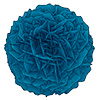
Spray-coated carbon flower sensors on stretchable substrates detect six biomarkers at sub-nanomolar levels and distinguish them in multi-analyte mixtures for wearable monitoring.
(Nanowerk Spotlight) Electrochemical sensors that detect biological molecules generally face a trade-off. Simple carbon electrodes are cheap, stable, and easy to fabricate, but they struggle to tell one molecule from another in a mixture. Adding biological recognition elements like antibodies or aptamers solves the selectivity problem: these molecules bind specific targets with high affinity, enabling sensors to pick out a single hormone from a soup of competing species.
But the biological route carries its own costs. Recognition elements degrade over time, are difficult to regenerate after binding their target, and require careful surface chemistry to attach. Each new analyte demands its own receptor, its own optimization, its own validation. For wearable health monitoring, where sensors must track multiple biomarkers simultaneously in sweat or saliva over hours or days, these limitations become acute.
One alternative is to engineer the carbon electrode itself to do the discriminating, without biological add-ons. Carbon nanotubes, graphene, graphene oxide, and their composites with metals and polymers have all been tested extensively. They offer high surface area, good conductivity, and mechanical compatibility with stretchable substrates.
Yet reported detection limits for hormones and neurotransmitters typically exceed 10 nM, while the concentrations found in saliva and sweat sit in the low nanomolar or picomolar range. Fabrication often requires expensive cleanroom processing, batch-to-batch reproducibility remains inconsistent, and selectivity is rarely tested in realistic conditions where multiple analytes compete for the electrode surface at the same time.
A study published in Advanced Functional Materials (“Sensitive Hormone and Neurotransmitter Detection with Carbon Flower Electrodes”) reports a purely carbon-based electrode that sidesteps the biological recognition route altogether, achieving both high sensitivity and multi-analyte selectivity through the material’s structure alone.
The researchers developed hierarchical carbon microparticles, roughly 1 µm in diameter, whose layered, petal-like structure resembles a flower. These “carbon flowers” are spray-coated onto soft, stretchable polymer substrates to create flexible, multi-electrode sensor arrays using a process simple enough to forgo cleanroom facilities entirely.
Carbon flower sensors: concept, design, properties. (a) Schematic of spray-coated carbon flower sensors with the capability of biomolecule recognition for wearable, skin-conformable sensors. (b) Representative SEM image of a carbon flower microparticle. (c) Photograph of high-throughput flexible and stretchable sensor arrays. (d) Schematic and photograph of the sensor. (e) SEM image of the working electrode. (Image: Reproduced with permission from Wiley-VCH Verlag) (click on image to enlarge)
The carbon flowers originate from polyacrylonitrile, a widely used polymer precursor. Through a one-step synthesis, polyacrylonitrile forms flower-shaped particles that are then stabilized in air and carbonized under nitrogen flow at temperatures ranging from 1000 to 1500 °C. The resulting structures retain their intricate petal morphology while gaining the electrical conductivity needed for electrochemical sensing.
Carbonization at 1500 °C yielded the best-performing material, producing particles with the highest carbon content (97.1 wt%), the lowest sheet resistance (4.2 kΩ), and a defect-rich graphitic structure well suited to catalyzing electrochemical reactions.
The open petal architecture gives the carbon flowers a practical advantage over conventional high-surface-area carbons, which rely on micropores smaller than 2 nm. Pores that narrow restrict the diffusion of larger biomolecules. The flower petals, by contrast, allow target molecules to reach reactive sites freely.
At the same time, the combination of high defect density and exposed graphitic edges creates a surface with abundant, chemically distinct sites where different molecules oxidize at different voltages. Each analyte produces a current peak at a characteristic potential, and the flower morphology sharpens these peaks enough to resolve them even in mixtures. This is the structural basis for the sensor’s selectivity.
To build sensors, the team dispersed carbon flowers in an ink and spray-coated them through a metal mask onto a stretchable elastomer substrate. Each sensor comprised eight electrodes connected by silver interconnects to a flat cable for readout. Like other recent efforts to develop printed wearable biosensors for multi-analyte sweat monitoring, this approach prioritizes simplicity and scalability, enabling high-throughput fabrication without specialized equipment.
In buffer solution without any analyte, the electrodes showed clean, rectangular current-voltage curves, confirming capacitive behavior — a prerequisite for the electrode surface to store and release charge cleanly so that the tiny currents generated by target molecules stand out. The electrochemically active surface area exceeded the geometric electrode area by a factor of nearly three, a direct consequence of the petal structure exposing more reactive sites than a flat surface would.
The critical test was whether the sensors could detect biomarkers at concentrations relevant to non-invasive monitoring. For estradiol, the primary form of estrogen, the sensors achieved a detection limit of 300 pM, outperforming most carbon-based electrochemical sensors reported to date. Serotonin, melatonin, and dopamine followed at 1, 1, and 4 nM respectively, while ascorbic acid and uric acid reached 10 nM.
These values already fall within the physiological range for serotonin, dopamine, ascorbic acid, and uric acid in sweat and saliva. For estradiol and melatonin, whose body fluid concentrations can dip into the picomolar range, further sensitivity gains will be needed.
Separate work on wearable estradiol monitoring in sweat has used aptamer-based approaches to reach those lower concentrations, but at the cost of the regeneration and stability challenges that a purely carbon-based sensor avoids. The carbon flower researchers suggest that tuning particle morphology and size to increase active site density could close this gap without resorting to biological recognition elements.
The sensors also proved durable. They maintained stable responses across 100 repeated measurement cycles, and a single sensor delivered consistent readings over 17 days. Varying pH across the physiologically relevant range for saliva produced only minor signal shifts, and changing potassium chloride concentration from 0 to 50 mM left the estradiol response essentially unchanged.
In artificial saliva, the sensors detected estradiol down to 10 nM, with higher overall signal than in buffer — consistent with the enhanced response seen at mildly acidic pH and elevated salt levels.
The selectivity results may represent the study’s strongest contribution. In real biological fluids, biomarkers co-occur, and their overlapping oxidation potentials can make individual identification difficult. In two-analyte mixtures, the sensors clearly resolved individual peaks for estradiol alongside melatonin, serotonin, or ascorbic acid, maintaining linearity and sensitivity comparable to single-analyte measurements. Three-analyte mixtures of serotonin, estradiol, and melatonin still showed clear separation.
Only when a fourth analyte, ascorbic acid, was added did partial peak overlap appear with serotonin. This is a known challenge given the similar oxidation potentials of these two molecules and the much higher physiological concentrations of ascorbic acid. Nafion coatings, which electrostatically repel negatively charged interferents, offer one potential mitigation strategy.
What makes these sensors unusual is not any single property but the convergence of several. Sub-nanomolar sensitivity, inherent selectivity in multi-analyte mixtures, stability over weeks, robustness to physiological pH and salt variations, and scalable fabrication on stretchable substrates all come together in one material system, without biological recognition elements. Reaching picomolar sensitivity for hormones like estradiol and fully resolving all interferents remain open problems, but the carbon flower platform provides a starting point that the wider sensing community can now build on.
For authors and communications departmentsclick to open
Lay summary
Prefilled posts
Nanowerk Newsletter
Get our Nanotechnology Spotlight updates to your inbox!
Thank you!
You have successfully joined our subscriber list.
Become a Spotlight guest author! Join our large and growing group of guest contributors. Have you just published a scientific paper or have other exciting developments to share with the nanotechnology community? Here is how to publish on nanowerk.com.