

Jan 30, 2026 Adding zinc ions to lithium niobate crystals cuts the energy needed for polarization switching by 69%, enabling visible-light programming of memristors for brain-inspired computing. (Nanowerk Spotlight) Ferroelectric materials hold innate appeal for engineers designing next-generation computing hardware. Their internal electric dipoles can flip between stable orientations when...
MXene hydrogel sensor enables heart and breathing monitoring in endurance sports

Jan 29, 2026 Stretchable MXene hydrogel sensor tracks heart rate and respiration during intense exercise, staying stable under heat, humidity, motion, and sweat. (Nanowerk News) Continuous monitoring of heart rate and breathing during intense physical activity is critical for early detection of cardiorespiratory risks, yet existing wearable devices often fail...
Silica nanocomposite enables self-disinfecting surfaces that activate on demand
Jan 29, 2026 A responsive silica nanocomposite generates biocidal oxygen species only when microbes alter local chemistry, allowing durable, trigger-free self-sterilizing surfaces. (Nanowerk News) A surface capable of responding to chemical signals generated by microorganisms and automatically producing biocidal substances – this is not a futuristic vision, but a description...
New light-based nanotechnology could enable more precise, less harmful cancer treatment
Jan 29, 2026 The approach offers a potential alternative to chemotherapy and radiation by using light and heat to target cancer cells. (Nanowerk News) Researchers at NYU Abu Dhabi have developed a new light-based nanotechnology that could improve how certain cancers are detected and treated, offering a more precise and...
Direct imaging captures the crystalline vibrations of a supersolid made of atoms and light
Jan 29, 2026 Researchers have succeeded in unequivocally demonstrating supersolidity in ultracold potassium atoms coupled to light. (Nanowerk News) The 20th century was marked by the discovery of exotic states of matter. First, liquid helium was observed to flow without friction at extremely low temperatures, a phase now known as...
Low-frequency excitations could soon be mapped with nanometer precision

Jan 29, 2026 Researchers propose a method to detect and map low-frequency excitations in nonlinear materials at nanometer resolution, enabling far-infrared fingerprints. (Nanowerk News) Atoms never remain perfectly fixed, even inside solid materials. Instead, they vibrate around their equilibrium positions, giving rise to collective excitations known as phonons. These and...
Light-based 3D printing method lets scientists program plastic properties at the microscale
Jan 29, 2026 Researchers have co-developed a new way to precisely control the internal structure of common plastics during 3D printing, allowing a single printed object to seamlessly shift from rigid to flexible using only light. (Nanowerk News) In a paper published in Science ("Lithographic crystallinity regulation in additive fabrication...
Reading neurochemical signals with integrated graphene-CMOS
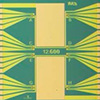
Jan 29, 2026 Researchers developed a CMOS platform that reads 32 graphene sensors in real time, enabling detailed mapping of fast, localized neurochemical activity. (Nanowerk News) Understanding how the brain communicates chemically requires tools that can capture fast, subtle changes across many locations at once. Neurotransmitters such as dopamine, serotonin,...
A new method rolls MXene into scrolls by the gram unlocking superconductivity and faster ion transport
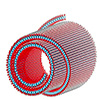
Jan 29, 2026 Rolling MXene sheets into scrolls at gram scale yields 33-fold conductivity gains and superconductivity at 5.2 K absent in flat films, enabling energy and sensing advances. (Nanowerk Spotlight) Rolling a flat sheet into a tube seems like a simple geometric transformation, but for MXenes it has proven...
Flexible photodetector selects wavelengths through electrical control
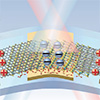
Jan 29, 2026 A flexible photodetector using asymmetric 2D heterostructures switches spectral response by gate voltage, enabling filter-free wavelength control under bending. (Nanowerk News) Flexible photodetectors are increasingly required in applications such as wearable health monitoring, curved imaging systems, and soft optoelectronic interfaces, where both mechanical compliance and spectral discrimination...