

Dec 08, 2025 A new atomically precise carbon sheet combines nanoporous graphene and biphenylene stripes, offering controlled semiconducting behavior, tunable mechanics, and selective gas interaction for future electronic and sensing applications. (Nanowerk Spotlight) Digital electronics rely on materials that can switch cleanly between a conducting state and a nonconducting state....
New study sheds light on Milky Way’s mysterious chemical history

Dec 08, 2025 Clues about how galaxies like our Milky Way form and evolve and why their stars show surprising chemical patterns have been revealed by a new study. (Nanowerk News) The research, published in Monthly Notices of the Royal Astronomical Society ("The Milky Way in context: The formation of...
Scientists identify the recipe for stabilizing atomically thin metals
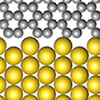
Dec 08, 2025 Researchers stabilize atomically thin metallenes, turning flimsy metals into robust platforms for nanoscale devices, energy technologies and biomedicine. (Nanowerk News) Metallenes are atomically thin metals, whose unique properties make them extremely promising for nanoscale applications. However, their extreme thinness makes them also flimsy. Now, researchers at the...
Stretchable polymer aerogel transistors enable recyclable biosensors and electronic skin
Dec 07, 2025 Nanoporous polymer aerogel channels boost soft transistor performance while remaining stretchable and recyclable, offering a single materials platform for high gain biosensors, neuromorphic elements and pressure sensitive electronic skin. (Nanowerk Spotlight) Stretchable electronics force together requirements that rarely coexist in a single material. A channel that moves...
Seeing stellar explosions in high definition

Dec 06, 2025 New technology is helping astronomers open new windows into novae, stellar explosions that can act as 'laboratories for extreme physics'. (Nanowerk News) An international team of astronomers, including researchers from the University of Michigan, has captured unprecedented images of two stellar explosions—known as novae—within days of their...
Nanoengineered hard-carbon anodes enable ultrafast sodium storage
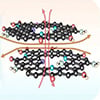
Dec 06, 2025 Nanoengineered hard-carbon with nanoporous channels and an ultrathin SEI boosts fast, reversible all-slope sodium storage in hard-carbon anodes. (Nanowerk News) A research team from the Hefei Institutes of Physical Science of the Chinese Academy of Sciences, has demonstrated ultrafast and highly reversible all-slope sodium storage using specially...
DNA nanostructures assembled in ionic liquids gain stability and targeting

Dec 06, 2025 DNA nanostructures assembled in ionic liquids instead of magnesium become stable in biological conditions and bind cancer-cell markers with higher precision. (Nanowerk News) DNA nanostructures are exciting new biomedical tools with myriad potential in treatment, diagnosis and disease prevention. Made of folded DNA, these nanostructures are highly...
X-ray spikes reveal electron beam size
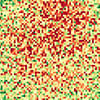
Dec 06, 2025 Researchers have directly observed, for the first time, transverse intensity fluctuations, called 'spikes', in synchrotron light. (Nanowerk News) While synchrotron radiation is often thought of as “stable”, the electromagnetic field exhibits pronounced randomly fluctuating distributions both temporally and spatially. These fluctuations encode spatial information about the electron...
Nanoscale kirigami silicon skin changes color when stretched
Dec 05, 2025 Nanoscale kirigami inspired silicon metamaterial uses a cut and fold mesh to tune structural colour, smoothly shifting reflected light from green to yellow to red. (Nanowerk News) Similar to its perhaps better-known cousin origami – the Japanese art of folding paper – kirigami is an art form...
First observation of ultra-thin two-dimensional materials in a state between solid and liquid
Dec 05, 2025 Researchers directly filmed an atomically thin crystal melting, revealing an exotic hexatic phase that defies standard melting rules and contradicts theory. (Nanowerk News) When ice melts into water, it happens quickly, with the transition from solid to liquid being immediate. However, very thin materials do not adhere...