

Jan 16, 2026 Custom polymer structures can now be 3D printed inside living cells using laser-based fabrication, opening paths to intracellular sensors, cell tracking tags, and embedded microlasers. (Nanowerk Spotlight) A human cell is roughly 20 micrometers across, about one-fifth the width of a human hair. Into this space are...
Magnetic honeycomb material could enable quantum spin liquids
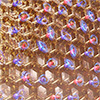
Jan 16, 2026 Researchers studied a potassium cobalt arsenate honeycomb, uncovering magnetic behaviors that may lead to quantum spin liquids and advanced quantum technologies. (Nanowerk News) Researchers at the Oak Ridge National Laboratory are pioneering the design and synthesis of quantum materials, which are central to discovery science involving synergies...
Pioneering natural, degradable polymer capsules
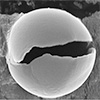
Jan 16, 2026 Researchers have developed technology to convert naturally derived monomers into polymers capsules. (Nanowerk News) Polymer capsules can store functional substances such as drugs and fragrances, making them widely used in functional cosmetics and daily necessities. However, conventional capsules use non-degradable polymers and are difficult to decompose in...
Efficient cooling method could enable chip-based trapped-ion quantum computers

Jan 16, 2026 New technique could improve the scalability of trapped-ion quantum computers, an essential step toward making them practically useful. (Nanowerk News) Quantum computers could rapidly solve complex problems that would take the most powerful classical supercomputers decades to unravel. But they’ll need to be large and stable enough...
Ferroelectric polarization patterns enable data storage beyond binary
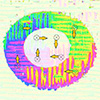
Jan 16, 2026 Spiral scanning creates six distinguishable polarization patterns in ferroelectric films, enabling data storage beyond binary and more than doubling information density per storage element. (Nanowerk Spotlight) In 1971, Intel's first commercial microprocessor contained 2,300 transistors. NVIDIA's Blackwell B200, the processor powering the company's latest artificial intelligence accelerators,...
MXene-based stretchable OLEDs keep brightness for wearable sensors

Jan 14, 2026 MXene electrodes and stretchable polymers enable OLED displays that maintain light output under strain for on-skin sensors and wearable health monitoring. (Nanowerk News) The organic light-emitting diode (OLED) technology behind flexible cell phones, curved monitors, and televisions could one day be used to make on-skin sensors that...
Graphene coatings offer an eco-friendly way to reduce marine biofouling

Jan 15, 2026 Graphene-based polymer coatings reduce marine biofouling by physically damaging cells on contact, cutting fuel use and maintenance needs without relying on toxic biocides. (Nanowerk News) Hull fouling is a problem familiar to most boat owners, and for the maritime industry, marine biofouling represents a significant challenge. Biofouling...
Researchers close gap in the characterization of organic semiconductors

Jan 15, 2026 Researchers developed high precision chips and a new measuring adapter enabling simultaneous contact with eight electrode pairs, advancing organic material analysis and future electronics. (Nanowerk News) Fraunhofer IPMS has made a significant breakthrough in materials research. The newly developed chips, which use interdigital electrodes, enable sensitive and...
A robot learns to lip sync (w/video)

Jan 15, 2026 Researchers have developed a humanoid robot that can learn realistic lip motions, enabling it to articulate words across languages and perform singing for the first time. (Nanowerk News) Almost half of our attention during face-to-face conversation focuses on lip motion. Yet, robots still struggle to move their...
Designing better catalysts for cleaner, more efficient chemistry

Jan 15, 2026 Scientists examine how a little-studied catalytic phenomenon can have outsized effects on chemical efficiency and selectivity. (Nanowerk News) Solid catalysts underpin many of the large-scale chemical transformations used to manufacture modern materials, converting hydrocarbons — including renewable or recycled forms of carbon — into the building blocks...