

Mar 02, 2026 Common carbon quantum dots harbor a hidden room-temperature quantum spin response, potentially transforming them from simple fluorescent tags into biological sensors. (Nanowerk Spotlight) Carbon-based quantum dots are among the most widely used luminescent nanoparticles in modern research. Laboratories around the world synthesize them routinely, exploiting their bright...
Blog
A crystal that changes fluorescence color and moves when heated
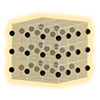
Mar 02, 2026 Chemists discovered that a seemingly solid, nonporous crystal can 'come alive' when heated. A two-step transformation releases trapped molecules, drives a vivid blue - green - yellow glow, and even propels the crystal forward through bubble-powered motion. (Nanowerk News) In a study recently published in Angewandte Chemie...
AI solves a key barrier to making hydrogen cars more affordable
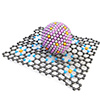
Mar 02, 2026 Researchers used artificial intelligence to redesign hydrogen fuel cell catalysts, boosting performance and durability while cutting costs for clean transport. (Nanowerk News) Hydrogen cars promise a clean alternative to fossil fuels, but one stubborn problem has held them back: the platinum catalyst at the heart of every...
Synthetic hydrogel helices amplify movement without muscles or motors
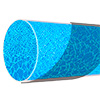
Mar 01, 2026 Inspired by a pond microorganism that retracts its spiral stalk using geometry alone, soft gel helices now wind and unwind on their own to amplify motion. (Nanowerk Spotlight) When Vorticella, a bell-shaped microorganism barely visible to the naked eye, detects a chemical threat in its pond-water habitat,...
Neurons self-organize and drive behavior inside artificial living bodies with no evolutionary precedent
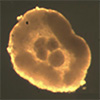
Feb 28, 2026 Neurons placed inside engineered living bodies built from frog cells self-organize, become active, and reshape movement without evolutionary guidance. (Nanowerk Spotlight) Understanding how neurons organize and function inside bodies that evolution never designed matters for building functional living machines, engineering replacement tissues, and grasping how biological complexity...
Common lab design inflates 2D transistor performance by up to six times

Feb 28, 2026 Lab architecture used to test 2D semiconductors artificially boosts performance metrics, making it harder to assess whether these materials can truly replace silicon. (Nanowerk News) Two-dimensional semiconductors could one day replace silicon in transistors, delivering smaller, faster and more energy-efficient processors. To ease their production and testing...
AI toolkit turns microscopy images into quantitative microstructure data

Feb 28, 2026 An AI-powered toolkit automatically extracts and quantifies microstructural features from microscopy images, accelerating data-driven materials discovery and optimization. (Nanowerk News) A research team from The Hong Kong University of Science and Technology (HKUST) has developed GrainBot, an AI-enabled toolkit that automatically extracts and quantifies multiple microstructural features...
Nanochannels yield ultra-strong membranes for longer-lasting clean energy systems

Feb 27, 2026 Chemical engineers have found a way to fabricate film-thin membranes imbued with super strength that could extend the durability of decarbonisation technologies. (Nanowerk News) Researchers at The University of Queensland are harnessing an intricate building technique to produce hyper-thin film membranes that boost the reliability, efficiency, and...
How to spot hidden flaws in ultrathin insulators

Feb 27, 2026 Researchers have shown that hard-to-spot defects in a widely used two-dimensional insulator can trap electrical charges and locally weaken the material, making it more likely to fail at lower voltages. (Nanowerk News) Future devices will continue to probe the frontier of the very small, and at scales...
Nanoplastics can interact with Salmonella to affect food safety

Feb 27, 2026 In a new study, researchers examined what happens when nanoplastics interact with Salmonella, potentially affecting food safety and human health. (Nanowerk News) Plastic products are ubiquitous in our food supply chain, shedding microplastics into every part of the human ecosystem. As they degrade, microplastics break down into...