

Mar 03, 2026 Physicists confirmed the full two-dimensional six-state clock model in atomically thin nickel phosphorus trisulfide, observing both the BKT and clock phases. (Nanowerk News) Physicists have experimentally confirmed a complete sequence of magnetic phase transitions in a two-dimensional material, fully realizing a theoretical model of clock magnetism that...
Blog
A sensor that sees like a retina
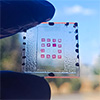
Mar 03, 2026 BIOPIX, a retina-inspired biohybrid image sensor combining biological liquid environments with organic electronics to generate real-time images on a display. (Nanowerk News) A multidisciplinary team of researchers has developed an innovative image sensor that integrates liquid biological environments with organic electronics, mimicking core functions of the animal...
‘Mesoscale’ swimmers could pave way for drug delivery robots inside the body

Mar 03, 2026 Researchers have discovered how tiny organisms break the laws of physics to swim faster. Such secrets of mesoscale physics and fluid dynamics can offer entirely new pathways for engineering and medicine. (Nanowerk News) In physics, the mesoscale lies between the microscopic and the macroscopic. It is not...
Magnetic measurements of asteroid samples reveal early solar system field history
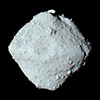
Mar 03, 2026 Paleomagnetic analysis of 28 Ryugu asteroid particles reveals stable magnetization acquired within millions of years of solar system formation. (Nanowerk News) Paleomagnetic analysis of 28 particles from the asteroid Ryugu has provided the most detailed evidence yet of magnetic fields present in the early solar system. A...
Functionalized wood emerges as a green nanoengineering platform for energy and environment
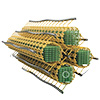
Mar 03, 2026 A comprehensive review examines how nanoengineered wood can serve as a renewable platform for energy storage, water treatment, and power generation applications. (Nanowerk News) As industrial carbon emissions continue to rise, the search for renewable materials that can serve multiple technological functions has become increasingly pressing. A...
Transparent MXene coating turns sunlight into heat to keep glass fog- and ice-free

Mar 03, 2026 An ultrathin MXene film absorbs invisible solar wavelengths to generate heat while staying transparent, enabling passive anti-fogging and de-icing on glass surfaces. (Nanowerk Spotlight) Sunlight carries enough energy to melt a thin layer of ice in minutes. If a window, windshield, or eyeglass lens could quietly harvest...
Lignin derived hard carbon anode achieves high efficiency in sodium ion batteries
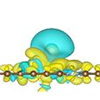
Mar 03, 2026 Researchers developed a lignin derived hard carbon anode for sodium ion batteries with 90.6 percent initial Coulombic efficiency and 401.5 mAh per gram reversible capacity. (Nanowerk News) Researchers have developed a hard carbon anode material from an industrial paper waste byproduct that delivers both high initial Coulombic...
A lopsided nanoparticle detects cancer markers in blood 100 times better than today’s rapid tests
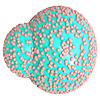
Mar 02, 2026 A self-propelled nanoparticle engineered through computer simulation could bring laboratory-grade cancer detection to paper-based bedside tests. (Nanowerk Spotlight) A cancer cell can shed telltale proteins into the bloodstream long before a tumor becomes visible on a scan. But finding those molecules is like searching for a handful...
AI makes X-ray spectroscopy five times faster, smarter and less prone to human error
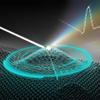
Mar 02, 2026 Researchers developed an AI-guided method that dramatically speeds up a widely used X-ray technique known as X-ray absorption near-edge structure (XANES) spectroscopy. It does so with far less risk of human error or damage to the sample from the X-ray beams. (Nanowerk News) Artificial intelligence (AI) is...
A quantum property is hiding in one of the most common lab nanoparticles

Mar 02, 2026 Common carbon quantum dots harbor a hidden room-temperature quantum spin response, potentially transforming them from simple fluorescent tags into biological sensors. (Nanowerk Spotlight) Carbon-based quantum dots are among the most widely used luminescent nanoparticles in modern research. Laboratories around the world synthesize them routinely, exploiting their bright...