| May 13, 2026 |
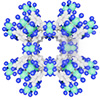
Laser post-treatment tunes MOF defects and pores, boosting CO2 adsorption up to 75% while cutting costs and avoiding chemical processing.
(Nanowerk News) A research team at Korea Institute of Materials Science (KIMS), led by Hee-jung Lee, senior researcher at KIMS, in collaboration with Professor Sunghwan Park of Kyungpook National University and Professor Mingyu Kim of Yeungnam University, has developed a technology that enhances CO₂ adsorption performance in metal–organic frameworks (MOFs) by up to 75% through precise laser-based control of their internal structure.
|
|
This study (Small, “Laser‐Induced Porosity Engineering of Metal‐Organic Frameworks for Enhanced CO2/CH4Adsorption Properties”) demonstrates a new approach to improving material performance through laser post-treatment, offering an efficient alternative to conventional complex chemical processing methods.
|
|
The separation of mixed gases such as carbon dioxide (CO₂) and methane (CH₄) is essential for applications such as natural gas purification and improving energy efficiency, and is considered a key technology for achieving carbon neutrality.
|
|
As a result, demand for high-performance adsorption materials has been rapidly increasing. However, conventional methods such as liquid absorption processes and cryogenic separation require high energy consumption and involve significant operational costs.
|
|
As an alternative, adsorption-based separation technologies using porous materials with sponge-like microstructures have attracted growing attention. In particular, metal–organic frameworks are considered promising materials due to their high internal surface area and tunable structures.
|
|
However, structural defects generated during synthesis often lead to non-uniform pore structures and a reduction in micropores favorable for CO₂ adsorption. To address these limitations, chemical or thermal treatment processes have been employed. However, these approaches involve complex procedures and may damage the pore structure, ultimately compromising the structural stability and performance of the material.
|
|
To address these limitations, the research team developed a laser-induced porosity engineering (LIPE) technique that precisely controls internal defects and pore structures in MOFs without chemical processing. This method rapidly heats and cools the material, reorganizing defect structures and improving pore uniformity. As a result, larger pores unfavorable for CO₂ adsorption are reduced, while micropores and surface characteristics that enhance CO₂ capture are formed.
|
|
Unlike conventional approaches that remove or introduce defects through chemical or thermal treatment, this technique improves performance by reorganizing existing defects using laser processing. This enables precise control of pore structures without additional chemical steps, enhancing both CO₂ adsorption capacity and selectivity. As a result, the developed MOFs exhibited up to a 94% increase in specific surface area and up to a 75% improvement in CO₂ adsorption capacity.
|
|
These findings provide a technological foundation for significantly improving the efficiency of CO₂ capture and separation, with strong potential for application in carbon-neutral industries. In particular, the ability to enhance the performance of MOFs made from low-cost materials through laser post-treatment alone enables both cost reduction and process simplification.
|
|
Furthermore, the technology is expected to be applicable to a wide range of gas separation industries, including natural gas purification and hydrogen and methane production processes, serving as a key material technology for selective CO₂ removal in eco-friendly energy systems.
|
|
“This technology is expected to serve as a next-generation core solution for carbon capture and gas separation industries, as it enables low-energy and large-area processing,” said Hee-jung Lee, senior researcher at Korea Institute of Materials Science, and Professor Sunghwan Park of Kyungpook National University.
|