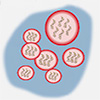
Dried mRNA vaccines can match standard injection without cold storage when a polymer matrix at the right ratio prevents the structural failures that destroy lipid nanoparticles during drying.
(Nanowerk Spotlight) Some medicines are easy to make and hard to keep. The active ingredients degrade within hours at room temperature, the dose falls below therapeutic levels, and the medicine effectively ceases to exist before it reaches a patient. Keeping them cold is, in those cases, as important as making them in the first place.
This challenge intensifies when the medicine contains fragile biological instructions, because water, heat, and time can all damage the molecules or the nanoscale carriers that protect them.
Few medicines illustrate this problem as clearly as mRNA. Messenger RNA gives cells temporary instructions to make a protein, which can train the immune system or support other therapies. But the RNA needs a protective carrier, usually a lipid nanoparticle, to enter cells. The carrier must protect its cargo, release it at the right moment, and survive manufacturing, storage, and injection.
Cold storage solves part of that problem by slowing damage, but it creates another barrier. Many mRNA vaccines require storage in aqueous buffer at very low temperatures, typically between −90 °C and −15 °C. That requirement complicates transport, raises costs, and limits access in places without reliable freezer infrastructure. Researchers have therefore pursued dry formulations, including microneedle vaccine patches, that could simplify storage and administration.
What that work did not explain was what actually happens to the nanoparticles during drying, why some formulations come out intact while others are destroyed, or how to tune the process for reliability.
(A) The vaccine ink is made by mixing mRNA-lipid nanoparticles with two dissolvable polymers, PVP and PVA. Both the N/P ratio (lipid amines to mRNA phosphates) and the polymer-to-mRNA ratio shape the final product. (B) As the ink dries inside a microneedle mold, water leaves and the nanoparticles concentrate. Insufficient polymer allows them to aggregate or fuse together, exposing the mRNA to degradation. (Image: Adapted from DOI:10.1002/adfm.75716, CC BY) (click on image to enlarge)
The lipid nanoparticles in mRNA vaccines are about 100 nm across, each one a self-assembled mixture of four lipid types arranged around the mRNA. The ionizable lipid grips the RNA at low pH. A helper phospholipid called DOPE, cholesterol, and a polyethylene-glycol stabilizer form the envelope around it. The molecules inside that envelope pack into a specific geometry that determines how the particle restructures inside a cell to release its cargo.
To turn these particles into a vaccine patch, the team mixed them with an ink containing two dissolvable polymers, polyvinylpyrrolidone and polyvinyl alcohol, known together as PVPVA. The ink filled a silicone mold patterned with microneedles and dried into solid cones a few hundred micrometers long. When pressed onto the skin, the tips dissolve in the intradermal space and release their cargo.
The paper’s central finding is structural. Inside each lipid nanoparticle, the lipids pack into a partial inverse hexagonal phase: a lattice of lipid cylinders threaded by water channels roughly 5 nanometers wide. Cryogenic electron microscopy and x-ray scattering converged on this structure, and showed that it survives drying largely intact when the polymer ratio is right.
The geometry matters because the curved lipid arrangement is the same one that helps the particle merge with cell membranes during delivery.
When the polymer-to-mRNA ratio fell too low, the architecture did not survive. At a ratio of 32 to 1, nanoparticles fused into oily droplets during drying. Cholesterol crystallized out of the lipid mixture into separate solid phases. Large fractions of mRNA escaped into solution and degraded. Above a ratio of 320 to 1, the particles emerged from rehydration with their hexagonal packing largely intact and their cargo still encapsulated.
The polymer plays two protective roles during drying. It slows the movement of nanoparticles toward one another, reducing the chance they coalesce. It also keeps cholesterol dispersed within the lipid envelope rather than allowing it to separate out and crystallize. A fluorescence assay that tracked lipid mixing between dye-labeled particles confirmed that aggregation rises exponentially as the polymer content drops.
The internal composition of the particles mattered as much as the polymer around them. Increasing the proportion of ionizable lipid relative to mRNA, measured as the N/P ratio, made the particles more robust through drying and rehydration. One likely reason is that higher N/P formulations contain a larger population of empty particles. When fusion events happen during drying, the empty particles take the hit, and the mRNA-loaded ones are more likely to survive.
Patches with enough polymer produced roughly 100 times more protein in mice than those with too little. Patches carrying mRNA for the SARS-CoV-2 spike receptor-binding domain raised antibody titers in mice and rats to levels matching intramuscular injection of the same dose. The patches achieved this without any cold storage.
The fabrication process itself turned out to matter. Standard microneedle production uses two drying cycles, the second to build a structural backing behind the needle tips. Each cycle subjected the lipid particles to another round of reorganization, and electrophoresis showed mRNA integrity dropping sharply across the second drying. Concentrating the ink and reinforcing the patches without a separate backing eliminated the second cycle, and the single-cycle patches produced an order of magnitude more protein in animals.
The cholesterol crystallization mechanism is the more novel piece of the work. Earlier studies had not connected it to mRNA-LNP delivery failure. At low water content, DOPE undergoes a phase change that compresses the lipid bilayer. The reorganizing bilayer expels cholesterol, which precipitates into separate crystals. Those crystals disrupt the lipid envelope and compromise the particle’s ability to escape from endosomes once inside a cell.
Future lipid designs that resist these structural changes could push performance higher. Some experimental ionizable lipids assemble into inverse cubic phases, three-dimensional networks of lipid and water channels, and these have shown improved intracellular cargo release in laboratory tests. Combining such lipid chemistry with the polymer matrix strategy could yield mRNA medicines that ship at ambient temperature and self-administer through a patch.
Cold chain requirements have shadowed mRNA technology since the pandemic and continue to limit its reach into low-resource regions. A patch that survives at room temperature and applies without trained personnel removes much of the infrastructure barrier. The same approach could open mRNA therapies beyond infectious disease, including the cancer and rare-disease applications that have similarly struggled with cold-chain logistics.
For authors and communications departmentsclick to open
Lay summary
Prefilled posts
Nanowerk Newsletter
Get our Nanotechnology Spotlight updates to your inbox!
Thank you!
You have successfully joined our subscriber list.
Become a Spotlight guest author! Join our large and growing group of guest contributors. Have you just published a scientific paper or have other exciting developments to share with the nanotechnology community? Here is how to publish on nanowerk.com.