| May 07, 2026 |
A review details how stacking 2D materials on bulk semiconductors yields photodetectors with record sensitivity, gigahertz speed, and built-in neural computing.
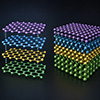
(Nanowerk News) A new review maps out how pairing atomically thin materials with conventional bulk semiconductors can produce photodetectors that not only outperform traditional devices but also process visual information directly on the chip. The review evaluates 2D/3D van der Waals heterostructures across four engineering strategies and details their emerging role in neuromorphic, or brain-inspired, sensing hardware (Nano-Micro Letters, “Band Engineering and Structural-Geometrical Engineering in 2D/3D van der Waals Heterostructures for Advanced Photodetection and Intelligent Sensing”).
|
Key Findings
- Van der Waals bonding lets researchers stack 2D crystals onto 3D semiconductors regardless of crystal structure, bypassing the lattice mismatch problem that creates performance-killing defects in conventional integration.
- Top-performing 2D/3D devices reach responsivities above 1000 amperes per watt and detectivities of 10^13 Jones, matching or exceeding cryogenically cooled infrared detectors.
- Charge trapping at the 2D/3D interface enables artificial synapses that merge sensing and computation, cutting the data-transfer overhead that consumes 80 to 90 percent of power in conventional AI vision systems.
|
 |
| Structural‑Geometrical Engineering in 2D/3D van der Waals Heterostructures for Advanced Photodetection and Intelligent Sensing. (Image: Reproduced from DOI:10.1007/s40820-026-02129-4, CC BY)
|
|
Silicon, germanium, and III-V compound semiconductors still dominate optoelectronics, driving solar cells, camera sensors, and fiber-optic receivers. But their spectral absorption bands are fixed, their power draw climbs steeply in dense sensing arrays, and combining different semiconductor crystals requires matching their atomic lattices — a constraint that limits material choice and raises fabrication cost.
|
|
Two-dimensional crystals sidestep that constraint. Materials such as graphene, transition metal dichalcogenides (TMDCs), and black phosphorus have atomically smooth surfaces with no dangling chemical bonds. They attach to bulk substrates through weak van der Waals forces instead of rigid covalent bonds, so a hexagonal 2D crystal can sit cleanly on a cubic silicon wafer without generating the line defects, called threading dislocations, that degrade conventional heterostructures.
|
|
The resulting hybrid devices split labor between the two layers. The 3D semiconductor absorbs photons efficiently thanks to its thickness and mature processing infrastructure. The 2D layer extracts the photo-generated charge carriers at high speed, and its electronic properties can be tuned with an external voltage.
|
|
The 2D film also passivates the 3D surface, suppressing trap states that would otherwise feed dark current — the background electronic noise that sets a detector’s sensitivity floor. Adding a narrow-bandgap 2D layer on silicon extends detection from visible wavelengths into the mid-infrared, letting a single chip register both optical images and thermal or chemical signatures.
|
|
The review organizes optimization approaches into four categories. The first is band structure engineering, which controls how the energy levels of the two layers line up at their shared interface. A staggered, or type-II, alignment places the 2D conduction band above the 3D conduction band and the 2D valence band below, forcing electrons and holes to separate into different layers and reducing recombination losses.
|
|
In broken-gap, or type-III, systems such as black phosphorus paired with tin diselenide, the bands are offset so far that carriers tunnel across the junction at very high speed — a property suited to telecommunications receivers. Graphene contacts add a further control: because graphene forms a Schottky barrier whose height shifts with an applied electric field, operators can toggle a single detector between high-sensitivity and high-speed modes.
|
|
A second strategy targets the interface directly. Placing an ultra-thin insulating layer — typically a few nanometers of hexagonal boron nitride or aluminum oxide — between the 2D and 3D components filters carriers by energy. Low-energy electrons responsible for dark current cannot cross the barrier, while higher-energy, photo-excited carriers tunnel through. The net effect is a sharp rise in detectivity, the figure of merit that captures a sensor’s ability to pick out a weak optical signal from its own noise.
|
|
Third, electrical coupling exploits the atomic thinness of 2D materials. A gate electrode positioned near the 2D layer can swing its carrier population from electron-dominated to hole-dominated in real time. A single pixel built this way becomes reconfigurable: it can act as a straightforward light sensor or switch into a logic mode that fires only when incident light crosses a preset intensity threshold.
|
|
Fourth, geometric and optical engineering replaces flat junctions with textured 3D substrates. Nanowires, nanopores, or moth-eye nanocone arrays trap incoming light, bouncing photons repeatedly through the absorbing region until they are captured. These surface features can also strain the 2D layer locally, shifting its bandgap and enabling polarization-sensitive detection — the ability to distinguish the orientation of incoming light waves.
|
|
Measured against standard benchmarks, the best 2D/3D devices already rival established technologies. Some heterostructures with internal gain mechanisms report responsivities above 1000 amperes per watt, far beyond the roughly 1 ampere per watt typical of standalone silicon detectors. Detectivity values reach 10^13 Jones, on par with cooled infrared sensors that require bulky cryogenic equipment. Carrier mobilities in graphene-based designs push operating speeds into the gigahertz range, fast enough for prospective 6G wireless optical links.
|
|
The review gives particular attention to in-sensor computing. In a conventional imaging pipeline, a sensor captures raw pixel data, transfers it to a separate memory chip, and then to a processor. That shuttling of data accounts for 80 to 90 percent of total power consumption in AI vision systems. 2D/3D heterostructures offer a shortcut: charge trapped at the van der Waals interface retains a memory of previous light exposure, mimicking the behavior of a biological synapse.
|
|
Sensor arrays built on this principle can remove noise and sharpen edges before the signal is digitized, recognize spatial patterns directly in hardware, and forward only salient information — a moving object, for instance — to the main processor. The approach mirrors how the human retina preprocesses visual data before sending it to the brain, and it opens a low-power path toward autonomous vehicle vision and real-time facial recognition.
|
|
Two practical barriers separate these laboratory results from factory production. Growing 2D films by chemical vapor deposition across full 12-inch wafers while keeping the atomic lattice free of wrinkles and grain boundaries — each a potential noise source — remains difficult. Environmental durability is another concern: black phosphorus, one of the most promising narrow-bandgap 2D materials, degrades rapidly when exposed to oxygen and moisture. Encapsulation methods that shield the active layer without blocking the light it needs to detect are still under active development.
|
|
As wafer-scale growth and CMOS-compatible fabrication processes mature, 2D/3D van der Waals heterostructures are positioned to serve applications from hyperspectral cameras in smartphones to the low-power, high-speed vision hardware that autonomous robots and AI systems will require.
|