| Apr 23, 2026 |
Researchers used computational tools and catalyst design to overcome the surface energy barrier limiting hydrogen release from magnesium hydride for clean energy storage.
|
|
(Nanowerk News) A research team has detailed how catalysts can be engineered to accelerate hydrogen release from magnesium hydride (MgH₂) by targeting the most energy-demanding step in the dehydrogenation process. The study, led by Hao Li at Tohoku University’s Advanced Institute for Materials Research (WPI-AIMR), provides a systematic framework for designing more effective hydrogen storage materials using a combination of computational modeling and catalytic strategy (Chem Catalysis, “Catalytic strategies and mechanisms for enhancing MgH2 solid-state hydrogen storage”).
|
Key Findings
- Researchers identified the “burst effect,” where the initial surface step of hydrogen release from MgH₂ is the most energy-intensive, while subsequent release proceeds more readily.
- Catalysts that specifically target this surface barrier can reshape the entire dehydrogenation process, improving both speed and efficiency.
- Computational tools, including density functional theory and data-driven models, played a central role in guiding catalyst design.
|
|
Hydrogen offers considerable promise as a clean energy carrier, but practical storage remains one of the main obstacles to its widespread adoption. An effective storage material must hold hydrogen safely and densely, then release it at temperatures and pressures compatible with real-world applications. MgH₂ meets many of these requirements — it can store a high percentage of hydrogen by weight and is made from abundant, low-cost elements. The drawback is that extracting hydrogen from MgH₂ typically demands temperatures too high for most practical energy systems.
|
 |
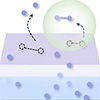
| Rate-determining step in MgH₂ dehydrogenation and its surface catalytic promotion.
|
|
The study centers on what the researchers call the “burst effect,” also referred to as the dam-break effect. This describes an asymmetry in how hydrogen leaves the MgH₂ crystal structure. Removing the first hydrogen atoms from the material’s surface requires the most energy. Once that initial barrier is cleared, the remaining hydrogen detaches far more easily, producing a rapid, cascading release. The phenomenon was first identified in Li’s earlier work and now serves as a guiding principle for catalyst design.
|
|
By focusing catalysts on this rate-limiting surface step, the team showed that even small modifications at the material’s interface can substantially change how fast and completely hydrogen becomes available. Rather than attempting to lower the energy requirement across the entire release process, the approach zeroes in on the single bottleneck that governs performance.
|
|
Computational methods were central to the work. The researchers used density functional theory (DFT) calculations — a quantum-mechanical modeling approach — alongside data-driven analysis to identify which catalytic modifications would most effectively reduce the surface energy barrier. These tools allowed the team to screen and evaluate potential catalyst designs in silico before committing to laboratory synthesis, streamlining a process that has traditionally relied on trial and error.
|
|
“This combined approach links fundamental insights with practical design strategies,” said Hao Li, Distinguished Professor at Tohoku University’s Advanced Institute for Materials Research (WPI-AIMR). “It points toward a more deliberate way of developing hydrogen storage materials, rather than relying on incremental improvements.”
|
|
The team plans to expand its use of artificial intelligence in future catalyst development. Machine learning and related methods could further accelerate the identification of promising material compositions and surface structures, potentially shortening the path from computational prediction to working storage systems. This direction aligns with broader efforts across materials science to replace slow, iterative experimentation with faster, model-guided design cycles.
|