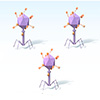
A biohybrid nanorobot pairs a bacterial virus with catalytic nanoparticles to destroy drug-resistant biofilms and shred the resistance genes they release.
(Nanowerk Spotlight) Killing dangerous bacteria is not always enough to neutralize the threat they pose. When antibiotic-resistant bacteria die, they leave behind fragments of DNA carrying the genetic instructions for resistance. Other bacteria can absorb these loose genes through horizontal gene transfer, gaining resistance they never evolved on their own. Destroying resistant bacteria can therefore seed the next generation of superbugs.
This problem intensifies inside biofilms, the slimy, self-produced matrices that bacteria build on surfaces. Biofilms function as dense microbial cities where bacteria share nutrients, communicate chemically, and exchange genetic material at elevated rates. In water treatment systems, pipe networks, and hospital surfaces, they act as persistent reservoirs for both resistant bacteria and the resistance genes they harbor.
No existing method can address all dimensions of this threat simultaneously. Antibiotics penetrate the sticky extracellular matrix poorly and often reach bacteria at sub-lethal doses that accelerate resistance. Chemical disinfectants generate toxic byproducts. Physical scrubbing dislodges bacteria but scatters freed resistance genes into the surroundings.
Schematic illustration of the N4@Pd nanorobot for synergistic elimination of E. coli NDM-1 biofilms and degradation of antibiotic resistance genes (ARGs). (A) Modular assembly of Pd nanozymes onto phage N4. (B) Antibiofilm mechanism of the N4@Pd nanorobot. (C) Synergistic antibacterial action combining phage lysis and ROS-enhanced attack. (D) Hydroxyl radicals (·OH) driven oxidative fragmentation of ARGs, enabling post-killing genetic clearance. (Image: Reproduced from DOI:10.1002/advs.75287, CC BY) (click on image to enlarge)
The biological component is bacteriophage N4, a virus isolated from municipal wastewater that specifically infects and destroys Escherichia coli NDM-1, a multidrug-resistant strain carrying the plasmid-encoded resistance gene blaNDM-1. The phage recognizes surface receptors unique to its host, giving it a built-in navigation system. Genomic analysis confirmed that N4 carries no resistance or virulence genes of its own.
The catalytic component consists of palladium nanozymes, cube-shaped nanoparticles that mimic peroxidase enzymes. In the presence of low concentrations of hydrogen peroxide, they generate hydroxyl radicals, a highly reactive oxidizing species. The researchers linked these palladium cubes to the phage’s protein shell using a bifunctional polymer tether, producing the assembled nanomaterial-enabled bacteriophage nanorobot.
The assembled nanorobot retained both functions intact. The phage bound its target bacteria with roughly six times greater efficiency than a simple mixture of phage and loose nanoparticles. The palladium nanozymes reached peak catalytic performance at pH 6.0, closely matching the mildly acidic conditions found inside biofilms. This pH sensitivity concentrates the nanorobot’s chemical output inside the biofilm matrix rather than in the surrounding water.
The first question was whether the nanorobot could kill resistant bacteria while simultaneously destroying their resistance genes. Even at low concentrations, the N4@Pd system eliminated E. coli NDM-1 below the detection limit of colony-counting assays. The phage lysed bacterial cells while palladium-generated radicals caused severe membrane damage, energy depletion, and oxidative stress.
Those same radicals attacked the freed plasmid DNA carrying blaNDM-1. Atomic force microscopy showed that intact, continuous DNA strands fragmented into short pieces after treatment. Gel electrophoresis and quantitative PCR confirmed the damage, showing complete band loss and an approximately 3.2 log10 reduction in gene copy numbers. The nanorobot thus eliminated both the bacteria and their genetic legacy.
The tougher challenge was mature biofilms grown over 24 hours. Here the nanorobot achieved over 95% reduction in biofilm biomass. Microscopy revealed near-complete structural collapse, with thick, textured biofilm surfaces replaced by smooth, thin remnants. The system reduced both polysaccharide and protein components of the extracellular matrix, undermining the scaffold that held the community together.
The nanorobot also degraded resistance genes within the biofilm itself. Quantitative PCR showed a 2.78 log10 reduction in blaNDM-1 copy numbers, far exceeding any single-component treatment. This dual clearance of both structure and genetic material addresses the core problem: conventional biofilm destruction liberates resistance genes and risks making resistance worse.
Transcriptomic analysis illuminated the molecular mechanisms behind this collapse. The nanorobot suppressed genes controlling quorum sensing, the chemical signaling system bacteria use to coordinate biofilm construction. It also downregulated genes for fatty acid metabolism, nutrient transport, and energy production. The combined effect disrupted bacterial communication, metabolism, and structural integrity at multiple levels simultaneously.
The researchers then tested whether the nanorobot could function under realistic conditions. In simulated wastewater containing natural organic matter, the system maintained over 90% biofilm removal and achieved a 2.06 log10 reduction in resistance genes. In spiked municipal wastewater collected from a treatment plant, metagenomic sequencing showed that the nanorobot selectively eliminated Escherichia populations while reducing overall counts of resistance and virulence factor genes.
Non-target bacterial genera such as Acinetobacter and Aliarcobacter expanded to partially fill the ecological niche. This pattern suggests the nanorobot restructures microbial communities rather than sterilizing them indiscriminately, a meaningful distinction for environmental applications where microbial diversity supports ecosystem health.
The approach carries limitations the researchers acknowledge. The palladium nanozymes require externally supplied hydrogen peroxide, which complicates fully autonomous deployment. The phage’s host range, while broad among E. coli strains, does not cover the full species diversity in natural biofilms. Future iterations may incorporate phage-inspired nanomotor designs with self-fueled propulsion, multi-phage cocktails, or light-driven catalytic regeneration.
The N4@Pd nanorobot unites biofilm removal and genetic decontamination in a single, self-targeting platform. By pairing a virus that evolved to find and kill bacteria with a synthetic catalyst that destroys the genetic aftermath, it addresses a blind spot in conventional disinfection: the secondary pollution created by successful sterilization itself.
For authors and communications departmentsclick to open
Lay summary
Prefilled posts
Nanowerk Newsletter
Get our Nanotechnology Spotlight updates to your inbox!
Thank you!
You have successfully joined our subscriber list.
Become a Spotlight guest author! Join our large and growing group of guest contributors. Have you just published a scientific paper or have other exciting developments to share with the nanotechnology community? Here is how to publish on nanowerk.com.