| Apr 14, 2026 |
New nanotweezers rapidly trap and analyze tiny vesicles in their natural state, enabling faster detailed study of cell communication and advancing diagnostics and therapies.
(Nanowerk News) Justus Ndukaife, associate professor of electrical and computer engineering and Chancellor Faculty Fellow, and his team have developed next generation nanotweezers that better analyze extracellular vesicles and aid in unraveling the mysteries of how cells package molecules and interact with one another.
|
|
The research was published in Light: Science & Applications (“Rapid trapping and label-free optical characterization of single nanoscale extracellular vesicles and nanoparticles in solution”). Graduate student Ikjun Hong helped to perform the experimental characterization under Ndukaife’s direction.
|
 |
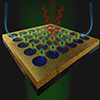
| Interferometric Electrohydrodynamic Tweezers (IET) provide high-throughput, parallel trapping with label-free imaging and spectroscopic characterization of single nanoscale extracellular vesicles and nanoparticles. (Image: Vanderbilt University)
|
|
Nanosized extracellular vesicles (EVs), though they vary in size and molecular cargo composition, are an important means for cells to communicate with each other. A significant research opportunity involves analyzing EVs individually to discern their biological roles in diverse diseases as well as leverage them for next generation therapeutics.
|
|
Studying single, intact EVs often relies on trapping individual particles, but existing methods face significant limitations. For example, optical tweezers – an approach recognized by the 2018 Nobel Prize in Physics – use a tightly focused laser beam to trap microscopic objects.
|
|
However, the process is slow, as particles must be captured sequentially, and it is difficult to ensure that a new particle is trapped for each measurement. These constraints severely limit throughput and scalability.
|
|
To address this challenge, Ndukaife’s team has developed new technology – called interferometric electrohydrodynamic tweezers (IET) – that uses electrohydrodynamic flows to rapidly capture and trap thousands of nanoscale objects, including EVs and other nanoparticles, often within seconds.
|
|
The platform integrates label-free interferometric imaging with Raman spectroscopy – a technique that involves illuminating a sample with a light source, typically a laser – enabling real-time characterization of individual particles without fluorescent labels or surface immobilization.
|
|
“Importantly, IET allows comprehensive analysis of nanoscale particles in their native, freely suspended state. By avoiding chemical staining or fixation, the technique minimizes measurement artifacts and preserves the intrinsic properties of each particle,” Ndukaife said. “Overall, the IET platform represents a significant advance in nanoscale particle trapping and characterization, opening new opportunities across nanomedicine, drug delivery, diagnostics, and environmental monitoring.”
|