| Apr 01, 2026 |
Researchers activated the full basal plane of tungsten diselenide through atomic vacancies, achieving over 550 stable lithium-air battery cycles.
(Nanowerk News) A research team from the Korea Institute of Science and Technology (KIST) and the Institute for Advanced Engineering (IAE) has developed a catalyst strategy that converts the normally inactive surface of a two-dimensional nanomaterial into a highly reactive platform for lithium-air batteries.
|
|
The lithium-air battery catalyst, based on tungsten diselenide (WSe₂), achieved stable cycling beyond 550 charge-discharge cycles under fast charging conditions, pointing to longer-lasting, higher-energy batteries for electric vehicles and energy storage systems.
|
Key Findings
- Substituting platinum atoms into tungsten diselenide and creating selenium vacancies transformed the material’s entire basal plane into a catalytically active surface.
- Lithium-air batteries built with the new catalyst maintained stable operation for more than 550 cycles at a 1 C-rate, outperforming established commercial catalysts.
- The catalyst retained high stability across charge-discharge rates ranging from 0.1C to 3C, suggesting viability under rapid charging scenarios.
|
|
Lithium-air batteries are widely regarded as one of the most promising successors to conventional lithium-ion technology. Their theoretical energy density exceeds that of lithium-ion cells by a factor of ten, which could translate into substantially extended driving ranges for electric vehicles. Yet commercial progress has stalled because the catalytic sites that drive oxygen reactions during charging and discharging are too few and too sluggish, resulting in poor reaction kinetics and limited battery lifespans.
|
 |
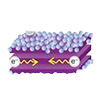
| Two-dimensional metallic WSe₂ exhibits limited catalytic reactivity as its active sites are confined to the edge sites. During charge-discharge cycles, structural degradation and loss of conductivity occur, leading to rapid termination of the material’s lifespan. However, introducing atomic-level defect control (platinum substitution and selenium atomic vacancies) activates the basal plane of the 2D two-dimensional metallic WSe₂ material. Subsequently, the high catalytic reactivity of the oxide intermediates formed during the first discharge cycle synergizes with the high electrical conductivity inherent to the metallic material, enabling efficient and stable maintenance of charge-discharge cycles. (Image: KIST)
|
|
The joint team, led by Dr. Sohee Jeong from the Extreme Materials Research Center at KIST and Dr. Gwang-Hee Lee from the Materials Science and Chemical Engineering Center at IAE, addressed this limitation by reconsidering how two-dimensional materials participate in catalysis. In conventional WSe₂, only the narrow edge sites are chemically active. The much larger basal plane — the flat, exposed face of the layered material — contributes almost nothing to the reaction. The team’s goal was to activate that unreactive surface at the atomic scale.
|
|
Their method involved substituting platinum atoms into the layered WSe₂ structure while deliberately removing individual selenium atoms to create atomic-level vacancies on the surface. These vacancies serve as strong reaction sites that attract and activate oxygen molecules, boosting the rates of both the oxygen reduction reaction (ORR) during discharge and the oxygen evolution reaction (OER) during charge. The modification activates the entire basal plane without compromising the material’s electrical conductivity, a trade-off that has undermined previous catalyst designs.
|
|
When integrated into a lithium-air battery, the engineered catalyst delivered a stable lifespan exceeding 550 cycles at 1 C-rate — a fast charge-discharge regime that typically accelerates degradation. The catalyst also outperformed widely used commercial alternatives, including platinum on carbon (Pt/C) and ruthenium oxide (RuO₂), across a broad operating window from 0.1C to 3C. The result suggests batteries built with this material could withstand high-speed charging with minimal performance loss.
|
|
The research also involved collaboration with Lawrence Livermore National Laboratory (LLNL) in the United States. The study was published in Materials Science and Engineering: R: Reports (“Atomic-scale vacancy engineering unlocks basal-plane catalytic activity in metallic WSe2 for reversible oxygen electrocatalysis”).
|
|
Dr. Sohee Jeong of KIST stated, “This research is significant in that it presents an atomic-level control strategy that utilizes the previously untapped basal plane while maintaining the structural advantages of two-dimensional materials.” Dr. Gwang-Hee Lee of IAE added, “It has dramatically secured the rapid charge-discharge performance that was a major challenge for lithium-air batteries, accelerating the commercialization timeline for high-power mobility power systems.”
|
|
The design principle of converting an entire two-dimensional surface into a catalytic active site may also apply to other electrochemical technologies such as water electrolysis and fuel cells, where effective and affordable catalysts remain scarce. The research team plans to pursue technology transfer and commercialization efforts to advance domestic lithium-air battery competitiveness.
|