| Mar 11, 2026 |
Researchers developed a new electrolyte system that significantly boosts the energy-harvesting performance of twistrons, which are yarns made from carbon nanotubes.
(Nanowerk News) Researchers at The University of Texas at Dallas have developed a new electrolyte system that significantly boosts the energy-harvesting performance of twistrons, which are carbon nanotube yarns that generate electricity when repeatedly stretched.
|
|
The findings could aid in the manufacturing of intelligent textiles, such as fabrics used to make spacesuits, that would power wearable electronic devices or sensors by harvesting energy from human motion.
|
|
In a study published in ACS Nano (“D2O-Enhanced Twistron Yarn Harvesters for Low-Frequency Mechanical Energy Harvesting”), the UT Dallas scientists and their collaborators reported that replacing conventional water with heavy water in the neutral electrolyte solution that bathes the twistrons significantly increased energy output from the yarns.
|
 |
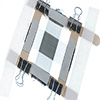
| Carbon nanotube sheets, shown here cross-stacked at 90 degrees, are spun in a manner similar to traditional yarn to make twistron energy harvesters. (Image: The University of Texas at Dallas)
|
|
Normal water comprises hydrogen and oxygen atoms. In heavy water, the hydrogen is replaced with deuterium, a form of hydrogen that contains an added neutron in its nucleus.
|
|
Compared to normal water, the heavy water‑based system delivered up to 2.5 times higher peak electrical power and 1.8 times more energy per stretching cycle at low frequencies, between 0.01 hertz (cycles per second) and 2 hertz. The energy conversion efficiency reached 9.5%, which is higher than any other previously reported twistron harvester operating in neutral electrolytes, said Dr. Mengmeng Zhang, corresponding author of the study and a research assistant professor and co-lead of the Alan G. MacDiarmid NanoTech Institute.
|
|
“Although this research focuses primarily on enhancing low-frequency energy harvesting — for example, from human movement or ocean waves — these deuterium-enhanced twistron harvesters also exhibit remarkable harvesting performance at high frequencies, from 2 hertz to 50 hertz,” Zhang said. “Potential higher-frequency uses might include harvesting electricity from rotating car wheels.”
|
|
Twistrons are spun yarns made from carbon nanotubes, hollow cylinders of carbon 10,000 times smaller in diameter than a human hair. Originally developed by a UT Dallas-led team and described in 2017 in the journal Science, twistrons were developed subsequently as three‑ply carbon nanotube yarns similar in structure to common textile fibers, which enables them to be integrated easily into fabrics.
|
|
Twistron performance is typically maximized when the twistrons are covered by strong acid electrolytes, but the corrosive nature of acid limits the fibers’ use in wearable or environmentally sensitive systems. Neutral water-based electrolyte solutions offer a safer alternative, but they are not as efficient.
|
|
“Our new heavy water‑based electrolyte system overcomes this challenge, providing a noncorrosive option that maintains high performance, particularly in low‑frequency environments such as human activity,” said Ishara Ekanayake, co-first author of the study and a chemistry doctoral student in the School of Natural Sciences and Mathematics (NSM).
|
|
“Using heavy water slows the movement of charged molecules and reduces or minimizes the self-discharging rate, so we can keep more charges on the carbon nanotubes. For energy harvesting, that’s a big benefit — more charges lead to better harvesting performance,” Ekanayake said.
|
|
To demonstrate practical use, the researchers embedded a twistron yarn array covered in a solid electrolyte gel into a commercial textile and stretched the material to simulate energy harvesting from human motion. The captured energy successfully powered wearable electronic devices.
|
|
“We can envision next‑generation wearable fabrics capable of continuously generating electricity from everyday movement to power phones, watches, tablets, laptops and other portable electronics,” Zhang said.
|
|
The team also demonstrated thermal‑energy harvesting by coupling electrolyte-coated twistron yarns to a polymer‑based artificial muscle that contracts when heated. As the muscle contracted, it stretched the twistron yarn to produce electricity, showing the technology’s potential for applications that involve environmental temperature changes.
|
|
The next step in the research will include identifying ways to optimize the deuterium-based electrolyte system.
|