| Mar 11, 2026 |
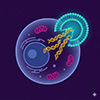
Researchers developed a DNA barcoding assay to measure nanoparticle cargo escape in living organisms, enabling a new class of lipid nanoparticles for more efficient gene editing.
|
|
(Nanowerk News) Researchers have developed a DNA-based barcoding system that can measure, for the first time in living organisms, how effectively lipid nanoparticles deliver genetic material to the correct location within cells. The technique, published in Nature Biotechnology (“In vivo endosomal escape assay reveals mechanisms for efficient hepatic LNP delivery”), enabled the team to design a new class of nanoparticles that achieved potent gene editing at substantially lower doses than existing delivery methods. The work addresses one of the central obstacles in gene therapy: most therapeutic cargo is destroyed inside cells before it can function.
|
Key Findings
- A DNA-based barcoding assay can now quantify, in living mice, how much genetic cargo escapes cellular disposal versus how much is degraded.
- Measurements from the assay guided the design of lipid nanoparticles with improved ionizable lipids that achieved gene editing at much lower doses than current methods.
- The study confirmed that the primary bottleneck in gene therapy is intracellular cargo release, not cellular uptake.
|
|
Gene therapies rely on delivering genetic instructions or editing tools into specific parts of a cell. But once nanoparticles carrying this cargo enter a cell, the material is frequently routed to lysosomes, organelles that function as the cell’s waste processing system. Inside lysosomes, the therapeutic payload is broken down before it reaches the cellular compartment where it could take effect. Until now, researchers lacked a way to directly measure this process in living animals.
|
|
Antony Jozic, a graduate student in the Oregon State University College of Pharmacy, led the experimental work under the supervision of Gaurav Sahay, a professor of pharmaceutical sciences. Together with collaborators at OHSU, Tennessee Technological University, Yeungnam University in South Korea, and the University of Brest in France, they built a DNA-based barcoding test that distinguishes between genetic material that reaches its intended target and material that ends up as cellular waste.
|
|
“Once you can measure something, you can design around it,” Sahay said. “Designs based on our measurements allow for new lipid nanoparticles capable of much more efficient delivery.”
|
|
Lipid nanoparticles are tiny carriers, between one and 100 billionths of a meter in size, assembled from fatty acid compounds. A critical component of these particles is the ionizable lipid, a molecule that changes its electrical charge depending on the acidity of its surroundings. Ionizable lipids serve a dual purpose: they help package the genetic cargo and they interact with cellular membranes in ways that can promote cargo release.
|
|
Applied to mouse models, the barcoding assay provided direct readouts of how much material carried by different nanoparticle formulations escaped destruction and how much did not. “That allowed us to quantify how efficiently different nanoparticle designs release their cargo,” Jozic said. “It was a huge outcome for us and a particularly meaningful one for me after working on this for several years.”
|
|
Using these measurements as a guide, the researchers identified and tested a new class of lipid nanoparticles constructed around improved ionizable lipid chemistry. These redesigned particles enabled safe and effective gene editing at doses well below those required by current advanced delivery systems.
|
|
“The study also clearly demonstrated that the main problem with gene therapies is getting the cargo to the right part of the cell once it’s inside,” Sahay said. “This insight resolves a longstanding challenge in our field, to track genetic material inside the subcellular compartments within the cell in a living organism, and provides a road map for improving RNA and gene-editing medicines and reducing off-target effects.”
|
|
The research team also included Oregon State University members Deepak Sahel, Emily Bodi, Michelle Palumbo, Aishwarya Vasudevan, Namratha Murthy, Yulia Eygeris, Milan Gautam, and Elissa Bloom. The French collaboration involved Paul-Alain Jaffres and his graduate student Chole Le Roux at the University of Brest.
|
|
“This game-changing work really highlights our growing leadership in this space and our ability to attract and train outstanding students,” Sahay said. “By working together from the earliest design stages with our collaborators in France, Paul-Alain Jaffrès and his graduate student Chole Le Roux, we created some of the most potent ionizable lipids reported to date that deliver gene-editing tools far more efficiently than existing systems.”
|
|
The ability to directly measure intracellular cargo fate in vivo opens a systematic path for optimizing future lipid nanoparticle designs. Rather than relying on indirect proxies for delivery efficiency, researchers can now screen formulations based on actual endosomal escape performance, potentially accelerating the development of more effective RNA therapeutics and gene-editing treatments.
|