| Feb 05, 2026 |
Scientists designed a DNA scaffold that carries HIV vaccine proteins into the body and sharpens the immune response against the virus.
|
|
(Nanowerk News) One of the biggest hurdles in developing an HIV vaccine is coaxing the body to produce the right kind of immune cells and antibodies. In most vaccines, HIV proteins are attached to a larger protein scaffolding that mimics a virus. Then, a person’s immune system produces a range of antibodies that recognize different bits of those proteins. Often, however, some of those antibodies react not to HIV itself—but to the scaffold used to deliver the vaccine.
|
|
Now, researchers at Scripps Research and the Massachusetts Institute of Technology (MIT) have developed a new kind of vaccine scaffolding made from DNA that the immune system ignores, eliminating these off-target antibodies.
|
|
In a new study published in Science (“DNA origami vaccines program antigen-focused germinal centers”), the team showed that vaccines made with these DNA-based scaffolds led to 10 times more immune cells targeting a vulnerable site on HIV when compared to vaccines with protein-based scaffolds. That suggests a stronger and more targeted immune response to the DNA-based vaccines.
|
|
“It’s a brand-new technology that might help us get to a protective HIV vaccine or solve other particularly difficult vaccine problems,” says senior author Darrell Irvine, professor at Scripps Research.
|
 |
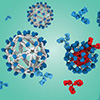
| The DNA-based vaccine induces antibodies to the HIV antigen (blue) without eliciting antibodies to the DNA particle (gray), whereas the protein-based vaccine generates antibodies to both the HIV antigen (blue) and the protein particle (red). Image created by Grant Knappe (MIT) based on atomic models from MIT (DNA-based vaccine) and Scripps Research (protein-based vaccine). (Image: MIT and Scripps Research)
|
|
Typically, a vaccine is made up of a scaffolding particle covered in many inert viral proteins (antigens) that can be recognized by the immune system. Like a virus, these vaccine structures present many copies of an antigen on their surface, triggering stronger immune activation than free-floating antigens used in previous, less effective vaccines. But until now, essentially all such scaffolds have been made from proteins, which can trigger immune reactions to the scaffolds themselves. For most vaccines targeting common pathogens, the off-target immune reaction doesn’t pose major problems. But for challenging vaccine targets like HIV, influenza and pan-coronavirus vaccines—where broadly protective B cells are extraordinarily rare—every competing immune response could matter.
|
|
“We knew that protein nanoparticle scaffolds generate their own immune responses, but we didn’t know how much those off-target responses were actually limiting the immune cells we care about,” says Irvine, who is also a Howard Hughes Medical Institute Investigator.
|
|
In the new work, Irvine, along with lead author Anna Romanov and collaborators including biological engineer Mark Bathe of MIT, turned to DNA origami technology, which allows scientists to fold DNA into precise three-dimensional shapes. There’s limited data regarding the use of DNA origami in vaccines, but the researchers already knew that B cells—the immune cells responsible for recognizing antigens and producing antibodies—don’t flag DNA. That’s in part to protect people from autoimmune reactions attacking their own DNA.
|
|
“In prior work in 2024 using a SARS-CoV-2 antigen, we found DNA scaffolds were ‘silent’ immunologically without generating an antibody response, but it was unclear whether they’d also promote focused germinal center responses; this study now clearly demonstrates this response for Scripps’ HIV antigen, which is a breakthrough for the active immunotherapy field,” says Bathe.
|
|
The team designed DNA nanoparticles that could each display 60 copies of an HIV envelope protein—one that’s known to activate the rare B cells that can eventually produce broadly neutralizing antibodies against HIV. They then tested the nanoparticles in mice expressing human antibody genes. Nearly 60% of the germinal center B cells—specialized immune cells that mature to produce the high-quality antibodies—targeted the HIV envelope protein. By contrast, the protein-scaffolded vaccine (which is currently in clinical trials) generated germinal centers where only about 20% of B cells recognized the HIV target; the rest included many cells responding to the scaffold itself.
|
|
The DNA-based vaccine achieved a 25-fold better ratio of HIV-specific to off-target immune cells compared to the protein scaffold. Within two weeks of vaccination, mice who had received the DNA-based vaccine had detectable levels of the desired rare B cells, while mice who had received the protein nanoparticle-based vaccine had none of the cells detectable.
|
|
The implications extend beyond HIV, as the same challenges apply to efforts to develop universal influenza and pan-coronavirus vaccines. DNA origami scaffolds could provide a more focused immune response for any of these challenging vaccine problems, says Irvine.
|
|
“These are vaccines where you’re trying to recruit incredibly rare cells in the B-cell repertoire,” he adds. “Anything that limits those correct cells from getting activated is a potential problem, and DNA origami scaffolds could help overcome these challenges.”
|
|
The Irvine and Bathe teams are now studying how variations in the shape of the DNA origami may impact vaccine effectiveness, as well as testing the long-term safety of the scaffolds for vaccination.
|